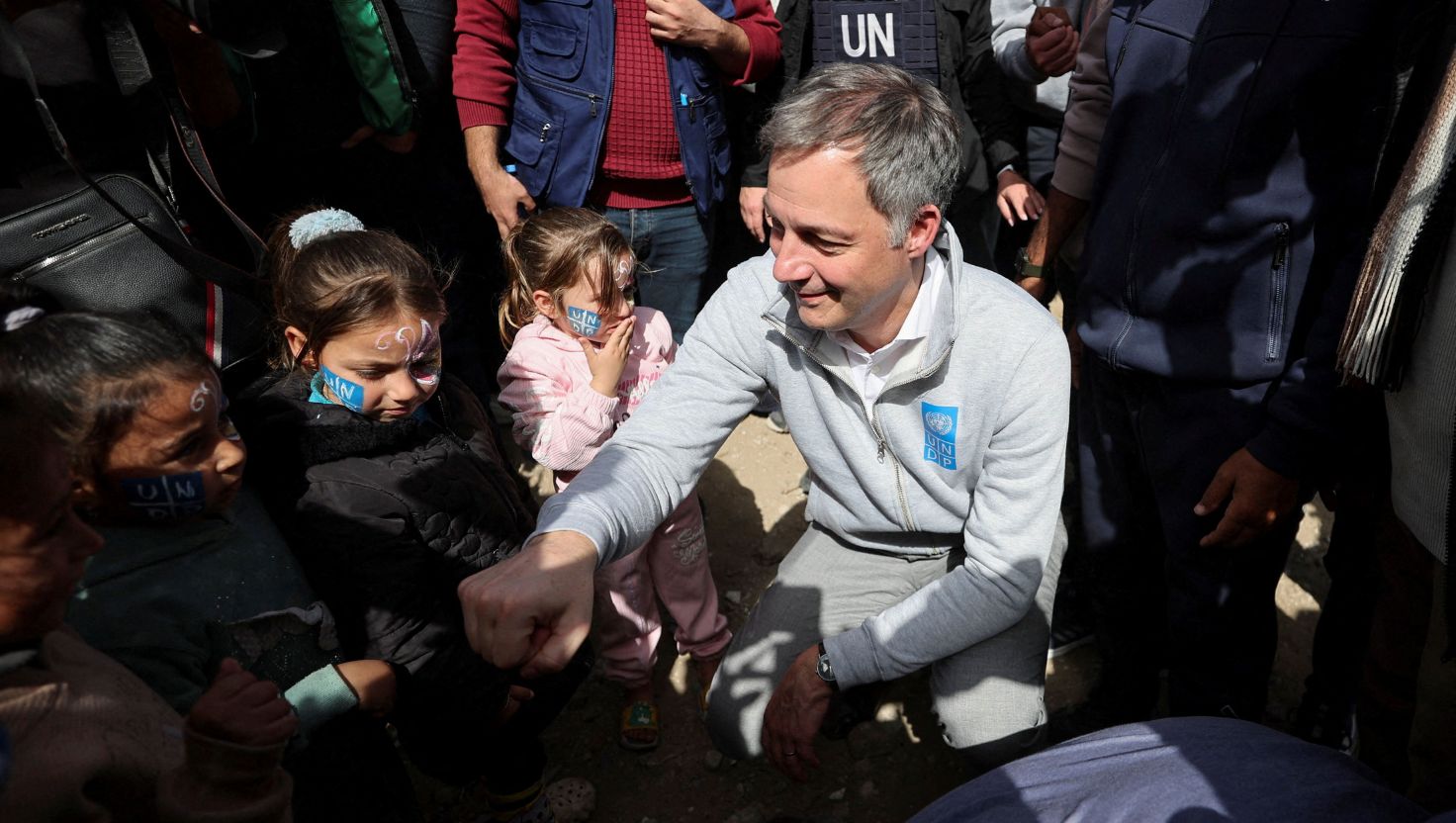
A targeted investment of $6 billion in cash transfers or energy subsidies could prevent up to 32 million people worldwide from slipping into poverty due to soaring energy prices driven by the Middle East war, according to United Nations Development Programme (UNDP) Administrator Alexander De Croo.
Speaking to Reuters, De Croo said the ongoing conflict has already reversed decades of development progress in just six weeks. However, he emphasized that timely and focused financial interventions could shield millions from economic hardship.
“Ending the war is the first step,” he noted, adding that restoring global trade flows would be critical. In the meantime, he urged governments to implement targeted policies such as temporary cash assistance or limited energy subsidies, though he cautioned that subsidies are generally less effective.
His remarks come as global financial leaders gather at meetings of the International Monetary Fund and World Bank in Washington, where concerns have been raised about inflation and limited fiscal capacity in developing economies.
The IMF recently downgraded its global growth outlook, citing war-driven energy price surges and supply chain disruptions. It warned that prolonged conflict and oil prices exceeding $100 per barrel through 2027 could push the global economy toward recession.
De Croo acknowledged that while $6 billion is significant, it should be viewed as an investment. “The economic benefits of acting are tangible, while the cost of inaction is far greater,” he said.
The war’s impact has extended beyond energy markets, affecting fertilizer trade and amplifying challenges in agriculture-dependent regions.
Experts say the expansion of mobile financial systems has made it easier for governments to deliver direct cash assistance. Between 2011 and 2024, global account ownership rose sharply, particularly in low- and middle-income countries, where 75% of people now have access to financial accounts.
According to the GSMA, mobile money transactions reached $2 trillion in 2025—double the figure recorded four years earlier—with Sub-Saharan Africa leading in new account growth despite being among the regions hardest hit by the crisis.
BOB Post