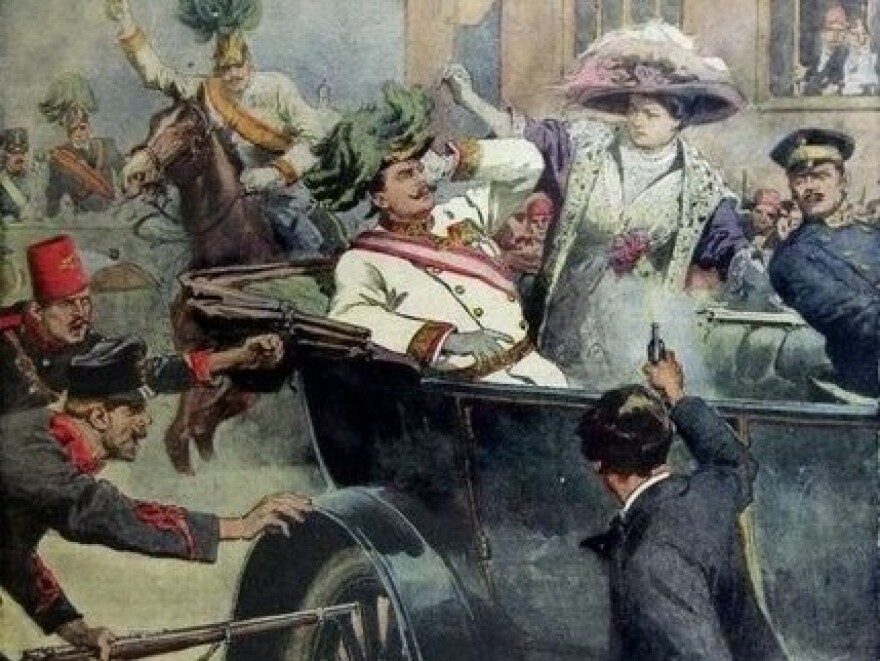
Two gunshots fired in Sarajevo on June 28, 1914, set off a chain of events that plunged much of the world into the First World War. The assassination of Archduke Franz Ferdinand, heir to the Austro-Hungarian throne, escalated within weeks into a global conflict involving more than 40 countries and reshaped the course of the 20th century.
Franz Ferdinand and his wife, Sophie, were visiting Sarajevo when Bosnian Serb nationalist Gavrilo Princip shot them at close range after an earlier assassination attempt had failed. Both died within minutes.
Austria-Hungary blamed neighboring Serbia for the attack and issued a 10-point ultimatum. Although Serbia accepted most of the demands, it rejected some key conditions. On July 28, 1914, Austria-Hungary declared war on Serbia.
The conflict quickly spread because Europe was divided into rival military alliances. Russia backed Serbia, Germany supported Austria-Hungary, while France and Britain entered the war after Germany invaded neutral Belgium. The fighting soon expanded beyond Europe as countries including Japan, the Ottoman Empire and, later, the United States joined the conflict.
The war, which lasted until November 1918, killed an estimated 20 million people and introduced large-scale use of machine guns, tanks, poison gas and aircraft. It also led to the collapse of the German, Austro-Hungarian, Ottoman and Russian empires.
Historians say the Sarajevo assassination was the spark that ignited the war, but not its sole cause. Years of imperial rivalry, military alliances, arms races and rising nationalism had already pushed Europe to the brink, making a wider conflict almost inevitable once the crisis began.
BOB Post