Tensions between the United States and its traditional allies have resurfaced sharply after Donald Trump launched a fresh attack on NATO, accusing the alliance of failing Washington during its recent confrontation with Iran.
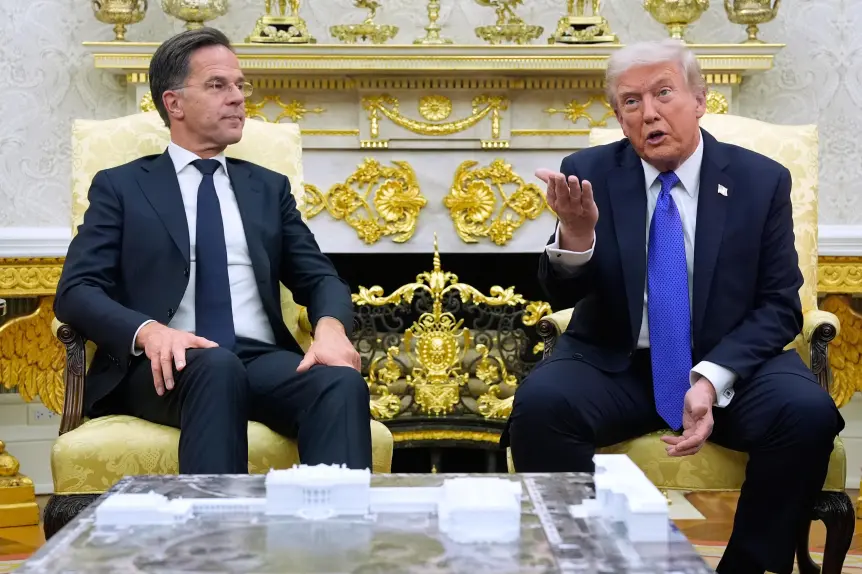
The criticism followed a closed-door meeting at the White House between Trump and NATO Secretary General Mark Rutte, which both sides described as candid but marked by visible disagreements. In a post on Truth Social after the talks, Trump declared that NATO “wasn’t there when we needed them,” signaling deepening frustration with what he perceives as insufficient allied support during “Operation Epic Fury.”
According to the BBC, the meeting lasting more than two hours in total was aimed at persuading Trump to remain committed to the 32-member transatlantic alliance amid growing speculation that he could reconsider US membership. However, the White House did not release any official details of the discussion.
The dispute centers on NATO’s role in the ongoing Iran conflict, particularly its reluctance to directly support US efforts to secure the Strait of Hormuz, a critical global oil route. Trump had previously urged allied nations to assist in reopening the passage to stabilize energy markets, but several members resisted deeper involvement.
White House Press Secretary Karoline Leavitt reinforced the president’s position, stating that NATO had been “tested and failed,” and accusing member states of turning their backs on American taxpayers who fund much of the alliance’s defense infrastructure.
Rutte, however, offered a more measured assessment, emphasizing that many European nations had contributed indirectly through logistical support, military basing, and airspace access. He described the situation as “nuanced,” suggesting that NATO refrained from direct engagement but also allowed US operations.
Despite acknowledging disagreements, Rutte praised Trump’s leadership, asserting that the Iran campaign had made the world “safer” by weakening Tehran’s nuclear capabilities. He also noted that most NATO members do not consider the war illegal, reflecting a degree of strategic alignment beneath the public discord.
Still, Trump’s rhetoric has intensified concerns about the alliance’s future. Recently, he has floated the possibility of withdrawing from NATO, an action that would face legal hurdles after the US Congress moved in 2023 to restrict any unilateral exit without Senate approval.
Complicating matters further are longstanding disputes unrelated to Iran, including Trump’s controversial interest in Greenland, which he again referenced in his post-meeting remarks highlighting the broader strain in US-European relations.
As geopolitical pressures mount, the evolving standoff between Washington and NATO underscores what may be one of the most significant tests in the alliance’s modern history, with implications stretching far beyond the current conflict.
BOB Post