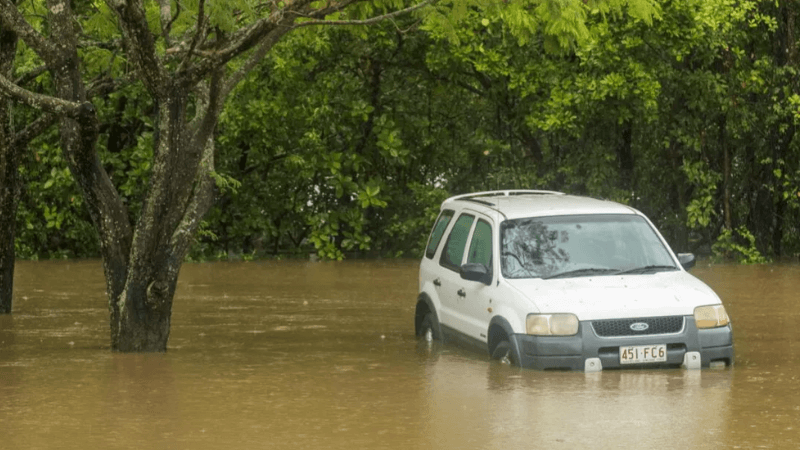
Northeast Australia faces a daunting recovery process as floodwaters recede, leaving behind a trail of destruction and displacing over 300 people in Queensland. The catastrophic flooding, described as "absolutely devastating" by Queensland state Police Commissioner Katarina Carroll, unfolded over the weekend, triggering intense rescue efforts and highlighting the vulnerability of communities in the face of extreme weather events.
The deluge, reminiscent of a monsoon, struck the region with record-breaking rainfall, causing rivers to swell and submerging towns, including the major city of Cairns. Emergency services, strained by an extraordinary number of calls, orchestrated heroic helicopter rescues, plucking over 300 individuals from rooftops and rising floodwaters. Police Commissioner Carroll reported an "extraordinarily challenging evening" as authorities navigated treacherous conditions to save lives. While no deaths or serious injuries were reported, the flooding took a toll on the community, with at least one life lost, and concerns rising for those still unaccounted for.
Preliminary estimates suggest billions of dollars in damage, with homes, businesses, roads, and bridges severely affected. The floodwaters left a path of devastation, transforming familiar landscapes into scenes of destruction. Communities face an uphill battle in rebuilding, uncertain of where to begin and grappling with the economic impact of the disaster.
One of the immediate challenges is the threat to Cairns' water supply. Floodwaters inundated the city's main treatment plant, prompting its closure and raising concerns about water contamination. With the possibility of water restrictions looming, authorities are working urgently to ensure safe drinking water for Cairns' 160,000 residents. Boil notices are in effect, and bottled water distributions are underway to address the immediate needs of the community. The Australian government has pledged emergency relief funds and support for recovery efforts. As communities assess the damage and embark on the rebuilding process, financial assistance and resources are crucial to facilitate a swift recovery. Coordination between federal, state, and local authorities is paramount in providing effective relief to those affected.
While the flood threat is subsiding, the unpredictable weather remains a concern. Flash flooding and landslides remain possible, adding complexity to the recovery process. Climate change experts emphasize the likelihood of more frequent and intense extreme weather events in the region, underscoring the importance of long-term flood mitigation strategies and preparedness. In the aftermath of the Queensland floods, communities are demonstrating resilience and solidarity. Volunteers are coordinating clean-up efforts, providing shelter, and offering support to those impacted. However, the disaster serves as a stark reminder of the urgent need for long-term solutions, including infrastructure improvements and climate-resilient planning, to mitigate the impact of future floods and protect lives and livelihoods.
As Queensland faces the immense task of rebuilding, the days ahead will be marked by both challenges and the strength of community bonds. It is a critical juncture to prioritize not only immediate relief but also sustainable measures that can withstand the increasing threat of extreme weather events in the future.
BOB Post