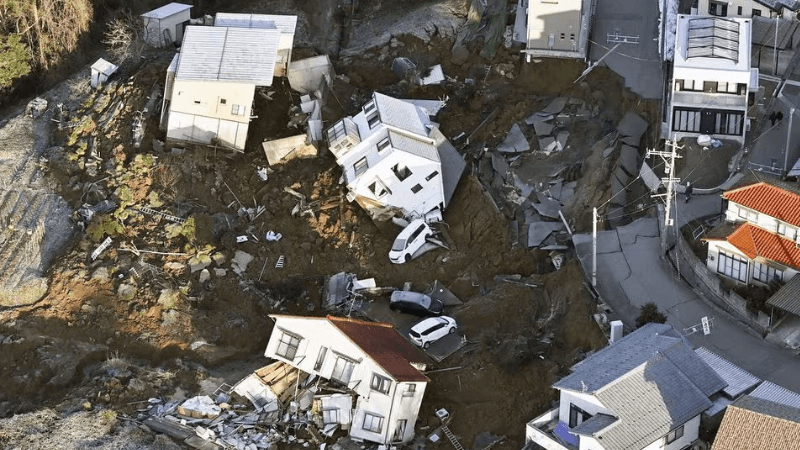
In a prompt response to the aftermath of a powerful earthquake, Japanese authorities are swiftly mobilizing to assess the widespread devastation that unfolded on Monday. The quake, measuring 7.6 in magnitude, struck Ishikawa Prefecture's Noto Peninsula on New Year's Day, resulting in at least 30 confirmed fatalities, building collapses, a raging fire in a prominent tourist area, and the activation of a tsunami warning along the nation's west coast, as reported by The Japan Times.
The seismic event, reaching the highest intensity of 7 on Japan's shindo scale at its epicenter, prompted rare major tsunami warnings predicting waves up to 5 meters high. However, by 10 a.m. Tuesday, all alerts were lifted, with the highest recorded tsunami height at Wajima Port in Ishikawa reported to be over 1.2 meters.
While the fears of a devastating tsunami reminiscent of the 2011 Great East Japan Earthquake did not materialize, the quake itself inflicted widespread damage. The confirmed death toll is expected to rise as rescue efforts continue. Collapsed buildings in Niigata, Toyama, Fukui, and Gifu prefectures have led to multiple injuries, with victims trapped or buried beneath the debris.

Confirmed fatalities include individuals in their 30s to 90s, with reports of casualties in the cities of Nanao, Hakui, and the town of Shika. Wajima, alone, accounts for eight confirmed deaths and numerous injuries, primarily due to people being trapped beneath collapsed structures.
Prime Minister Fumio Kishida announced the establishment of an emergency disaster response headquarters in Ishikawa to coordinate assessments and provide assistance. The government is working against time to save lives and manage the escalating impact of the disaster.
As night fell on Monday, a massive blaze erupted in the Kawaimachi district of Wajima, reportedly consuming over 100 structures, including homes and shops. The popular tourist spot, known for its Asaichi street, remains engulfed in flames, with the extent of injuries or fatalities still unclear.

The earthquake triggered more than 129 aftershocks, and the Meteorological Agency cautioned about the possibility of further quakes, emphasizing vigilance in the coming days. Transportation networks were severely disrupted, leaving passengers stranded as Shinkansen lines and flights in the affected area were canceled. The Hokuriku Shinkansen is set to resume operations around 1 p.m. on Tuesday.
Power outages have affected around 32,700 households in Ishikawa, while several cities are grappling with water supply disruptions. Health facilities are also impacted, with 19 medical facilities in Ishikawa and two in Niigata experiencing power and water shortages as of 11 p.m. on Monday. The situation remains dynamic as rescue and relief efforts intensify in the wake of this significant natural disaster.
BOB Post