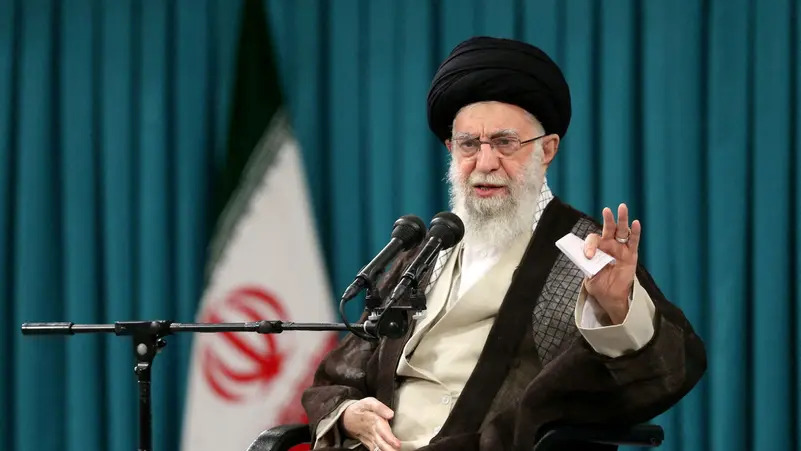
Iran’s long-serving Supreme Leader, Ayatollah Ali Khamenei, has reportedly been killed in coordinated airstrikes carried out by the United States and Israel on Tehran early Saturday, marking a dramatic turning point in the Islamic Republic’s history.
Iranian state-run media confirmed the 86-year-old leader’s death hours after US President Donald Trump announced it publicly, describing Khamenei as “one of the evillest people in history” in a post on Truth Social. The announcement followed multiple reports from Israeli officials claiming that the strikes had directly targeted the Supreme Leader’s residential compound in the heart of Tehran.
According to Euro news, Iranian authorities declared 40 days of public mourning and announced a seven-day nationwide holiday following confirmation of Khamenei’s death. However, earlier in the day, Tehran-based state outlets had denied the reports, citing sources close to his office who insisted he remained “firmly in command.”
Israeli Prime Minister Benjamin Netanyahu said in a televised address that a “powerful surprise strike” had destroyed Khamenei’s compound and that there were “many signs” the Iranian leader was no longer alive. Israeli Channel 12 reported that a photograph of Khamenei’s body was shown to Netanyahu after it was recovered from the rubble.

In a phone interview with NBC and ABC News, Trump said the US believed reports of Khamenei’s death were accurate and suggested that much of Iran’s top leadership had been eliminated in the operation. “The people that make all the decisions, most of them are gone,” he said, adding sarcastically that Iranian officials might soon be “calling me to ask who I’d like” to lead.
The Israeli military also claimed that seven senior Iranian officials were killed in the strikes, including General Mohammad Pakpour, head of the Islamic Revolutionary Guard Corps (IRGC). Among the reported dead were senior adviser Ali Shamkhani and Defence Minister Aziz Nasirzadeh, according to Israeli military spokesperson Brigadier General Effie Defrin.
Witnesses in Tehran described scenes of confusion and mixed reaction. While some residents reportedly cheered and played celebratory music from their windows late Saturday night, others rushed for safety as retaliatory missile fire and drone activity escalated across parts of the Middle East. Tehran responded with a barrage of missiles, while drones reportedly struck civilian areas in Bahrain and the United Arab Emirates.
Khamenei, who assumed the role of Supreme Leader in 1989 after the death of Ruhollah Khomeini, had been the Islamic Republic’s ultimate authority for nearly four decades. He rose to prominence during the 1979 revolution that toppled Mohammad Reza Pahlavi and established the current theocratic system.
As commander-in-chief and final arbiter on state, military and religious matters, Khamenei exercised sweeping control over Iran’s domestic and foreign policy. The IRGC, a powerful military institution under extensive US and EU sanctions, reported directly to him.
The strikes are expected to usher in a period of profound uncertainty in Tehran, with questions mounting over succession and regional stability. Iranian Foreign Minister Abbas Araghchi had earlier said Khamenei was alive “as far as I know,” underscoring the confusion that surrounded the unfolding events.
If confirmed beyond dispute, Khamenei’s death would signal the end of an era that shaped Iran’s political identity for nearly half a century and could redefine power dynamics across the Middle East.
BOB Post