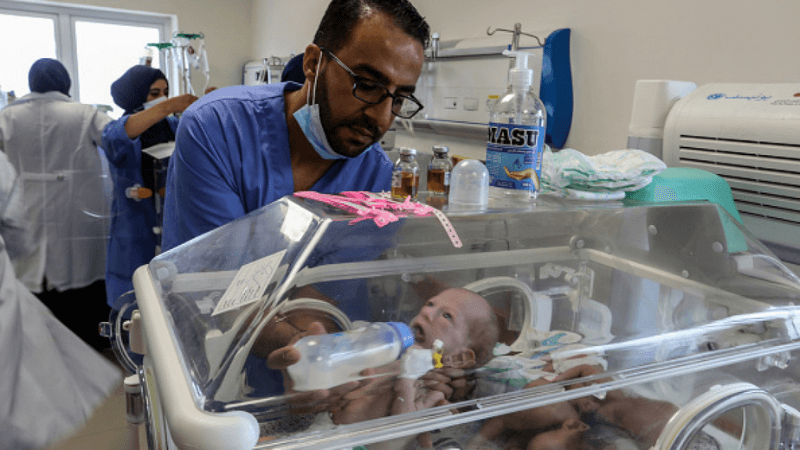
In a startling revelation, UNICEF announced on Friday that over 20,000 children have been born since the commencement of Israel's devastating war on Gaza in October, emphasizing the alarming threats to the health and well-being of both mothers and infants.
The data suggests an alarming rate of approximately one child born every 10 minutes amidst the relentless military actions in the enclave. UNICEF's communications specialist, Tess Ingram, underscored the dire conditions Palestinian women face during childbirth in the war-ravaged territory, citing insufficient medical equipment, restricted aid access, and an unsuitable environment for delivery.
Many women, due to these challenging circumstances, have been compelled to give birth without anesthesia, posing significant health risks to both mother and child. Ingram, speaking at a bi-weekly UN agencies press briefing in Geneva, lamented the unimaginable challenges mothers endure in accessing proper medical care, nutrition, and protection during the entire birthing process.
"Becoming a mother should be a time to celebrate. In Gaza, it is another child born in hell," Ingram remarked, urging intensified and immediate actions for pregnant women and newborns in the war-hit territory.
The toll of the Israeli bombardment has been severe, with close to 25,000 casualties, mostly women and children, in the densely-populated and impoverished territory. The destruction of key infrastructure and the blockade imposed by Israel have exacerbated the crisis, limiting aid entry to Gaza.
Ingram, who recently visited southern Gaza, shared distressing accounts from Emirati Hospital in Rafah, where mothers had to be evacuated within three hours after a caesarean section due to ongoing bombings. The continual violence and displacement directly contribute to high rates of malnutrition, growth problems, and various health complications among newborns.
UNICEF estimates that approximately 135,000 children under the age of two are at risk of acute malnutrition, enduring inhumane conditions in temporary shelters with malnutrition and unsafe water. With over half of Gaza's population displaced, mainly concentrated in the southern city of Rafah, the prevalence of diseases such as Hepatitis C is on the rise among the displaced population. The situation demands urgent attention and concerted efforts to address the escalating humanitarian crisis in Gaza.