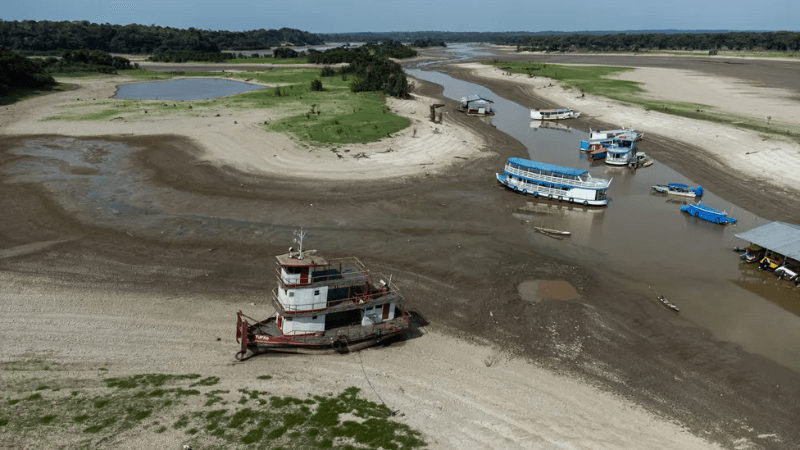
The Brazilian island of Marajó is grappling with an unprecedented drought, transforming the lifeblood Canaticu River into a mere trickle. Historically low water levels have left hundreds of thousands of residents in crisis, challenging their reliance on the Amazon's rivers for sustenance and livelihoods. For Marajó's riverside communities, the Canaticu River is a vital resource during the rainy season, providing water for drinking, cooking, and washing. However, the severe drought, exacerbated by climate change and this year's intense El Niño, has diminished the river to alarming levels, impacting the daily lives of residents.
Fish, a primary food source for these communities, face a threat due to receding waters. Some fish are stranded, while others decompose in the shallows, possibly contaminating the water. Abnormal warmth is suspected in the mass die-off, with fears of waterborne diseases affecting residents.
Scientists attribute the escalating temperatures and extreme weather conditions to climate change, exacerbated by deforestation. The weakened Amazon, struggling to release moisture without dense tree cover, experiences prolonged dry spells. A record-breaking nine heatwaves in Brazil this year underscore the severity of the situation, further stressing the rainforest. Marajó residents, deeply dependent on nature, are facing a crisis that extends beyond food security. The historically low water levels disrupt transportation, isolating communities and raising concerns about access to essential supplies and medical assistance. Small-scale farmers in nearby towns are grappling with devastating wildfires, worsened by the tinder-dry conditions.
In response to the drought, some residents have resorted to digging wells for subterranean water. However, the reliability of these wells is questioned, leading to calls for major infrastructure projects like drinking water distribution systems. The lack of adequate water sources has resulted in health risks, with instances of vomiting and diarrhea reported due to consuming river water.
The Amazon's plight extends far beyond Marajó, impacting global climate patterns. The rainforest, often referred to as the lungs of the planet, plays a crucial role in regulating carbon dioxide levels. However, a stressed Amazon becomes a net emitter of carbon, contributing to climate change. The interconnectedness of environmental issues highlights the need for a global approach to address deforestation, unsustainable practices, and rising temperatures. Conservation efforts and initiatives led by indigenous communities offer glimpses of hope amidst the challenges. Curbing deforestation, transitioning to renewable energy, and embracing sustainable practices are essential steps. Listening to the wisdom of indigenous communities, who possess vital knowledge about rainforest ecosystems, is crucial for restoration efforts.
The fate of the Amazon hangs in the balance, presenting a critical juncture for global action. While the challenges are immense, collaborative efforts can ensure the preservation of this vital ecosystem. The urgency of the situation calls for a commitment to sustainable practices, reforestation, and the protection of indigenous rights, ensuring that the Amazon continues to thrive for the well-being of the planet and future generations.
BOB Post