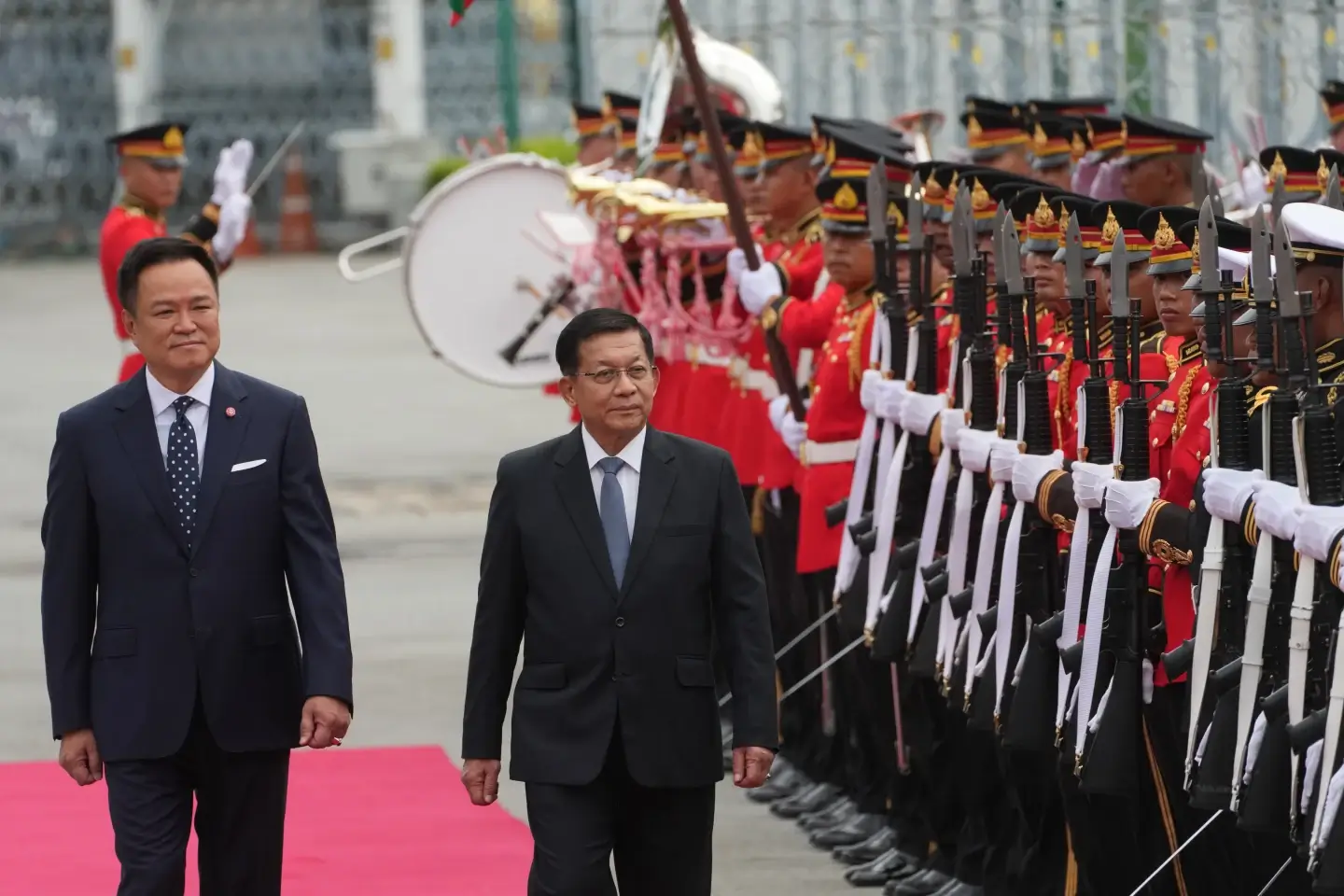
Myanmar President Min Aung Hlaing arrived in Thailand on Wednesday for his first official visit since leading the 2021 military coup, marking a significant diplomatic step as Bangkok deepens engagement with its conflict-hit neighbor despite criticism from rights groups and some ASEAN members.
The two-day visit comes more than five years after the military overthrew the elected government of Aung San Suu Kyi, triggering a nationwide civil war that has claimed thousands of lives and severely damaged Myanmar's economy.
According to the BBC, Thailand is giving Min Aung Hlaing a full state-level welcome, including official talks with Prime Minister Anutin Charnvirakul, a state dinner, meetings with the leaders of both houses of parliament and participation in a Thailand-Myanmar business forum aimed at strengthening economic cooperation.
Min Aung Hlaing, who became Myanmar's president in April after stepping down as military chief following widely criticized elections, has remained largely isolated internationally. Western countries continue to impose sanctions on him over alleged human rights abuses, including the 2017 military crackdown against the Rohingya, while international bodies have accused Myanmar's military leadership of crimes against humanity.
The election that brought the new government to office was widely rejected by critics as neither free nor fair. Major opposition parties were barred from participating, while voting did not take place in large parts of the country under the control of anti-junta resistance groups, leaving the military-backed party with overwhelming control of parliament.
The visit also reflects Thailand's evolving policy toward Myanmar. While several ASEAN members including Indonesia, Malaysia, Singapore and the Philippines have maintained pressure on Myanmar's military leadership to implement the bloc's Five-Point Consensus before restoring full diplomatic engagement, Thailand has pursued what it describes as a policy of "calibrated re-engagement."
Bangkok argues that close coordination with Myanmar is necessary because the two countries share a 2,400-kilometre border and face common challenges, including cross-border crime, migration and security concerns.
Thailand's outreach follows similar diplomatic moves by China and India, both of which recognized Myanmar's new government and invited Min Aung Hlaing for official visits after he assumed the presidency. Beijing, in particular, has remained one of the junta's closest partners, providing diplomatic and political backing as the military seeks to regain territory lost to armed resistance groups, according to the BBC.
The visit has nevertheless drawn sharp criticism from pro-democracy activists. Campaign group Justice for Myanmar said Thailand's continued diplomatic engagement lends "false legitimacy" to the military-led government and warned that the policy risks prolonging Myanmar's political crisis and humanitarian suffering.
BOB Post