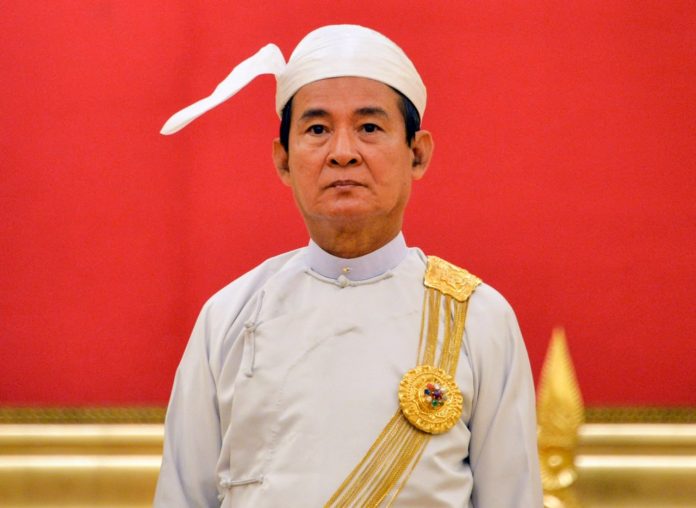
Myanmar’s military authorities have released former president Win Myint as part of a sweeping prisoner amnesty marking the country’s traditional New Year, state media reported on Friday. The move, ordered by junta chief turned president Min Aung Hlaing, covered more than 4,500 inmates, though uncertainty remains over how many political detainees were included.
Win Myint, a close ally of detained civilian leader Aung San Suu Kyi, had been held since the military coup of February 1, 2021. He was serving a reduced eight-year sentence after initially receiving a combined 12-year term on multiple charges widely seen as politically motivated. His release was confirmed by state broadcaster MRTV, which said he had been held in Taungoo in Bago region.
The amnesty did not appear to extend to Suu Kyi, 80, who remains imprisoned despite growing international calls for her release. The Nobel laureate had led Myanmar’s civilian government until the military takeover, which nullified election results and triggered nationwide unrest.
According to AFP, the mass pardon coincides with the junta’s efforts to project a semblance of political normalcy following a widely criticized election that brought Min Aung Hlaing formally into the presidency. Observers and rights groups say the vote lacked credibility and was designed to entrench military control.
UN Secretary-General António Guterres acknowledged the amnesty but stressed the need for broader action. His spokesperson, Stéphane Dujarric, said the UN chief urged the “swift release of all those arbitrarily detained,” including Suu Kyi, and called for an immediate end to violence and the start of inclusive political dialogue.
Scenes outside Yangon’s Insein Prison reflected both relief and uncertainty, as families gathered to receive freed detainees. Among those released was filmmaker and journalist Shin Daewe, who had been serving a life sentence under counterterrorism laws.
The prisoner release comes amid continued conflict and repression across Myanmar, where the military has faced sustained resistance since seizing power, raising questions about whether the amnesty signals any meaningful shift or remains a symbolic gesture.
BOB Post