Myanmar’s military-backed government has signalled a willingness to compromise with armed groups that are prepared to engage in talks, as fighting continues across several parts of the country.
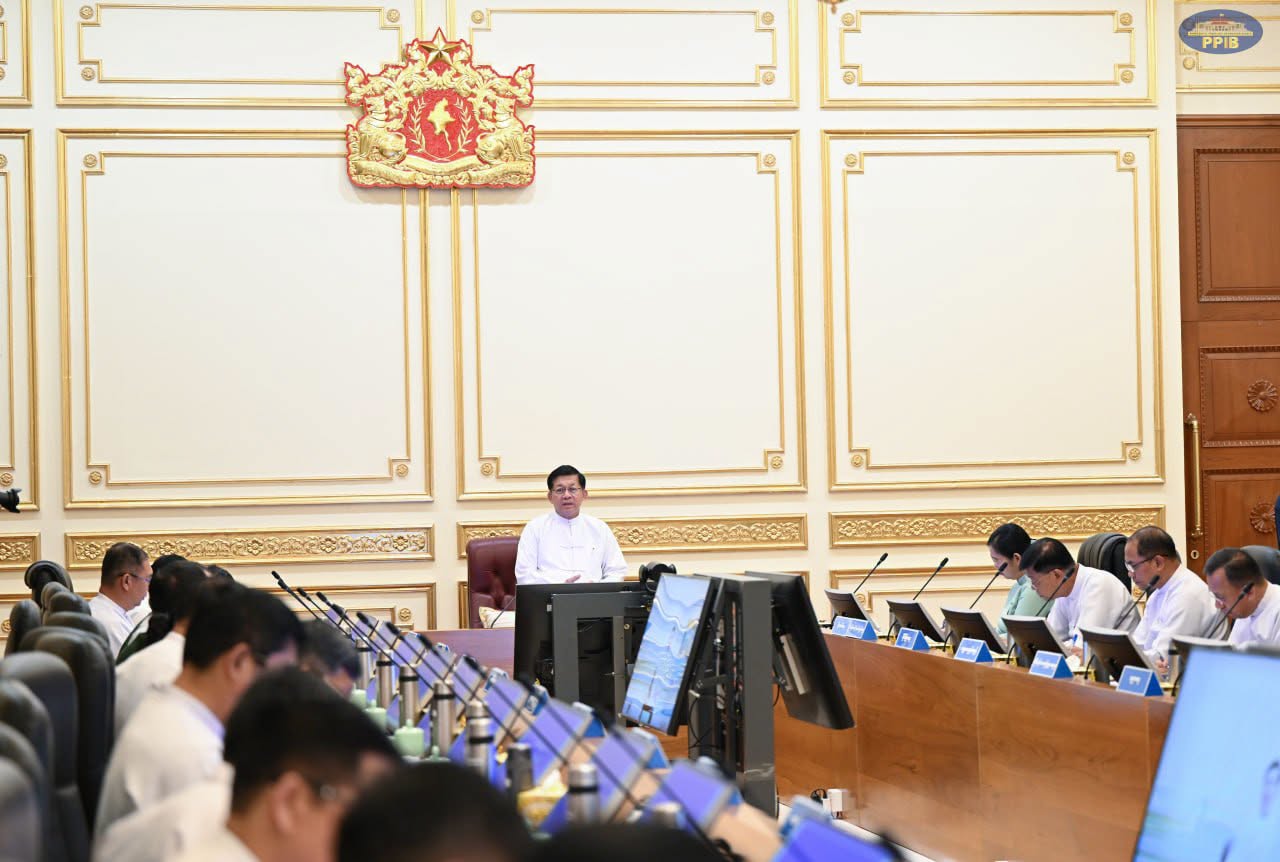
President Min Aung Hlaing said peace negotiations should be based on realistic demands, stressing that parties should seek only what is possible and be prepared to compromise on issues that cannot be achieved.
He made the remarks during a cabinet meeting on Tuesday, September 15, according to The Irrawaddy.
“Only what is possible should be demanded, and what is not possible should be negotiated,” Min Aung Hlaing said, calling for greater flexibility in efforts to restore peace and stability.
His comments come as Myanmar’s military continues operations in Rakhine, Kachin and Karen states, where it is attempting to regain territory controlled by ethnic armed organizations and other resistance forces. The fighting has resulted in casualties and continued displacement in several areas.
Min Aung Hlaing has previously called on ethnic armed organizations to put forward realistic demands. His latest remarks, however, put greater emphasis on reaching compromises with groups willing to participate in negotiations.
During the cabinet meeting, he pointed to the development of Vietnam and Cambodia as examples of countries that achieved economic progress after establishing greater peace and stability. Myanmar, he said, also needs peace and stability to pursue development.
The junta had earlier launched what it described as a peace dialogue initiative and set a 100-day period for holding talks. That deadline has since expired, while several major armed groups actively fighting the military rejected the initiative.
According to The Irrawaddy, participation in the talks was largely limited to organizations that had either stopped fighting or were cooperating with the military.
Myanmar has remained locked in armed conflict since the military seized power in February 2021. The coup triggered nationwide resistance, while long-running ethnic conflicts intensified as the military faced coordinated offensives from ethnic armed organizations and newer resistance forces.
Despite repeated military operations aimed at restoring territorial control, armed groups continue to hold or contest territory across several states and regions, leaving prospects for a broader political settlement uncertain.
BOB Post