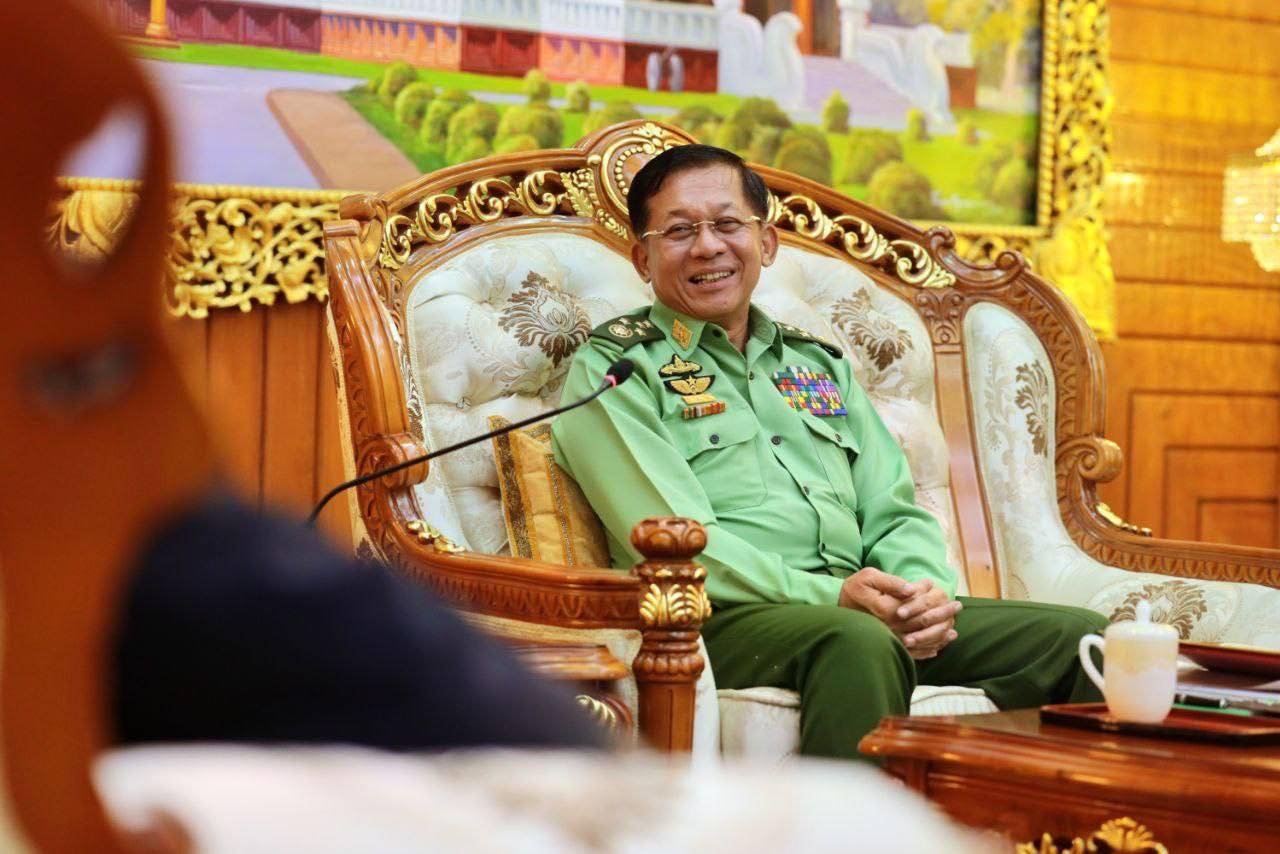
Myanmar’s junta chief Min Aung Hlaing has been nominated for a vice-presidential post, setting the stage for a potential transition from military rule to a formal political role in the conflict-hit country.
The nomination was put forward on March 30 in Myanmar’s newly convened Lower House of Parliament, where lawmakers named Min Aung Hlaing as one of two vice-presidential candidates. A third nominee is expected from the Upper House, with the presidency to be decided from among the three in a subsequent parliamentary vote, the date of which has yet to be announced.
The move comes after a controversial election held in December and January, which was won by the military-backed Union Solidarity and Development Party. The poll was widely dismissed as lacking credibility by the United Nations and Western governments, who criticized it as neither free nor fair.
According to The Straits Times, the nomination signals a rare public indication of a possible leadership transition within Myanmar’s powerful military establishment, with observers suggesting the general has long sought to formalize his authority through constitutional means rather than direct military rule.
Myanmar has remained mired in violence since the 2021 Myanmar coup d'état, when the military, known as the Tatmadaw, ousted the elected government led by Aung San Suu Kyi. The coup triggered nationwide protests and an armed resistance movement, plunging the country into prolonged instability.
Under the military-drafted 2008 Constitution, presidential candidates are barred from being active-duty military personnel at the time of nomination. Analysts say this requirement could pave the way for Min Aung Hlaing to formally step back from his military role while maintaining power through civilian office.
An independent political analyst noted that the development reflects a long-standing ambition of the general, describing it as “a shift from ruling as a military leader to ruling as president.”
Min Aung Hlaing, who has led Myanmar’s military since 2011, studied law before joining the armed forces and steadily rose through the ranks, consolidating control over the country’s political landscape in the years leading up to and following the coup.
BOB Post