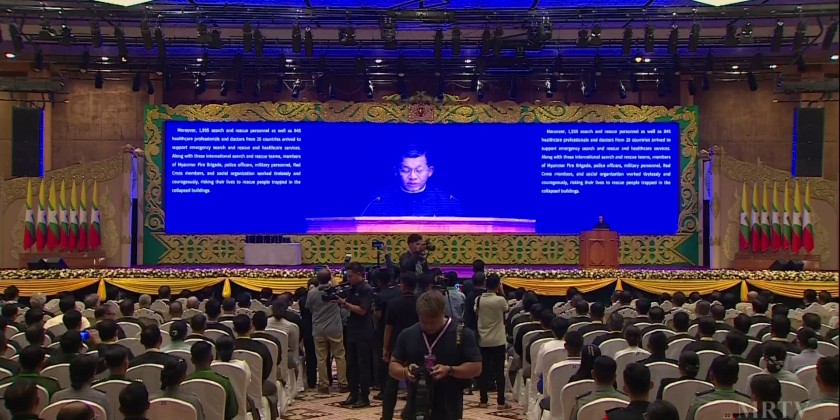
Myanmar on Saturday commemorated the first anniversary of the devastating Mandalay earthquake with a solemn ceremony in the capital, reflecting on the scale of destruction and ongoing recovery efforts.
Speaking at the event, acting president Min Aung Hlaing expressed deep sorrow over the lives lost and the widespread damage caused by the March 28, 2025 disaster. He noted that the earthquake impacted 10 regions and states, including the capital, leaving 3,818 people dead and injuring more than 5,100 others.
According to Xinhua News Agency, the disaster affected over 160,000 households and more than 420,000 people, with total damages estimated at nearly 7,979 billion kyats (approximately $3.79 billion). Authorities said the scale of destruction posed a major challenge to national recovery efforts.

The Myanmar leader highlighted the international response, saying more than 2,600 tonnes of humanitarian aid were delivered by countries including China, India, Bangladesh, Thailand, and Russia. These supplies were distributed across affected areas as part of coordinated relief operations.
China’s contribution included prefabricated housing units, fuel for rescue missions, emergency medical equipment and essential medicines, which were deployed in critical zones. Meanwhile, over 1,900 search and rescue personnel and 845 healthcare workers from 25 countries joined forces with domestic agencies such as the Myanmar Fire Services Department, police, the Tatmadaw, and the Red Cross to support emergency operations.
Officials said the joint efforts led to the successful rescue of 653 people trapped in the aftermath of the quake. Min Aung Hlaing described the collective response as a testament to “unity, courage and compassion,” calling it one of the country’s proudest moments amid tragedy.
He added that around 80 percent of rehabilitation work has been completed, with the remaining efforts expected to be continued under the next administration. Looking ahead, he stressed the need for stronger disaster preparedness and sustainable development planning to better withstand future crises.
BOB Post