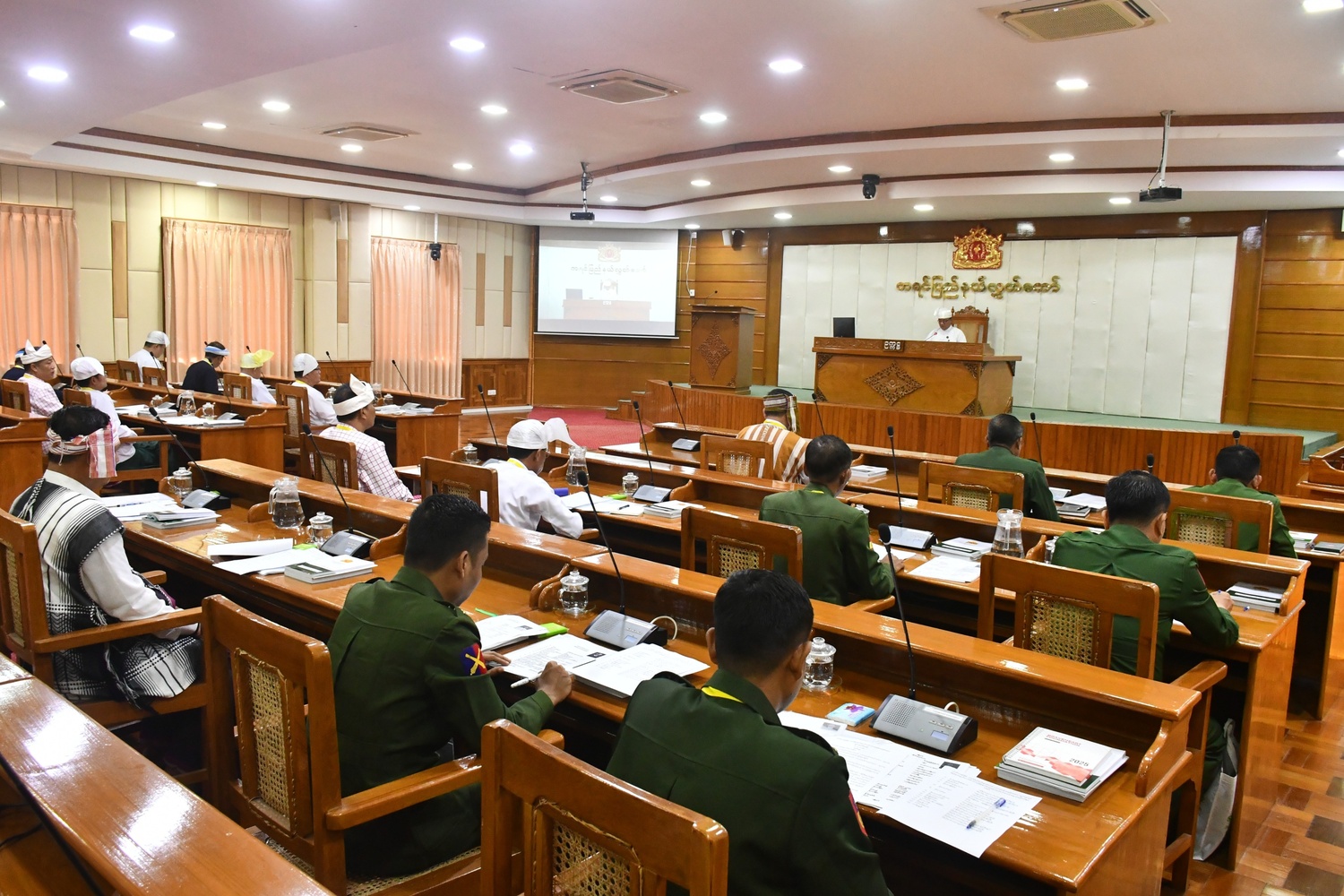
Myanmar’s junta leader Min Aung Hlaing has moved to consolidate power by forming a heavily military-backed cabinet, just days after being declared president by a regime-controlled parliament. The move has raised fresh concerns over the country’s political trajectory and human rights situation.
The newly appointed president, elected on April 3 by the junta-installed Union Parliament, has established 31 ministries and nominated 30 ministers, around two-thirds of whom are serving or former military officers. Among them, at least 16 are current members of the regime, reinforcing the dominance of the armed forces in what the junta portrays as a “civilian” administration.
According to The Irrawaddy, the appointments underline a deliberate strategy to maintain tight military control under the guise of a transition to civilian rule. The report highlights that key security ministries remain firmly in the hands of top military officials, many of whom have been sanctioned internationally for their roles in violent crackdowns and operations against civilians.
Senior military figures have been assigned to the most powerful ministries. General Htun Aung, the current air force chief, has been nominated as defense minister, while Lieutenant General Nyunt Win Swe is set to oversee home affairs. Lieutenant General Hpone Myat, already serving in the interior portfolio, has been shifted to border affairs three positions traditionally controlled by the military under Myanmar’s political framework.

Several other prominent figures linked to the junta have also been reshuffled. Former General Mya Tun Oo has been nominated to lead the Digital Development and Communications Ministry, while Khin Maung Yi and Tin Aung San both previously sanctioned by Western governments have been reassigned to key economic and infrastructure roles. Finance Minister Dr. Kan Zaw, also under sanctions, is expected to retain his influential position overseeing the regime’s economic affairs.
The cabinet also includes political allies from the military-backed Union Solidarity and Development Party (USDP), further blurring the line between military rule and partisan governance. Some of these figures have previously been accused of organizing pro-military rallies and supporting militia groups linked to violence against civilians following the 2021 coup.
The nominations are expected to be approved during a Union Parliament session on April 9, where military representatives and USDP lawmakers dominate proceedings, making opposition unlikely.
International criticism has intensified in response to these developments. The Association of Southeast Asian Nations Parliamentarians for Human Rights (APHR) has urged the global community not to recognize the new presidency, warning that doing so would legitimize military rule responsible for widespread suffering and democratic backsliding.
Human rights organizations have echoed these concerns. Amnesty International stated that assuming a civilian title would not shield Min Aung Hlaing from accountability for alleged international crimes, including attacks on civilians. The group stressed that ongoing airstrikes, raids, and arson attacks continue to displace thousands across resistance-held areas.
Despite the regime’s claims of a political transition, analysts say the formation of this cabinet signals continuity rather than change entrenching military authority at the heart of Myanmar’s governance while the conflict and humanitarian crisis deepen.
BOB Post