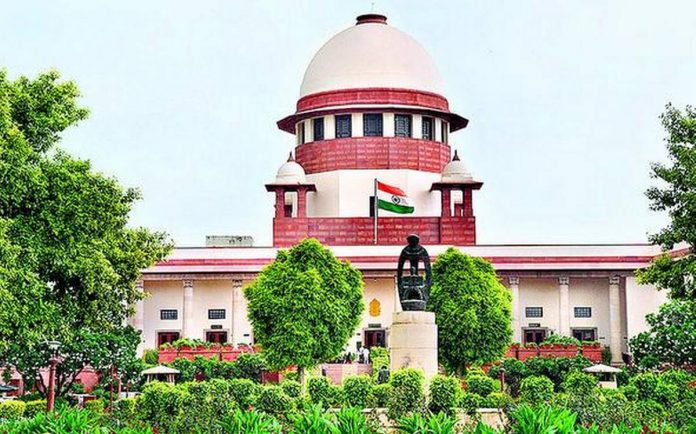
India's Supreme Court's decision to decline an urgent hearing on a petition challenging police action against students during the Cockroach Janta Party (CJP)-led protest has added a new dimension to the country's growing political crisis, with observers warning that the absence of swift judicial intervention could further intensify public anger and prolong the demonstrations.
The petition, mentioned before a bench headed by Chief Justice of India Surya Kant, sought an expedited hearing over allegations of excessive police force against students who participated in Monday's march to Parliament. However, the court refused to grant urgent listing, stating that it was not interested in reviewing video evidence at the mentioning stage.
The refusal comes at a sensitive moment, as thousands of students and young demonstrators continue to express outrage over alleged examination irregularities and the government's handling of the protests. The demonstrations, which began as a demand for accountability in the education sector, have increasingly evolved into a broader movement centered on civil liberties, democratic rights and the state's response to dissent.
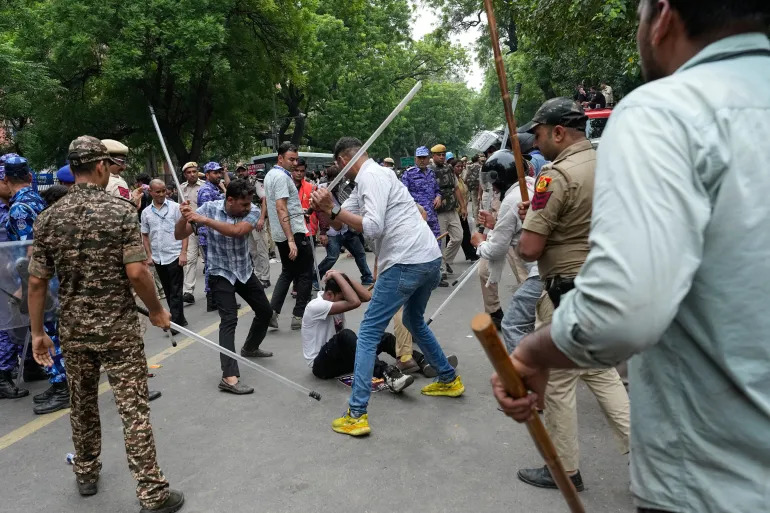
Political analysts say the judiciary's response could have a significant impact on the trajectory of the movement. In highly polarized situations, courts are often viewed as institutions capable of restoring public confidence by ensuring that allegations of excessive use of force receive an impartial hearing. When that expectation remains unmet, protesters may feel they have fewer institutional avenues through which their grievances can be addressed.
"The longer people perceive that there is no effective forum willing to examine allegations of police excesses, the greater the possibility that demonstrations will continue and attract wider public sympathy," said a Delhi-based political observer.
Public sentiment is also emerging as a critical factor. Images and testimonies circulating on social media have generated widespread debate over the police response, with many citizens expressing solidarity with the protesting students. While others have defended the authorities' responsibility to maintain public order, the growing public discussion suggests that the issue has moved beyond campus politics and entered the national political discourse.
The level of public acceptance or rejection of the government's handling of the protests is likely to determine the movement's future. If broader sections of society increasingly identify with the students' demands and perceive the response as disproportionate, analysts believe the protests could expand both geographically and politically.
Monday's march witnessed clashes between protesters and security personnel after demonstrators attempted to advance towards Parliament during the opening day of the Monsoon Session. Police used batons and tear gas to disperse the crowds, while several students alleged they were subjected to excessive force.
With the Supreme Court declining to intervene immediately, attention is now shifting to whether the judiciary will take up the matter in due course and whether the government will seek political dialogue to ease tensions.
For many protesters, the dispute is no longer confined to examination reforms. It has become a broader test of institutional accountability, public trust and the space available for democratic dissent in India. Whether those concerns are addressed through judicial scrutiny or political engagement may determine whether the current wave of protests gradually subsides or evolves into a longer and more intense nationwide movement.
BOB Post