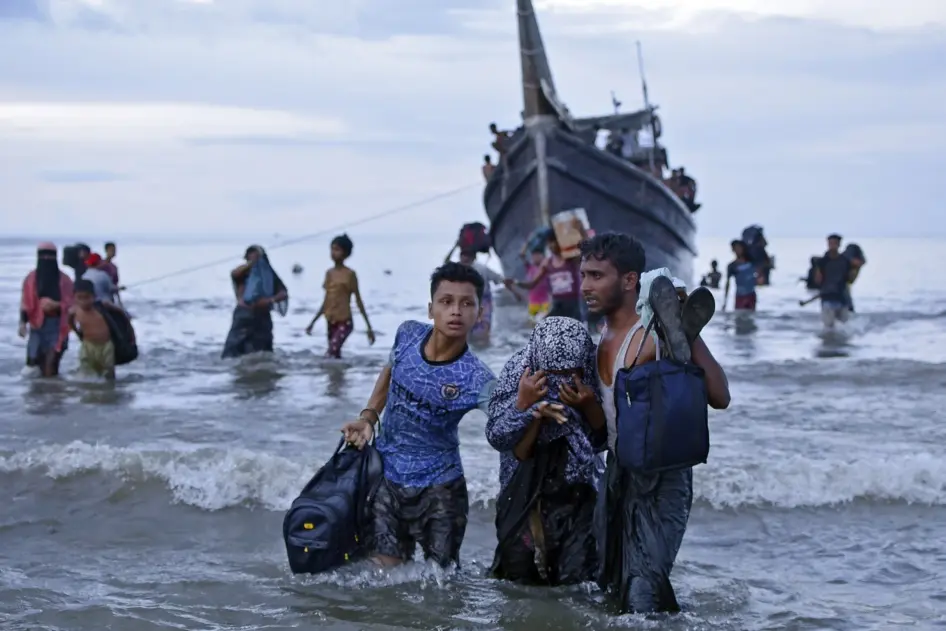
Human rights group Fortify Rights has called on Thailand to grant legal status and facilitate third-country resettlement for 36 Rohingya refugees who arrived in the country in February, following what it describes as a forced and abusive return from India to Myanmar months earlier.
In a statement issued on April 8, Fortify Rights warned that the refugees now in an undisclosed location in Thailand remain at risk without formal protection. “Rohingya refugees are being pushed from one danger to another,” said Puttanee Kangkun, the group’s director, urging regional governments to ensure lawful and coordinated protection pathways.
According to interviews conducted by Fortify Rights with 14 survivors, the group was among 40 Rohingya refugees both Muslim and Christian, who were detained in New Delhi in May 2025 under the pretext of biometric verification. They were later flown to India’s Andaman and Nicobar Islands and allegedly subjected to abuse by security personnel before being forced into boats and abandoned at sea near Myanmar.
Survivors reported beatings, degrading treatment, and sexual violence during their detention. Some said Indian naval personnel blindfolded and assaulted detainees, while women described incidents of sexual abuse. Their phones and documents, including refugee cards issued by UNHCR, were confiscated before they were pushed into the water near Myanmar’s coast.

The group eventually reached Dawei in Myanmar’s Tanintharyi Region an active conflict zone where they spent months moving between locations to avoid fighting between the military junta and resistance forces. Fearing for their lives amid ongoing violence, they fled to Thailand in early 2026.
The UN Special Rapporteur on human rights in Myanmar, Tom Andrews, previously condemned India’s actions as “unconscionable,” citing evidence presented to Indian authorities.
Fortify Rights said Thailand’s current legal framework leaves the refugees vulnerable. The country does not formally recognize refugees and continues to treat undocumented arrivals as illegal under its 1979 Immigration Act. Although Thailand introduced a National Screening Mechanism in 2019, Rohingya are largely excluded on national security grounds.
The group also warned that any forced return of Rohingya to Myanmar would violate the principle of non-refoulement, a cornerstone of international law prohibiting the return of individuals to places where they face serious harm.
More than one million Rohingya refugees currently live in camps in Bangladesh, while hundreds of thousands remain scattered across Southeast Asia. Around 500,000 are still in Myanmar’s Rakhine State, where they continue to face systemic persecution and violence.
Fortify Rights called on India to investigate alleged abuses and hold those responsible accountable, while urging Thailand to provide immediate protection and support for durable solutions for the refugees.
BOB Post