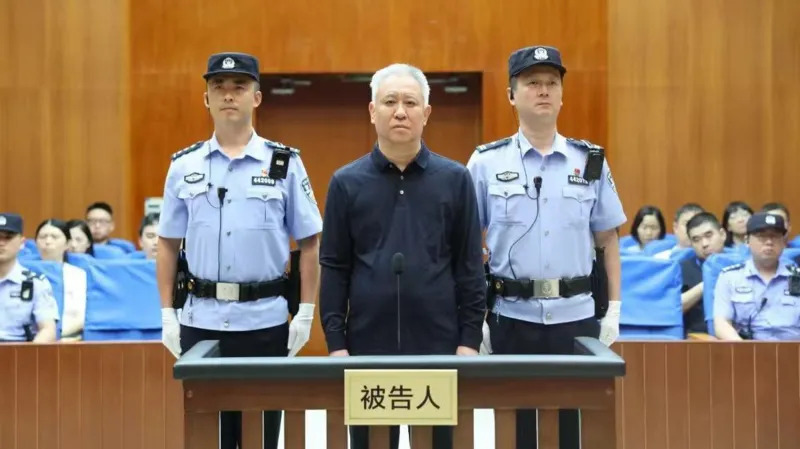
Hui Ka Yan, the founder of debt-laden Chinese property giant Evergrande, has been sentenced to life in prison, bringing a dramatic fall from grace for one of China’s once most powerful businessmen.
A court in Shenzhen handed down the sentence after Hui pleaded guilty to embezzlement and corporate bribery. His personal assets were also ordered to be confiscated, while companies linked to Evergrande were fined a combined 15.82 billion yuan ($2.35 billion) for a series of offences, including falsifying records and concealing debt.
The verdict follows the spectacular collapse of Evergrande, whose financial troubles became a defining symbol of China’s property downturn. According to BBC, the court said Hui and his businesses had seriously disrupted the property market and caused significant economic losses.
Several former Evergrande executives were also convicted. Hui’s two sons, Xu Zhijian and Xu Tenghe, received prison sentences ranging from 22 months to 18 years, state-run Xinhua News Agency reported.
Hui, also known as Xu Jiayin, built Evergrande from a property company founded in 1996 into China’s largest real estate developer. At the height of his career, he was ranked among Asia’s wealthiest individuals as the company expanded rapidly through massive borrowing.
That growth began to unravel after Beijing moved in 2020 to curb excessive debt in the property sector. Evergrande subsequently struggled to service its liabilities, eventually defaulting in 2021 and leaving a trail of unfinished housing projects and unpaid debts.
The court heard that the developer had collected millions of dollars in advance payments from homebuyers but diverted some of the funds to other property projects instead of using them for construction.
The company’s collapse sent shockwaves through China’s property industry, affecting homeowners, investors, banks and local governments. Evergrande’s shares eventually lost about 99% of their value before being delisted from the Hong Kong Stock Exchange in August 2025.
Hui had already been barred for life from China’s capital markets and fined $6.5 million in 2024 after regulators found that Evergrande had overstated its revenue by about $78 billion.
The latest ruling underlines the scale of the consequences facing the former property tycoon as China continues to grapple with a real estate downturn that has weighed heavily on its broader economy.
Once a major pillar of Chinese growth and a crucial source of revenue for local governments, the property sector remains under pressure, with several major developers struggling with debt and weak demand.
BOB Post