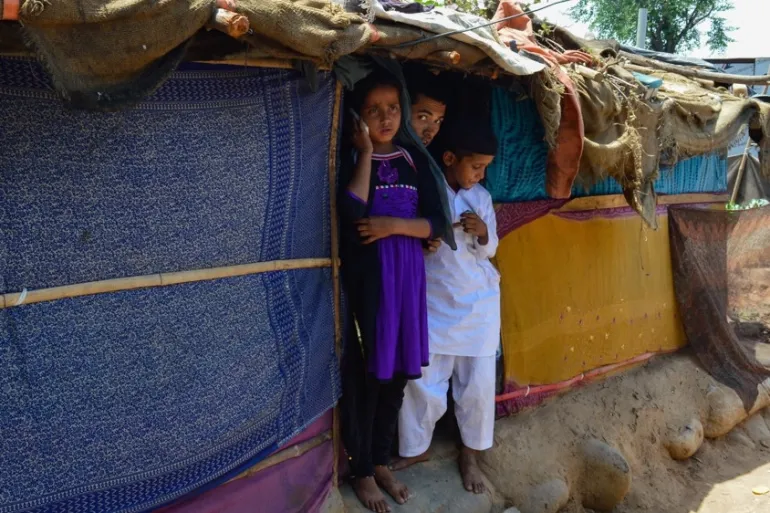
For stateless communities, displacement rarely ends with escape from violence; it often transforms into a prolonged condition of legal and economic exclusion. Rohingya refugees in India exemplify this reality. More than a decade after fleeing genocidal persecution in Myanmar, thousands remain trapped in a legal limbo that denies them recognition, stable employment, and long-term security.
Sohail Khan, a 33-year-old Rohingya refugee with a college degree in psychology, now runs a small handicraft stall in Delhi’s Shaheen Bagh. Twelve years after escaping Myanmar, his hopes of building a professional career have largely faded amid the constant threat of detention and systemic barriers to employment.
“It is a dog’s life,” Khan says, reflecting the despair shared by many Rohingya families living in informal settlements across Delhi, including Kanchan Kunj, Shram Vihar and Khajuri Khas.
The Rohingya crisis stems from decades of discrimination in Myanmar, particularly after the 1982 Citizenship Law stripped the Muslim minority of legal citizenship. Waves of violence most notably in 2016 and 2017 forced hundreds of thousands to flee. Today, the United Nations recognizes the Rohingya as the world’s largest stateless population.

In India, however, the absence of legal recognition has produced a severe livelihood crisis. The Ministry of Home Affairs estimates that more than 40,000 Rohingya refugees live across the country. Yet most are excluded from the formal economy because they lack government-issued identification documents.
India is not a signatory to the 1951 UN Refugee Convention and does not formally recognize refugee cards issued by the UN refugee agency. Without identification such as Aadhaar or PAN cards, refugees struggle to secure jobs, open bank accounts or access basic financial services.
“Wherever I go, I don’t get a job because I don’t have Aadhaar,” says Amina Khatoon, 32, who has lived in India for fifteen years with her three daughters.
Most Rohingya therefore survive through irregular daily-wage labour, rag-picking or small roadside businesses. Abdullah, a 35-year-old refugee educated up to class ten, says work is scarce.
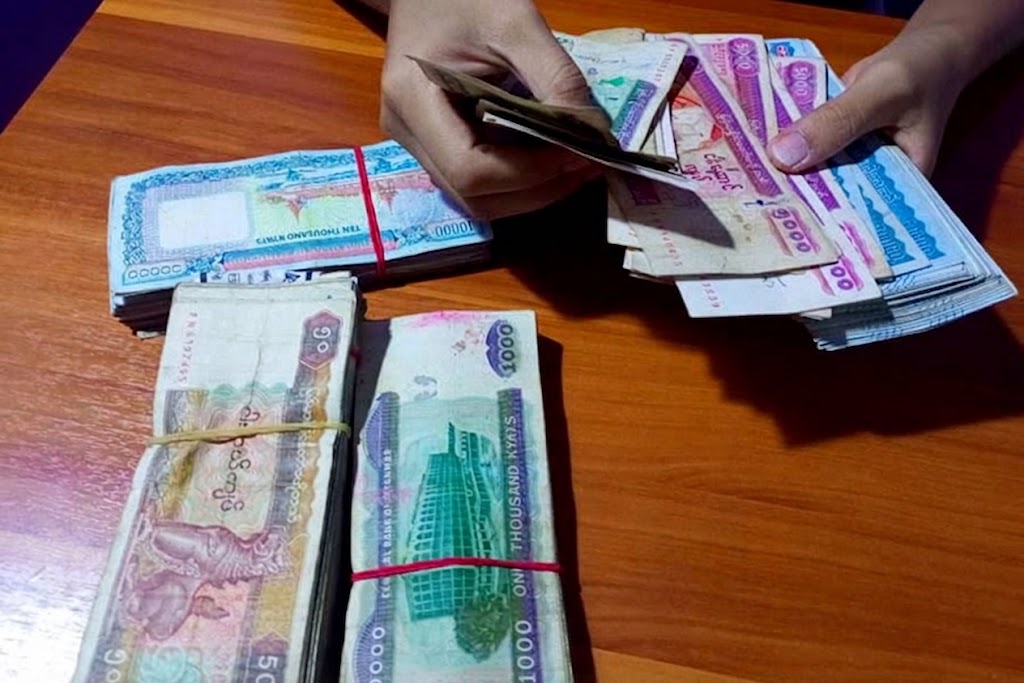
“I get called only a few days a month for small jobs like sorting scrap,” he explains. “Even with a shop and labour work, it hardly reaches 10 or 15 thousand rupees.”
According to Maktoob Media, Rohingya workers in Delhi frequently face exploitation in the informal labour market, including wage theft and discrimination because of their undocumented status.
Mohd Zubair, 28, recalls how an employer refused to pay him ₹1,600 for completed work.
“They told me, ‘You’re from Burma. Do what you want we won’t give you the money,’” he says.
The lack of legal documents also excludes refugees from India’s increasingly digital economy. Without recognized identification, they cannot open bank accounts or accept payments through platforms such as UPI or Paytm.
Ajida Begum, 36, says this affects even small businesses. Her 19-year-old son sells vegetables in Shaheen Bagh but struggles because he cannot accept digital payments.
“This is the age of Paytm,” she says. “If someone else handles the payment, they might cheat us.”
Beyond economic hardship lies a deeper anxiety the constant fear of detention and deportation. For many refugees, this uncertainty makes long-term planning impossible.
“We live in fear all the time,” says Mohd Ayas, who has lived in India for fifteen years. “You never know when they will catch you and take you away.”
Researchers say this climate of insecurity keeps Rohingya refugees locked in short-term survival strategies rather than sustainable livelihoods leaving their future, like their legal status, uncertain.
BOB Post