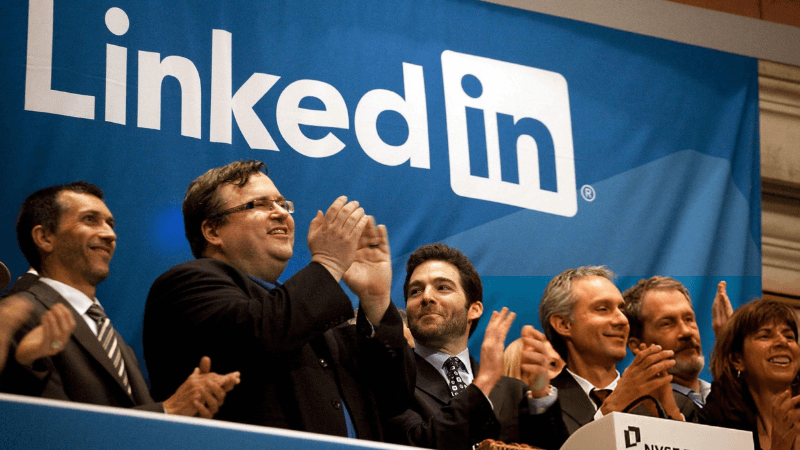
In a world on the edge of another technological revolution, LinkedIn co-founder and Silicon Valley visionary Reid Hoffman has once again stirred the global labor conversation with a bold prediction: the classic 9-to-5 job is on the brink of extinction.
Hoffman, who famously sold LinkedIn to Microsoft for a staggering $26.2 billion, is no stranger to forecasting seismic shifts in the tech and job markets. In a recently resurfaced interview, he painted a future where employment is fluid, industries morph constantly, and adaptability becomes the new currency of survival.
“You may not only work at multiple companies during your career, you may work at multiple industries,” Hoffman noted. “Industries are changing, your own path changes... you may not actually do a lot of your work fully as an employee. You may actually be working in the gig economy, or you may have two or three gigs.”
This evolution—driven by the explosive rise of AI and gig platforms like Uber, Airbnb, and JustEat—marks the end of predictability in career paths. But while some fear this uncertainty, Hoffman frames it as a new era of opportunity for the agile and the intellectually equipped.
The Future Is Complex, But for Smart People, It's Easy
In an increasingly automated world, success no longer lies in stability but in strategy. Smart individuals—those who can pivot, learn, and lead in digital spaces—are primed to thrive in what Hoffman calls the "portfolio career" age.
The implications are especially pronounced in Asia, where societal norms are deeply entwined with hard work, stability, and status. In countries like Japan, South Korea, and India, the 9-to-5 model isn’t just an economic structure—it’s a cultural identity. Yet the region is paradoxically leading in tech adoption and freelance growth.
In cities like Dhaka, Seoul, and Bangalore, millions of young professionals now juggle multiple digital gigs, freelance contracts, and entrepreneurial side hustles—all while navigating traditional family expectations and societal pressures.
“The average Asian millennial is managing two lives,” said labor sociologist Dr. Lina Tan. “One that is breaking barriers in the global gig economy, and one that is still answering to generational norms of stability and hierarchy.”
Adapting or Falling Behind
While the shift offers immense potential, it also deepens the divide between the adaptable and the left behind. Automation threatens millions of routine jobs, while AI reshapes even creative fields. Those unable—or unwilling—to reskill may face economic and social exclusion.
Hoffman’s prediction isn't a prophecy of doom, but a wake-up call. The future is fast, chaotic, and ever-changing—but it is also brimming with possibility.
As the global workforce undergoes one of the most radical transformations in history, one thing is clear: the winners will be those who don’t cling to tradition but ride the wave of change—with intelligence, flexibility, and courage.