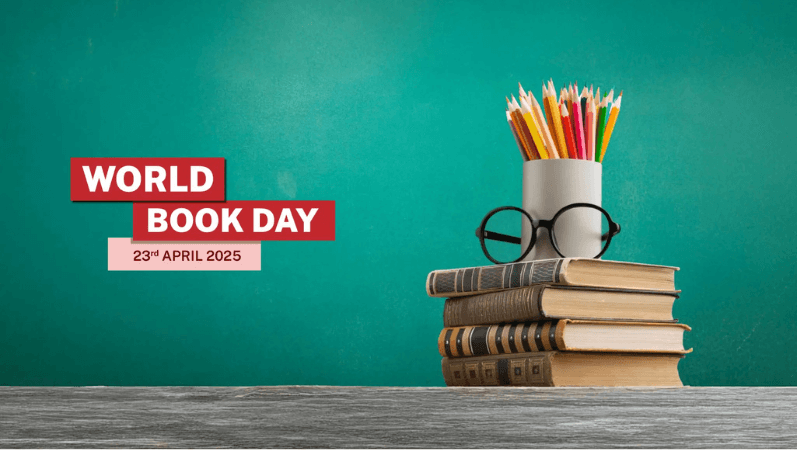
As the world celebrates World Book Day, South Asia is quietly scripting its own chapter in the global knowledge economy—one where reading habits and intellectual capital may soon rival traditional industries in driving development.
The Rise of the Knowledge Economy
In a region historically reliant on agriculture and manufacturing, South Asia is undergoing a subtle but significant shift. With digital learning, innovation hubs, and educational startups flourishing, the "knowledge economy"—defined by the use of intellectual capabilities over physical inputs is gaining ground.
Countries like India, Bangladesh, Sri Lanka, and Nepal are investing heavily in education technology and skill development. According to the Asian Development Bank, South Asia's knowledge-based sectors could contribute up to 30% of GDP by 2030, if nurtured correctly. But what fuels this growth? One answer lies in a simple but transformative habit: reading.

Reading Habits Index: A Mirror to Mindset
On the occasion of World Book Day, the South Asia Reading Index (SARI) was unveiled in Dhaka, offering rare insights into how people across the region engage with books.
India tops the index with an average of 10.4 hours/week spent reading, largely driven by regional language content and competitive exam preparation.
Bangladesh shows a surprising leap, ranking second, with a reading resurgence among urban youth driven by BookTok-style social media trends and a revived literary culture in cities like Chattogram and Dhaka. Nepal and Sri Lanka followed closely, though rural access to physical books remains a bottleneck.
The index also points out that countries investing in libraries, public book fairs, and mobile reading vans (as seen in parts of rural Bangladesh) are seeing higher literacy retention and increased digital fluency.

Inside the Book: A Look at the Bestseller Driving Conversations
One book dominating shelves and coffeehouse debates this World Book Day is “Ink & Insight: How South Asia is Reading Its Way to Power” by academic-turned-author Dr. Ayesha Rahman. A hybrid of investigative journalism and policy commentary, the book delves into how storytelling and scholastic ambition are changing the region’s socio-economic fabric.
Dr. Rahman uses case studies from Punjab to Chattogram to show how reading has become a quiet resistance—against poverty, patriarchy, and polarization.
“When you give someone a book, you’re not just handing them paper. You’re handing them power,” writes Rahman, noting how literacy programs in Rohingya refugee camps are even fostering small-scale entrepreneurial thinking.

The Way Forward: Can Reading Rewire Economies?
Experts believe the next phase of South Asia’s development will depend not just on infrastructure, but infrastructure of the mind.
“Reading improves critical thinking, and innovation—all vital for a sustainable knowledge economy,” says Professor Mizanur Rahman Raju, Director of Art of Living at Daffodil International University. “But the challenge is making reading desirable in a Digital world. Academician should perform as model to create enjoyment among learners to boost up reading.”
Private publishers and public educators are collaborating to gamify reading experiences, translating classics into local dialects, and even embedding AR features into textbooks.