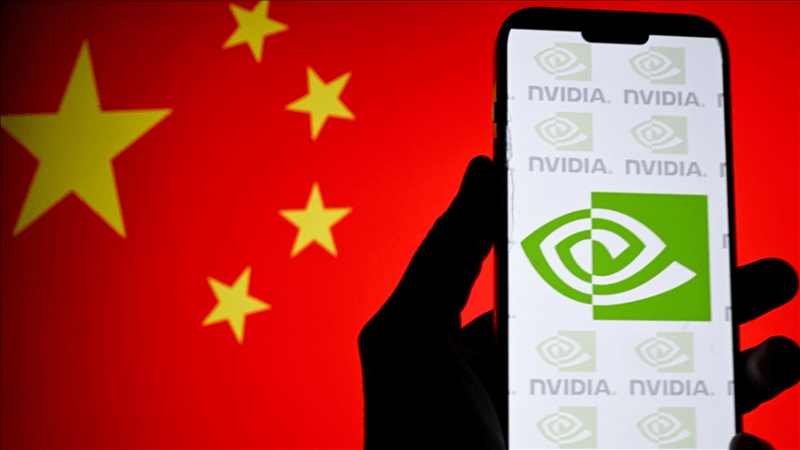
Beijing has officially barred domestic technology companies from purchasing Nvidia’s artificial intelligence chips, further escalating tensions in the global semiconductor sector.
On Wednesday (September 17), the Cyberspace Administration of China (CAC) ordered major firms including ByteDance and Alibaba to stop testing and ordering Nvidia’s RTX Pro 6000D server, a product designed specifically for the Chinese market, the Financial Times reported. The move follows earlier government signals in August discouraging reliance on foreign-made chips while urging adoption of local alternatives from companies such as Huawei.
Nvidia, the world’s leading AI chipmaker, faces a significant setback as its products are widely considered the most advanced in the market. CEO Jensen Huang, responding to the decision, said: “We can only be in service of a market if a country wants us to be. I’m disappointed with what I see, but they have larger agendas to work out between China and the United States. And I’m patient about it.”
The decision comes after months of shifting policies on chip exports. Earlier this year, the Trump administration-imposed licensing requirements on semiconductor sales to China, later easing restrictions in July. A revised plan announced in August would allow sales but require U.S. companies to share 15% of revenue from Chinese orders with the government. However, Nvidia has yet to complete any transactions under the scheme.
Nvidia had already warned of steep losses, estimating an $8 billion revenue hit in the second quarter due to restrictions on its H20 AI chips. In June, the company said it would no longer include China in its profit forecasts, signaling its effective exclusion from the world’s second-largest economy.
The ban represents a dual blow: while U.S. restrictions have constrained Nvidia’s ability to sell in China, Beijing’s own clampdown now seals off the market entirely, accelerating efforts to build a self-reliant domestic chip industry.
BOB Post