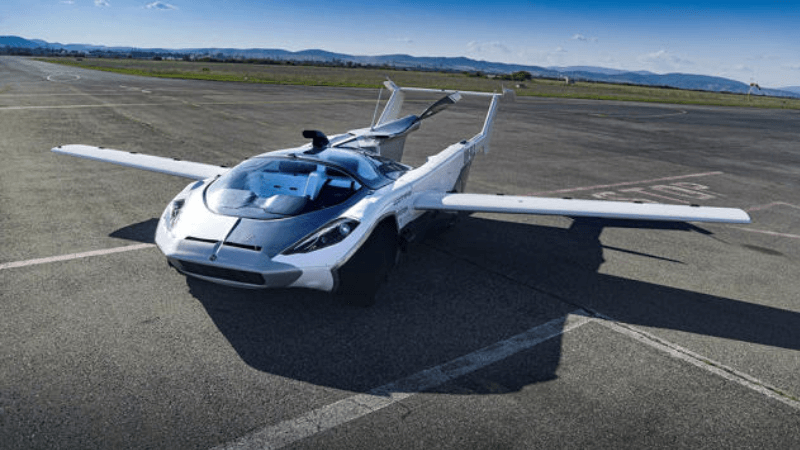
A Chinese firm has acquired the technology behind a flying car initially developed and tested in Europe. Dubbed the AirCar, this innovative vehicle smoothly transitions between being a car and an aircraft, powered by a BMW engine and conventional fuel. Its successful test flight in 2021 involved a 35-minute journey between two Slovakian airports, demonstrating its capability. It took just over two minutes to transform from a car into an aircraft. Unlike vertical take-off and landing drones, the AirCar utilizes traditional runways for both take-off and landing, marking a unique approach to aerial mobility.
Hebei Jianxin Flying Car Technology Company, based in Cangzhou, China, has obtained exclusive rights to produce and utilize AirCar aircraft within a specified region of China. This acquisition comes after the company's prior purchase from a Slovak aircraft manufacturer, showcasing their dedication to advancing aerial mobility.
With its own airport and flight school established, China, renowned for its leadership in electric vehicles (EVs), is now delving into flying transport solutions. Autoflight recently conducted a successful test flight of a passenger-carrying drone between Shenzhen and Zhuhai, completing a journey typically taking three hours by car in just 20 minutes, albeit without passengers aboard. In 2023, eHang, another Chinese firm, obtained a safety certificate for its electric flying taxi. The UK government anticipates flying taxis becoming a common sight in the skies by 2028, underscoring the rapid advancement of aerial mobility technology.
KleinVision has refrained from disclosing the sale price of its technology, which includes the AirCar, certified for airworthiness by the Slovak Transport Authority in 2022. The vehicle gained additional visibility when featured in a video by YouTuber Mr Beast earlier this year. Despite its advancements, this form of transport faces significant challenges in infrastructure, regulation, and public acceptance, underscoring the complexities of integrating flying cars into mainstream transportation systems.
"This brave new world of personal transport is acting as a great leveller," said aviation consultant Steve Wright.
People all across the world were left scratching their heads about what new questions needed to be posed in the wake of global initiatives to regulate the sector.
"In this respect the West's history can sometimes slow things down, as there is a bit of a temptation to try and squeeze these new machines into the old categories," said Wright. "China could well see this as an opportunity to get ahead."
Similar to initial concerns surrounding electric cars, which China has now dominated as a global market leader, the sale of the Slovakian AirCar prompts speculation about China's potential role in the flying car market. Aviation consultant Mr. Wright suggests that while prototypes like the AirCar may seem exciting, the reality of everyday use could involve mundane aspects such as queues and baggage checks. This observation highlights the practical challenges that must be addressed as flying cars move towards widespread adoption.
BOB Post