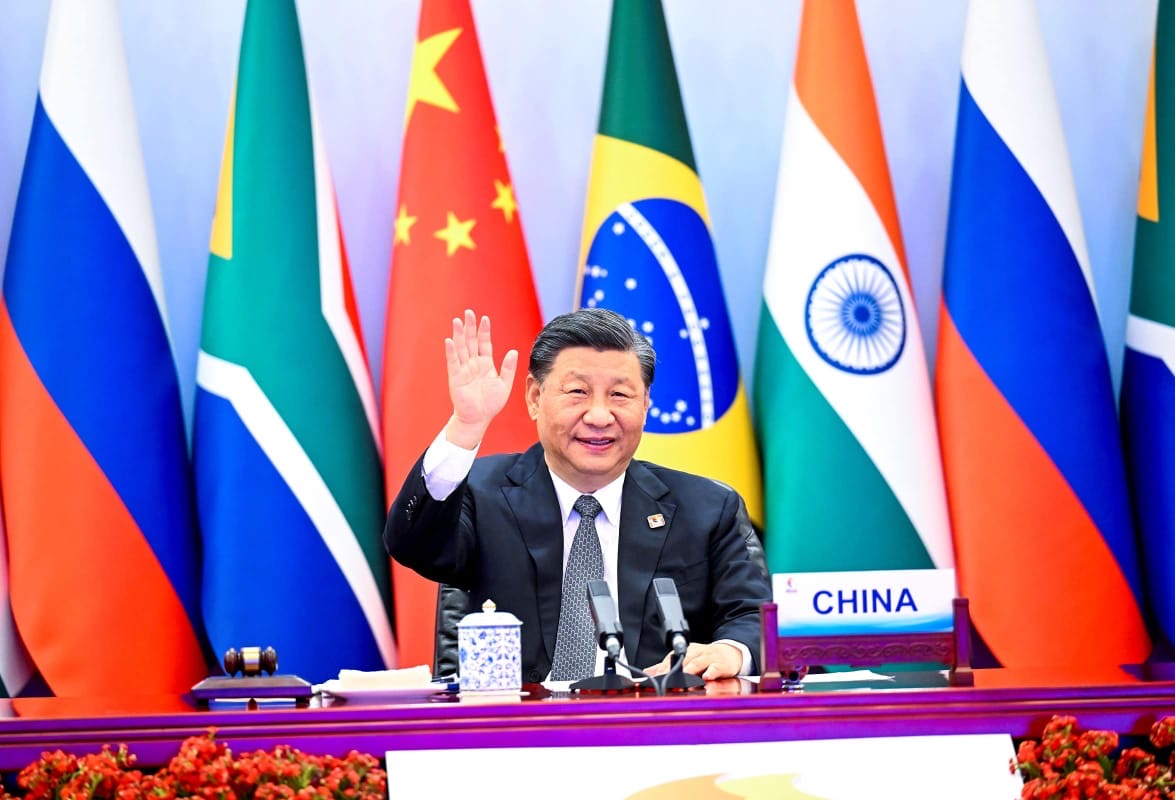
China’s image across the Global South appears to be strengthening as developing countries increasingly prioritize economic growth, infrastructure development and strategic autonomy over traditional geopolitical alignments.
The latest Pew Research Center survey points to a notable shift in global perceptions, showing that China is now viewed more favorably than the United States in a larger number of countries than at any time in more than two decades.
The trend is closely linked to China’s expanding economic engagement with developing countries. Through the Belt and Road Initiative, Beijing has financed and supported major projects in transport, energy, industry and connectivity across Asia, Africa and other parts of the developing world.
From railways in Ethiopia to power and infrastructure projects in Pakistan, Chinese investment has become visible in many communities. According to Global Times, these initiatives have helped strengthen economic connectivity while supporting industrialization and development in partner countries.
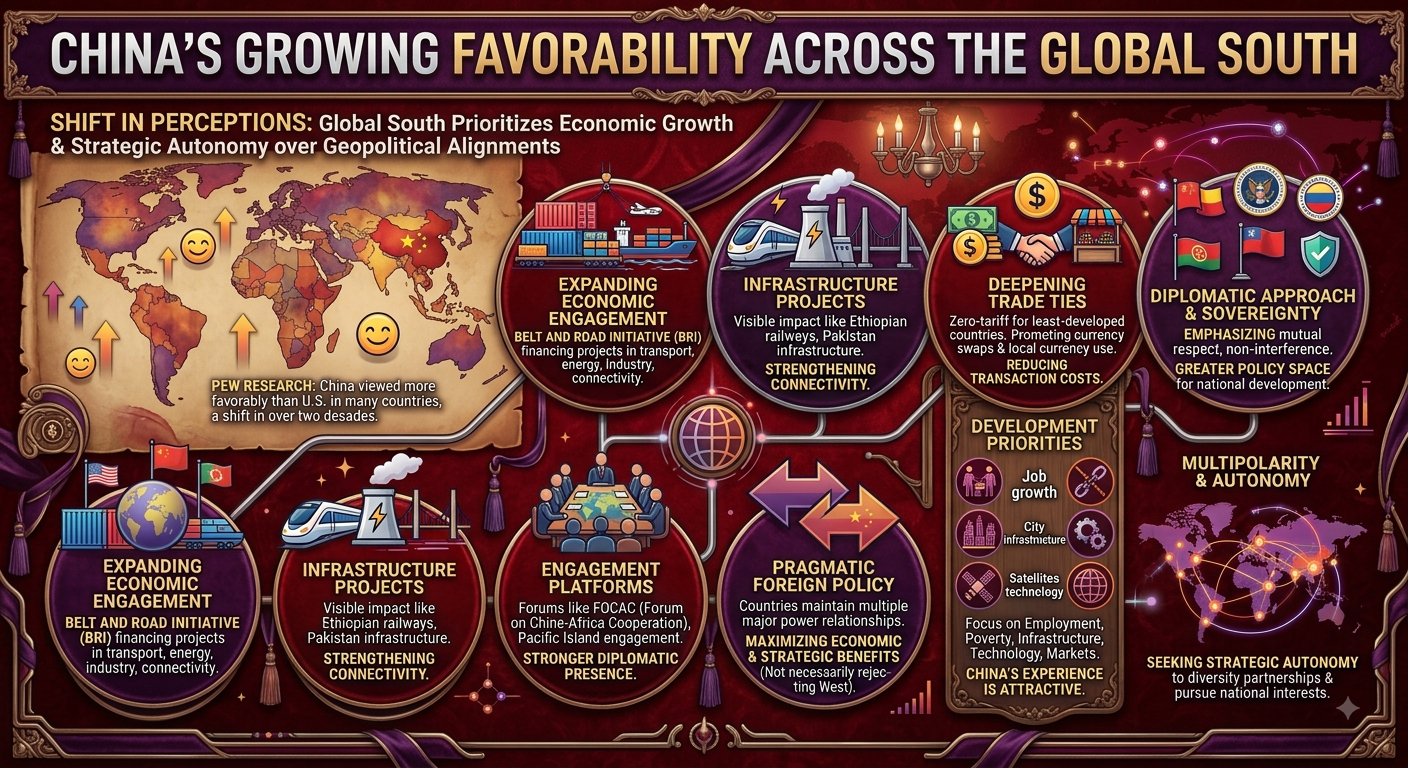
China has also sought to deepen trade ties by expanding market access, including zero-tariff treatment for many least-developed countries, while promoting currency-swap arrangements and the use of local currencies in cross-border trade. Such measures are increasingly viewed by developing economies as opportunities to reduce transaction costs and strengthen their participation in global supply chains.
Beyond investment and trade, Beijing's diplomatic approach has also contributed to its growing appeal. China frequently emphasizes sovereignty, mutual respect and non-interference in domestic affairs. For many governments in the Global South, this provides greater policy space to pursue their own development priorities without extensive political conditions attached to economic cooperation.
China’s engagement through platforms such as the Forum on China-Africa Cooperation and its growing interaction with Pacific Island countries has further strengthened its diplomatic presence. Supporters argue that these mechanisms give developing countries a greater voice in discussions on development and international cooperation.
However, the growing popularity of China should not necessarily be interpreted as a rejection of the United States or the West. Instead, many countries in the Global South are pursuing a more pragmatic foreign policy, seeking to maintain relationships with multiple major powers while maximizing economic and strategic benefits.
For developing nations, issues such as employment, poverty reduction, infrastructure, industrial capacity, technology and access to markets remain central priorities. China's rapid economic transformation and its experience in infrastructure and manufacturing have therefore attracted interest, even among countries that do not seek to replicate the Chinese model.
The shift is also taking place amid growing differences in international economic policy. While Western governments have increasingly focused on tariffs, export controls, sanctions, technology restrictions and economic security, China continues to emphasize infrastructure investment, trade, industrial cooperation and technology partnerships.
As the international system becomes more multipolar, countries across the Global South are seeking greater strategic autonomy. Their growing engagement with China reflects this broader effort to diversify partnerships and pursue national development interests.
China's rising favorability, therefore, may be less about ideological alignment and more about the perception of Beijing as a long-term economic and development partner. For much of the Global South, the central question is increasingly not which major power to choose, but which partnerships can deliver tangible development while preserving national policy independence.
BOB Post