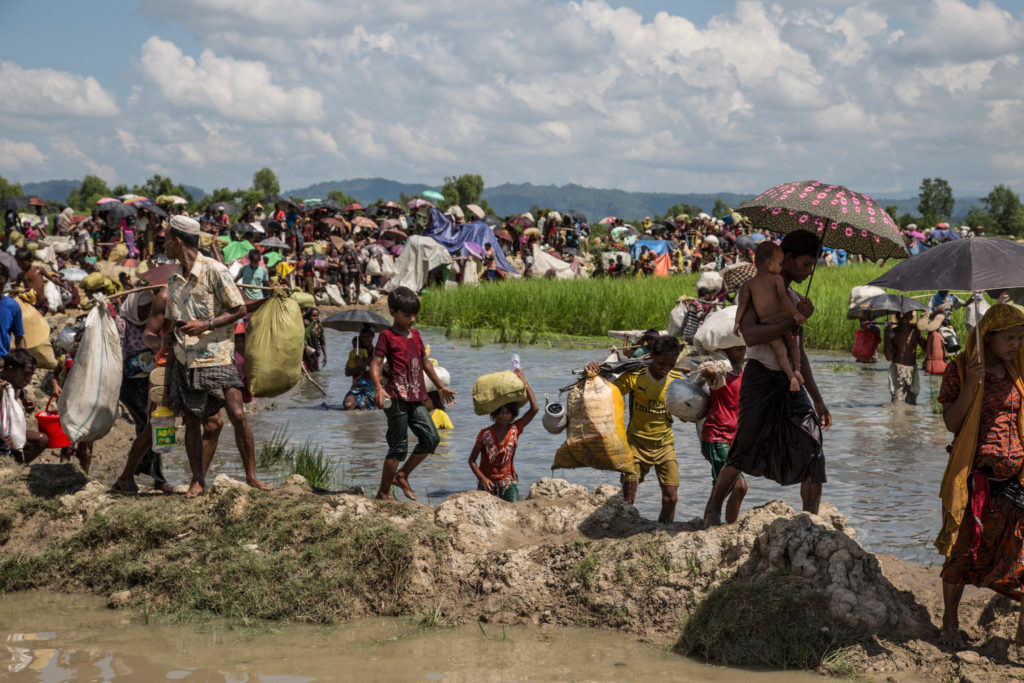
The Myanmar government has disputed reports that nearly one million Rohingya have entered Bangladesh from Rakhine State, claiming that the figure is inaccurate and that most of those who crossed the border were “Bengalis.”
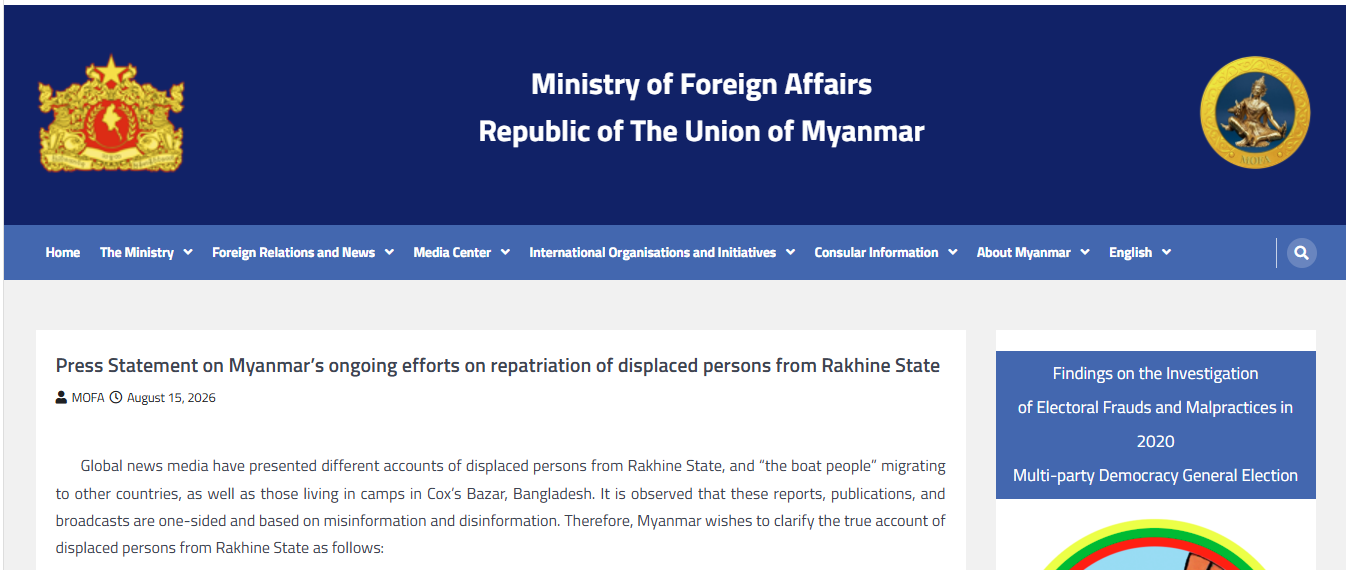
In a statement issued by Myanmar’s Ministry of Foreign Affairs on Saturday, August 15, as the Rohingya crisis entered its ninth year, the government said international media reports on displacement from Rakhine and the Rohingya refugee population in Bangladesh were based on what it described as “one-sided and inaccurate information.”
Myanmar said more than 740,000 “Bengalis” were living in Buthidaung, Maungdaw and Rathedaung townships in northern Rakhine before the attacks carried out by the Arakan Rohingya Salvation Army (ARSA) in October-November 2016 and August 2017.
According to the ministry, more than 200,000 remained in the area after the violence, while over 540,000 fled to Bangladesh. It said these figures did not support claims that more than one million people had been displaced from Rakhine and crossed into Bangladesh.
The statement also said Myanmar had verified 426,545 people from a list of 828,824 displaced people submitted by Bangladesh as of July 31, 2026. Of those, 308,797 were verified as former residents of Rakhine State, while 4,241 were identified by Myanmar as being involved in “terrorist activities.” The remaining 113,507 cases, it said, could not be verified.
Myanmar said it would continue working with Bangladesh to facilitate the return of those verified as former residents once the security situation in Rakhine becomes stable.
The latest statement comes amid renewed efforts by Dhaka and Naypyidaw to revive the long-delayed Rohingya repatriation process. Myanmar said it had made preparations on three occasions to receive displaced people under bilateral arrangements, but claimed that none had returned.
The government also rejected the characterization of all people living in Bangladesh’s Rohingya camps as having originated from Myanmar. It disputed claims that people arriving by boat or from other countries could claim an ethnic identity that, according to Myanmar, has never existed in the country.
The statement further referred to earlier waves of displacement in 1978, 1991 and 1992, saying Myanmar had previously received 186,968 displaced people between 1978 and 1979 and another 236,495 between 1992 and 2005 under bilateral agreements with Bangladesh.
Myanmar said it remained committed to the eventual repatriation of verified former residents of Rakhine and had prepared a “come and see” programme under a pilot project to demonstrate conditions for their return.
However, the repatriation process has remained stalled for years amid continued conflict and concerns over security, citizenship, freedom of movement and the rights of returnees.
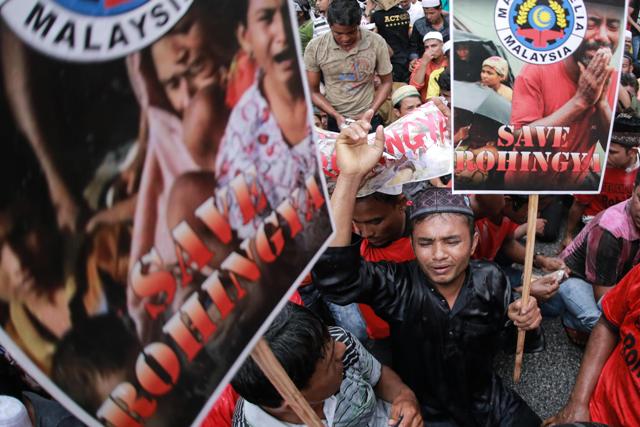
More than 700,000 Rohingya fled to Bangladesh following the Myanmar military’s sweeping operations in Rakhine after ARSA attacks on security installations in August 2017. The scale and nature of the military campaign prompted widespread international accusations of ethnic cleansing and genocide, which Myanmar has rejected.
Bangladesh was already hosting hundreds of thousands of Rohingya who had fled earlier waves of violence and persecution in Myanmar.
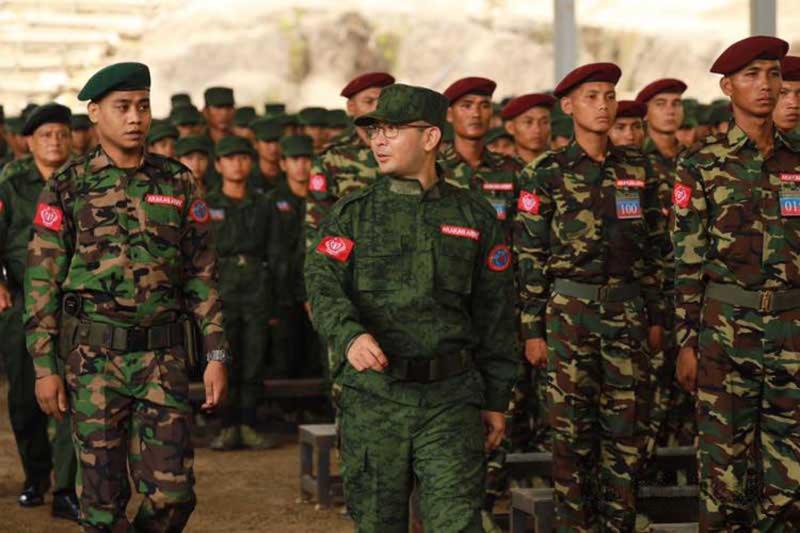
The situation has become even more complicated since Myanmar’s military seized power in 2021 and fighting spread across the country. Since late 2023, intense clashes between the military and the Arakan Army have further destabilized Rakhine State, with the Arakan Army now controlling large parts of the region.
The continuing conflict has also driven additional Rohingya to flee, while those remaining in Bangladesh face prolonged humanitarian hardship amid declining international assistance. Some have attempted dangerous sea journeys to Malaysia and Indonesia.
The repatriation issue has also recently generated differing statements between Myanmar and Malaysia. In late July, Malaysian Prime Minister Anwar Ibrahim said Myanmar had agreed to take back 300,000 Rohingya from Bangladesh and 5,000 Rohingya in Malaysia under a repatriation programme.
Myanmar’s Foreign Ministry official Han Win Aung subsequently offered a different interpretation, saying the programme concerned verified Myanmar nationals held in Malaysian detention centres and rejecting reports that Myanmar had agreed to repatriate Rohingya from Malaysia.
The conflicting claims highlight the continuing gap between Bangladesh’s position that Rohingya refugees must be returned safely, voluntarily and with dignity, and Myanmar’s insistence on its own framework for verifying and accepting returnees.
For Bangladesh, which hosts more than one million Rohingya refugees, the prolonged crisis remains a major regional humanitarian and security concern. For Myanmar, the issue is increasingly linked to the broader conflict over control of Rakhine State, making prospects for large-scale repatriation dependent not only on bilateral negotiations but also on the rapidly changing security situation on the ground.
BOB Post