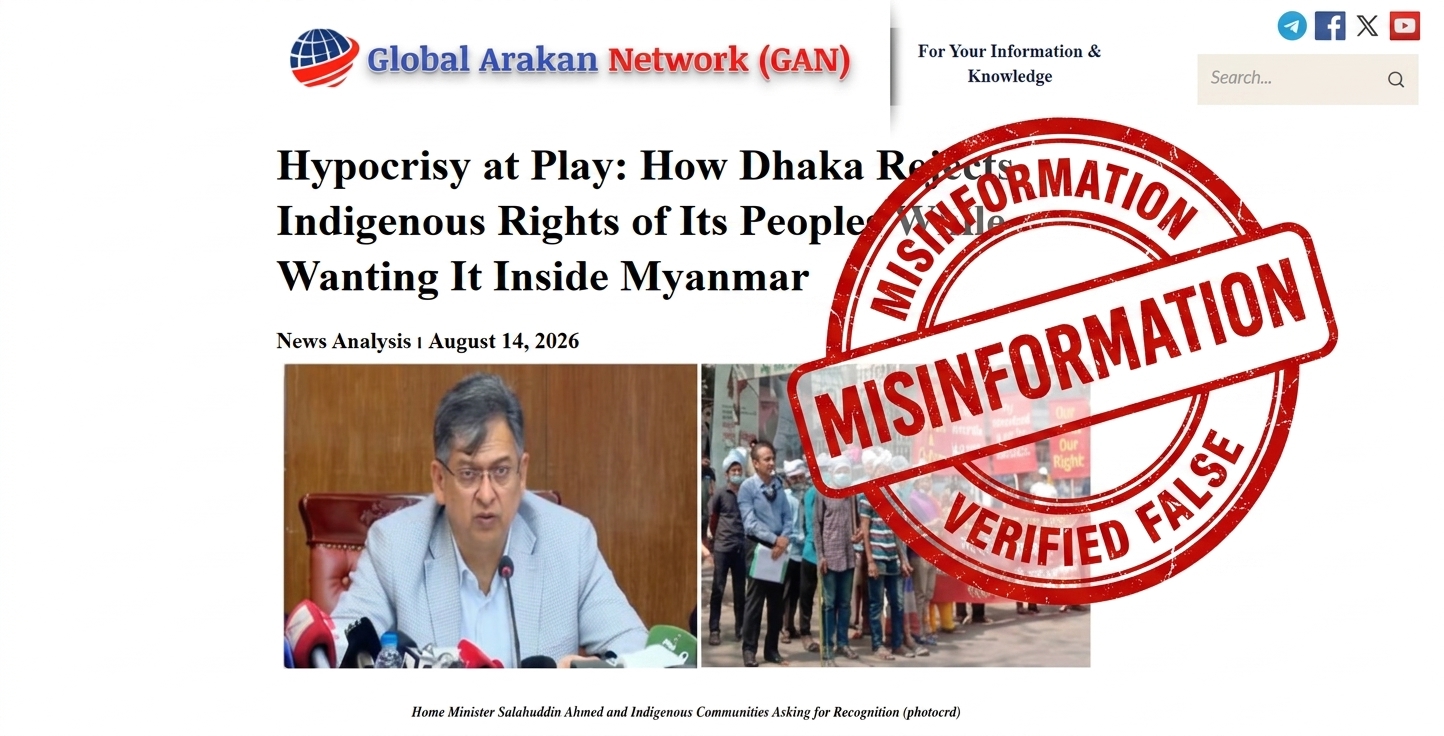
A recent commentary published by the Global Arakan Network has accused Dhaka of applying a double standard on indigenous rights. It argues that Bangladesh rejects ethnic identities at home while demanding recognition for Rohingya communities in Myanmar.
The argument, however, overlooks another serious contradiction in the region: the Arakan Army’s own position on ethnic rights.
The debate over ethnic identity in Bangladesh is a domestic political and constitutional issue. Home Minister Salahuddin Ahmed has already made Dhaka’s position clear. He said Bangladesh does not recognize separate indigenous identities in the way some groups demand and stressed that all citizens are Bangladeshis.
That position can and should be debated. But it should not be used to obscure the situation in Rakhine State, where the Arakan Army has established substantial control and where Rohingya communities continue to face serious allegations of abuses, displacement, and restrictions.
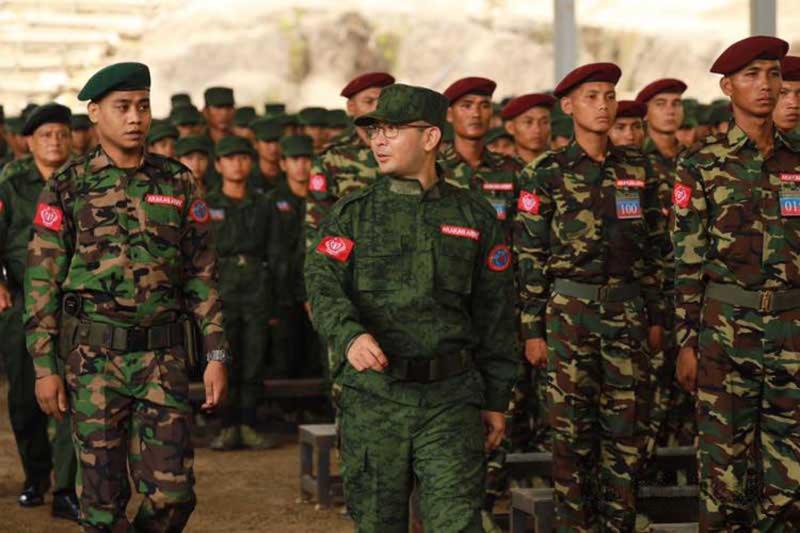
The Arakan Army has frequently presented itself as the defender of ethnic rights in Rakhine. It has also raised concerns about ethnic minorities and their political and cultural rights. Yet its treatment of the Rohingya raises difficult questions about the consistency of that position.
A movement cannot demand recognition and rights for ethnic communities while ignoring allegations of abuses against another community living under its control.
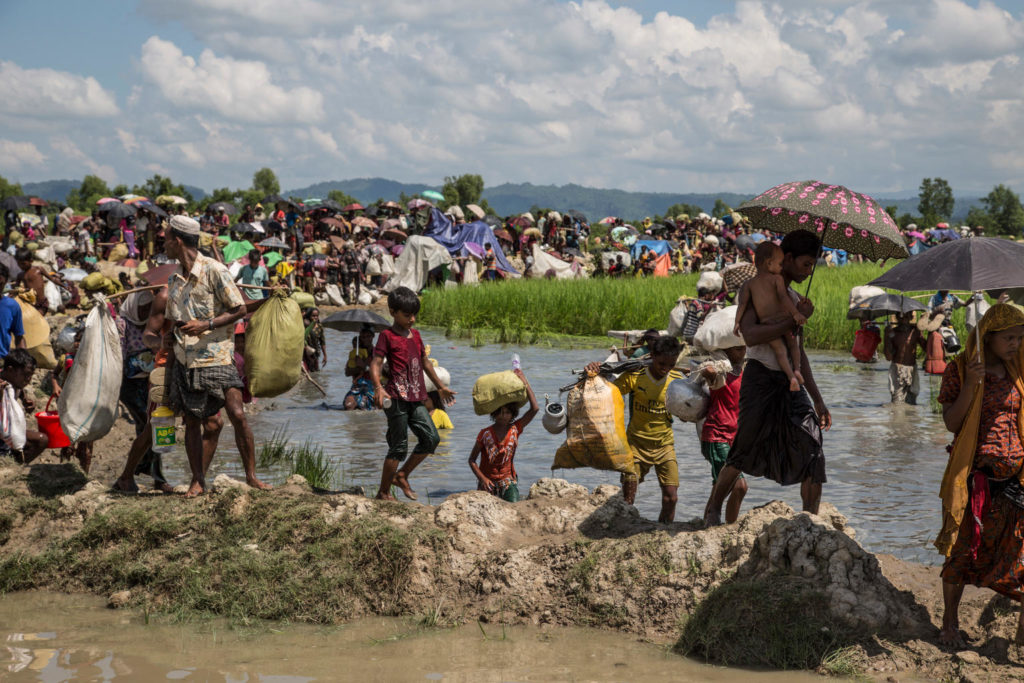
The Rohingya crisis did not begin with the Arakan Army. Myanmar’s military has been responsible for some of the most severe atrocities against the Rohingya, including the 2017 mass displacement. But that history does not remove the responsibility of other armed actors operating in Rakhine today.
The central question is therefore not whether Bangladesh should recognize every claim of indigenous identity. It is whether any authority exercising power over a population should respect the rights, security and identity of all communities under its control.
This is where the Global Arakan Network's argument falls short.
It focuses heavily on Bangladesh’s position toward the Chakma, Marma, Tripura and other Jumma communities. But it gives far less attention to the continuing concerns surrounding Rohingya communities in Rakhine.
The contradiction is particularly important because the Arakan Army seeks political legitimacy as a representative of the people of Rakhine. Such legitimacy cannot rest only on its claims to protect one ethnic community. It must also be measured by how it treats vulnerable minorities.
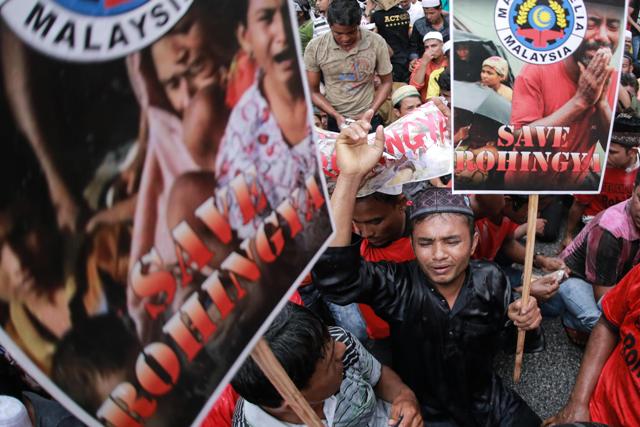
Rohingya civilians remain caught between competing political and military forces. Their rights cannot become secondary simply because the political narrative in Rakhine is framed around the rights of another ethnic group.
Bangladesh, meanwhile, has hosted a massive Rohingya refugee population for years and continues to call for their safe, voluntary and dignified return to Myanmar. Dhaka's position on the Rohingya should certainly be examined critically. But criticism of Bangladesh does not justify ignoring abuses or discrimination faced by Rohingya in Rakhine.
There is also a basic distinction between citizenship and ethnic identity. A person can be a Bangladeshi citizen and belong to an ethnic community at the same time. Likewise, the protection of minority rights does not automatically depend on granting a particular constitutional label.
The same principle should apply in Rakhine.
If the Arakan Army demands recognition of ethnic rights, it should also demonstrate that those rights apply to Rohingya civilians. If it demands political autonomy and cultural protection for Rakhine communities, it should explain how Rohingya communities will be protected under any future political arrangement.
Selective concern for ethnic rights weakens the credibility of the broader argument.
The international community should therefore examine both sides of the debate. Bangladesh's treatment of its ethnic minorities deserves scrutiny. So does the treatment of Rohingya and other minorities in areas controlled by the Arakan Army.
Human rights cannot be applied selectively.
The issue should not be reduced to a contest between Bangladesh and Myanmar, or between Bengalis and Rakhine communities. The real test is whether political actors are willing to defend the rights of communities even when those communities do not serve their political interests.
Dhaka has made its position on the ethnic identity debate clear. The Arakan Army should be held to the same standard of clarity.
If ethnic rights are fundamental, they must be fundamental for everyone—including the Rohingya.
BOB Post