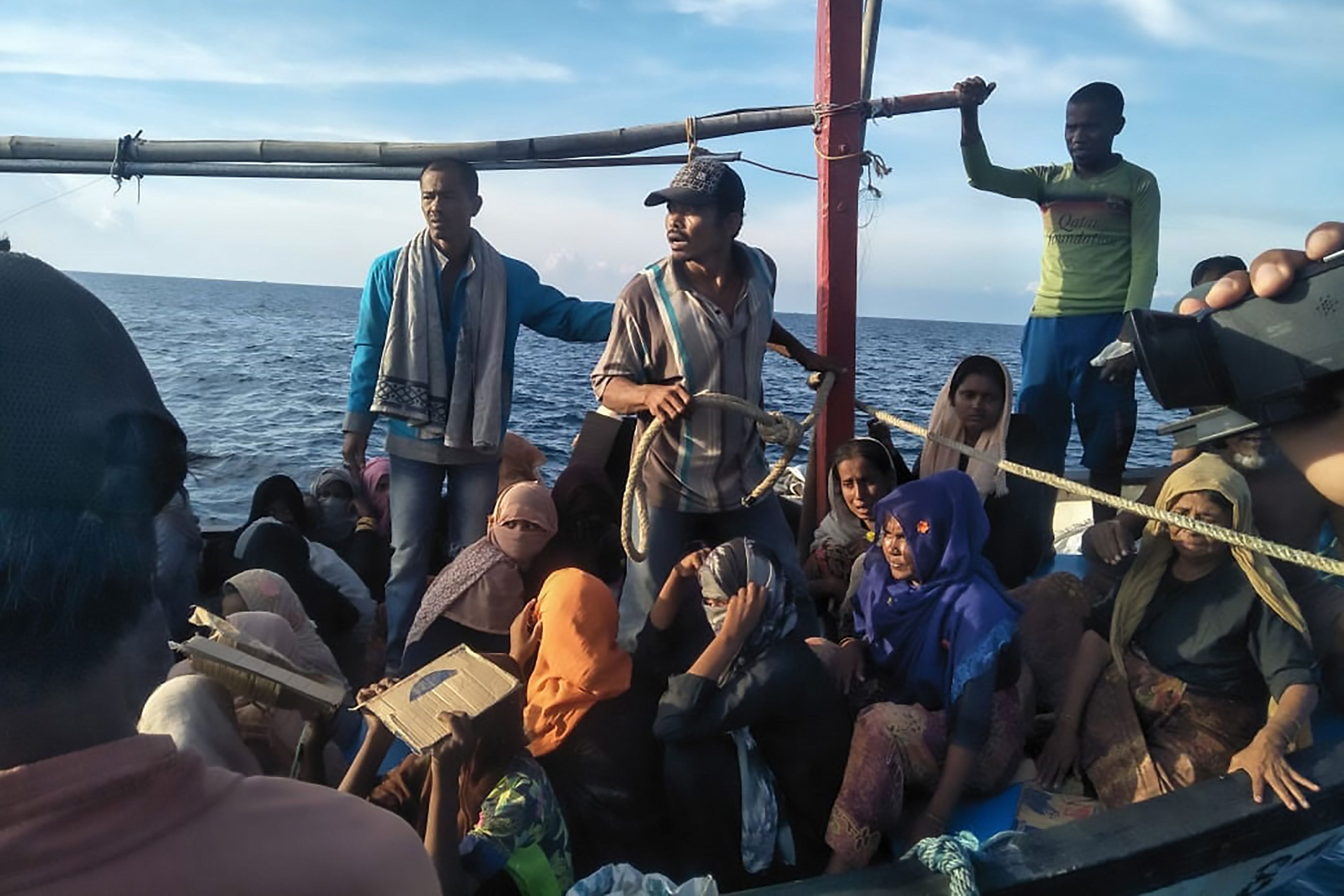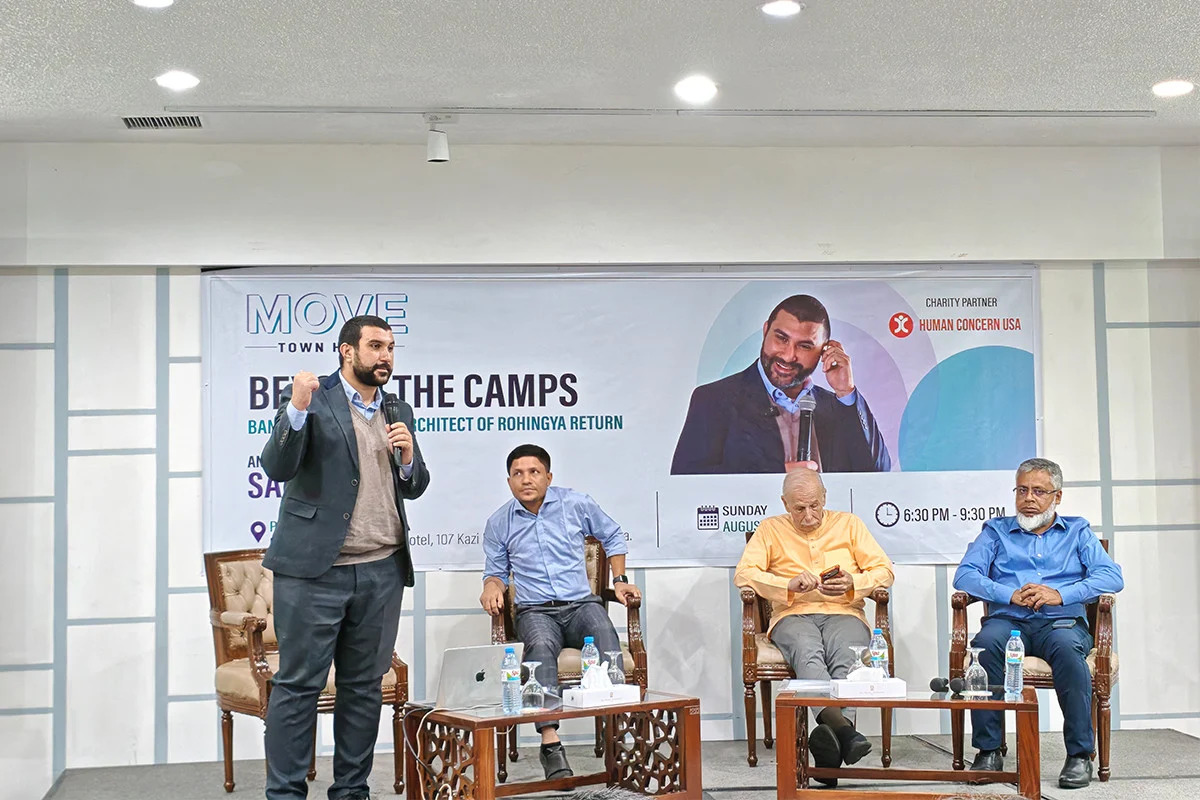
British journalist and geopolitical analyst Sami Hamdi have urged Bangladesh to move beyond a primarily humanitarian approach to the Rohingya crisis and develop a broader political and security strategy aimed at creating conditions for the refugees’ safe and dignified return to Myanmar.
Speaking at a town hall titled “Beyond the Camps – Bangladesh as the Architect of Rohingya Return” at Pan Pacific Sonargaon Hotel in Dhaka on Sunday, Hamdi said diplomatic efforts alone would not be sufficient to resolve the protracted crisis.
He argued that Bangladesh needs its own political roadmap and should engage more strategically with regional and global powers to protect its interests in any future negotiations over Rakhine State.
“Diplomacy alone is not enough,” Hamdi said, stressing that Bangladesh should prepare for possible political developments between the Arakan Army and Myanmar authorities that could shape the future of Rakhine and the prospects for Rohingya repatriation.
He encouraged Dhaka to deepen cooperation with countries including Turkey, Saudi Arabia, Pakistan and Malaysia, while exploring possible regional security or peacekeeping arrangements to help guarantee safety in northern Rakhine.
Hamdi also said Bangladesh could view the Rohingya crisis not only as a burden but as an opportunity to strengthen its regional diplomatic influence.
Meanwhile, Fadlullah Willmott, a programme manager for the Middle East and Africa at Muslim Aid and former deputy chief executive of Islamic Relief Australia, criticised the international community for failing to provide adequate funding for the Rohingya response.
He said shortages in education, food, water and healthcare were increasingly affecting refugee camps and warned that repatriation would not be sustainable unless fundamental rights were guaranteed.
According to Willmott, citizenship, compensation and legal rights should be central to any repatriation arrangement. He said returning Rohingya without guarantees over land, property, freedom of movement, education and employment would risk reproducing the conditions that forced them to flee.
He also called for greater support for host communities in Bangladesh, which have faced growing social and economic pressures as the crisis has continued.
Rohingya activist Mahmud Hasan highlighted the importance of education, skills development and leadership opportunities for the refugee community. He said Rohingya should not be treated merely as victims of a humanitarian crisis but should be given a meaningful role in shaping their own future.
Hasan, who said he arrived in Bangladesh from Myanmar in 2016 while studying in seventh grade, described the persecution and discriminatory narratives that have contributed to the displacement of Rohingya.
He called for greater investment in education and vocational training so that Rohingya youth can build the skills and leadership capacity needed for eventual repatriation and participation in future political processes.
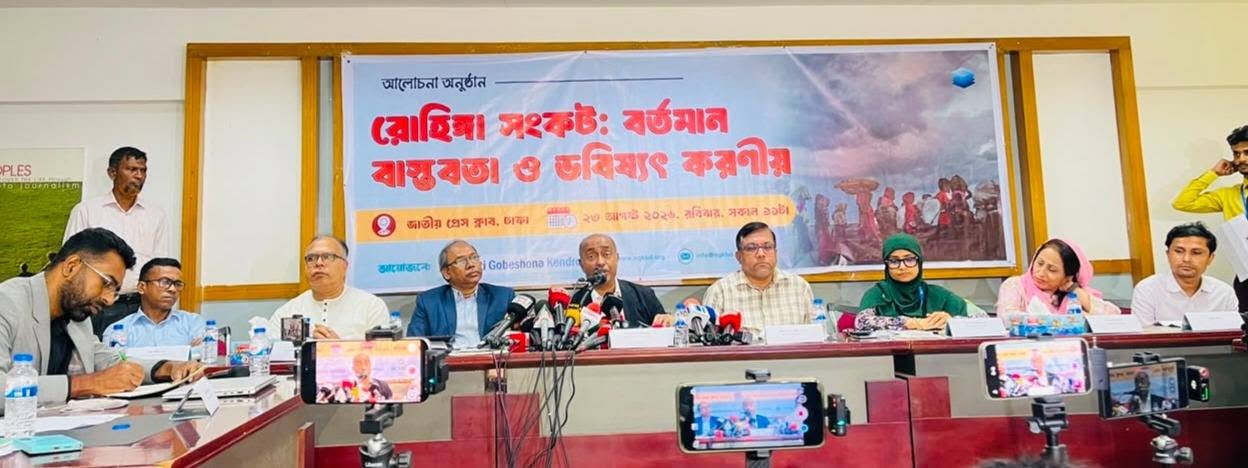
The discussion brought together humanitarian workers, activists and analysts to examine Bangladesh’s diplomatic role, Rohingya rights and the political and security conditions required for a sustainable return to Myanmar.
BOB Post