Golam Zakaria
In late September 2025, Khagrachhari district in Bangladesh’s Chittagong Hill Tracts witnessed a disturbing episode of social unrest that underscores the perils of politicized manipulation. It began with a sensitive incident: an eighth-grade Marma girl, returning home after private tutoring, was reportedly abducted. The alleged perpetrator, Shoyon Sheel, was swiftly apprehended the next day with assistance from the military, and the case is now under judicial process. Critically, medical examination confirmed that the girl had not been sexually assaulted. The evidence is clear, yet the reaction from certain quarters has been disproportionate and politically motivated.
The United Peoples Democratic Front (UPDF) and its affiliated networks capitalized on this incident to incite unrest. Under the banner of “Jumma Chhatro Jonota,” the group called for protests, road blockades, and mass demonstrations across three hill districts. These actions were not organic expressions of public concern but orchestrated campaigns designed to inflame tensions. UPDF’s leadership, notably Ukhyan Marma, actively encouraged the community to disrupt social order, while online posts by associates—including Yan Yan Rakhine and diaspora figures such as PT Chakma in Canada—amplified misinformation and called for provocative actions.

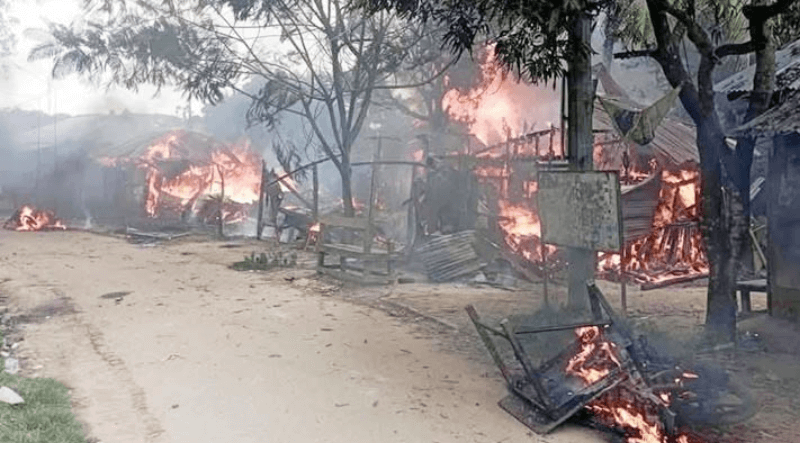
The consequences were swift and severe. On September 26, during a so-called mass demonstration, a military patrol team was attacked, leaving three soldiers injured. The following day, a blocked road incident left a local rickshaw driver wounded, and an ambulance transporting patients was vandalized in Alutila’s resettlement area. Across various town roads, trees were felled to create chaos, and armed individuals assaulted Bengali community members. At least 16–17 civilians were injured, shops were looted, and multiple businesses suffered extensive losses. Even a mosque reportedly came under attack. All these acts occurred under the guise of defending community honor—a claim unsubstantiated by any evidence.

UPDF’s actions reflect a deliberate strategy: exploiting an incident to stoke communal tension, undermine the rule of law, and destabilize this region. Despite medical reports confirming no sexual assault, the group persists in framing the narrative to incite anger and resentment. Their repeated dissemination of slogans like “Remove the army from the hills” is not a call for justice but a direct threat to social cohesion and public safety.
The district administration and security forces have responded decisively. On September 27, Section 144 (To prevent unlawful assemblies, demonstrations, processions, or potential unrest that could lead to violence, riots, or disturbance of public order) is imposed in Khagrachhari’s municipal areas to maintain law and order, and military and police patrols were intensified to protect civilians. These measures reflect the ongoing commitment of state authorities to uphold peace, safeguard communities, and prevent opportunistic political exploitation from spiraling into large-scale violence. Here to add a note that- internationally, the Bangladesh Army is acknowledged for its professionalism and success in peacebuilding. At this critical juncture, it is essential to place confidence in the military.

It is crucial to recognize the broader implications of UPDF’s tactics. These are not isolated disruptions but part of a recurring pattern in which politically motivated actors manipulate sensitive events for self-interest. The danger is twofold: first, ordinary citizens—both Tribal and Bengali—become victims of chaos; second, the harmony and development of the Chittagong Hill Tracts are threatened. In a region historically susceptible to ethnic tensions, such deliberate provocation carries the risk of undoing decades of peacebuilding.
The local population’s response offers hope. Communities have shown resilience and a commitment to maintaining order, cooperating with authorities to counter misinformation and violence. This civic vigilance highlights a crucial truth: the majority of residents desire stability and reject being pawns in political machinations.

Yet the UPDF’s persistence in fomenting unrest raises serious questions about accountability. Why does the group repeatedly incite communities despite clear evidence disproving their narrative? Why is a verified medical report insufficient to halt their politically motivated agitation? The answer lies in their strategic objective: destabilize the region, erode trust in state institutions, and leverage fear for political gain. Such tactics are ethically indefensible and socially dangerous.
Bangladesh’s experience underscores a broader lesson for the international community: political manipulation of social incidents is not merely a local problem. In regions with ethnically diverse populations and fragile communal relations, misinformation and deliberate incitement can rapidly escalate into widespread violence, economic disruption, and humanitarian crises. Observers, media, and policymakers must differentiate between genuine grievances and calculated provocations. Supporting local governance, strengthening rule-of-law mechanisms, and condemning orchestrated unrest are critical steps to preserving peace.
The Khagrachhari episode also highlights the indispensable role of professional security forces. Military and police coordination, combined with proactive administrative measures, prevented what could have been a far larger humanitarian and social disaster. It is a testament to disciplined governance that despite provocative campaigns, civilian casualties remained limited, and order was restored relatively quickly.
Ultimately, the challenge remains to prevent such manipulative actors from eroding trust and social harmony. UPDF’s calculated distortion of events is a stark reminder that in fragile regions, misinformation and political opportunism are not distant risks—they are present and immediate threats to lives, livelihoods, and communal harmony. Civic awareness, legal accountability, and responsive governance must work in tandem to ensure that truth prevails over manipulation.
Khagrachhari’s recent events are a stark reminder that stability in ethnically diverse regions requires vigilance against both overt violence and covert political exploitation. International observers, media, and policymakers must support local authorities in resisting such provocations, and promoting sustained peace. Only through sustained attention and action can regions like the Chittagong Hill Tracts remain secure, harmonious, and resilient against those who seek to inflame division for personal gain.
(Golam Zakaria is a journalist and columnist based in Bangladesh. He writes on South Asian politics, human rights, and international justice).