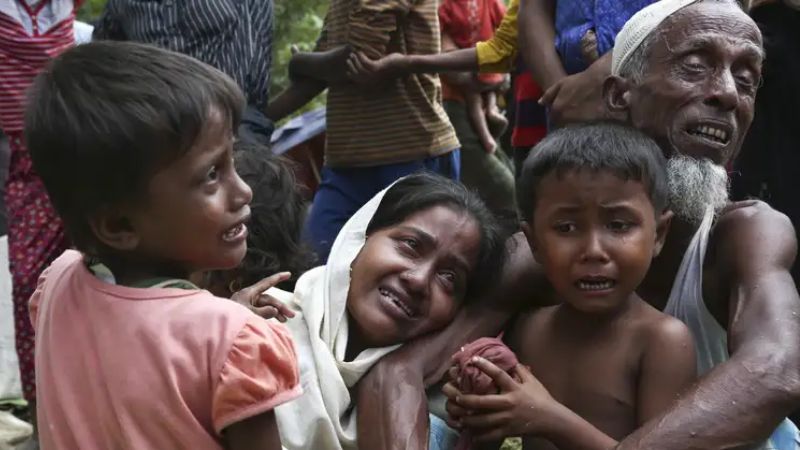
The United Nations Refugee Agency (UNHCR) has issued an urgent appeal for life-saving measures as hundreds of stateless Rohingya refugees from Myanmar have embarked on perilous sea journeys to seek safety in neighboring countries. The crisis, exacerbated by escalating violence and persecution in Myanmar, has already claimed the lives of 10 individuals this year.
In the first five days of 2025, 460 Rohingya men, women, and children arrived in Malaysia and Indonesia after weeks at sea with minimal food and water. On January 3, Malaysia received 196 refugees, while Indonesia welcomed 264 survivors on January 5. Just weeks earlier, 115 refugees landed in Sri Lanka, reporting six fatalities during their voyage.
Hai Kyung Jun, Director of UNHCR’s Regional Bureau for Asia and the Pacific, underscored the urgent need to prioritize the safety of these vulnerable individuals. “Saving lives must be the first priority,” she said, expressing gratitude for the steps taken by regional governments to assist the refugees. “We stand ready to support governments and local efforts to help them.”
Rising Numbers Amid Dire Conditions
The current arrivals highlight a worsening trend. In 2024 alone, over 7,800 Rohingya refugees attempted to flee Myanmar by boat—an 80% increase from 2023. Tragically, more than 650 people either died or went missing route, cementing the reputation of this maritime journey as one of the world’s deadliest.
UNHCR also reported a rise in the proportion of women and children making the treacherous journey, with children accounting for 44% of total passengers, up from 37% in 2023. Furthermore, thousands of individuals took desperate measures, such as crossing the Naf River during severe weather conditions to reach Bangladesh.
A new and troubling trend is the increasing number of refugees setting sail directly from Myanmar, reflecting the deteriorating conditions within the country.
Myanmar’s Negligence: Root of the Crisis
The plight of the Rohingya stems from decades of systemic discrimination and violence in Myanmar, where they have been denied citizenship and basic rights. The military regime’s continued persecution, coupled with its failure to address the crisis, has forced thousands to flee. Myanmar’s negligence has also undermined international efforts to improve conditions for the Rohingya, leaving them with little choice but to risk their lives at sea.
A Call for Sustainable Solutions
UNHCR and human rights advocates stress the urgent need for sustainable solutions. Addressing the crisis requires more than immediate humanitarian aid—it demands an end to the violence and persecution in Myanmar.
Regional mechanisms such as ASEAN and the Bali Process provide frameworks for coordinated action. However, the international community must strengthen these efforts by addressing the root causes of displacement, combating human trafficking, and ensuring safe and dignified conditions for the Rohingya.
“While States have the legitimate right to control their borders, these measures must not come at the cost of human lives,” said Hai Kyung Jun, emphasizing the need for enhanced search-and-rescue operations and the protection of refugees.
Moving Forward
As the Rohingya crisis deepens, UNHCR urges nations to counter hate speech and false narratives against refugees, while fostering regional cooperation to ensure their safety. Ending the cycle of displacement depends on international and regional pressure on Myanmar to uphold human rights and ensure safe conditions for the voluntary return of refugees.
The global community must act decisively to ensure that the Rohingya no longer face a future defined by fear, displacement, and loss.
BOB Post