Millions across South and South-East Asia are being forced into precarious migration by a confluence of crises-soaring inflation, weak job markets, fragile public services, and climate pressures. This struggle for survival severely compounds the long-standing displacement and risks faced by the stateless Rohingya community.
A new assessment from the UN Human Rights Office (OHCHR) warns that people across the region are increasingly moving “not by choice, but out of necessity,” as poverty and lack of basic rights undermine their ability to survive at home, according to a UNB report Saturday.
While the report addresses a broader regional challenge, the findings underscore the desperate circumstances driving Rohingya to undertake perilous journeys. More than a million Rohingya refugees remain in camps in Bangladesh, having fled military operations and systematic discrimination in Myanmar, while an estimated 600,000 are still confined within Rakhine State, largely deprived of basic rights.

The report's general finding that the denial of rights such as decent work, education, and healthcare forces people into "unsafe migration and exploitation" rings particularly true for the Rohingya, who are stateless and face severe restrictions on movement, livelihood, and humanitarian access, both in Myanmar and in refugee-hosting countries.
Mounting Dangers and "Futurelessness"
The scale of migration has ballooned, with over 72 million international migrants originating from the region in 2024, now accounting for nearly a quarter of all global migrants. The risks have soared, with at least 2,514 migrant deaths recorded across Asia in 2024, the highest number ever.
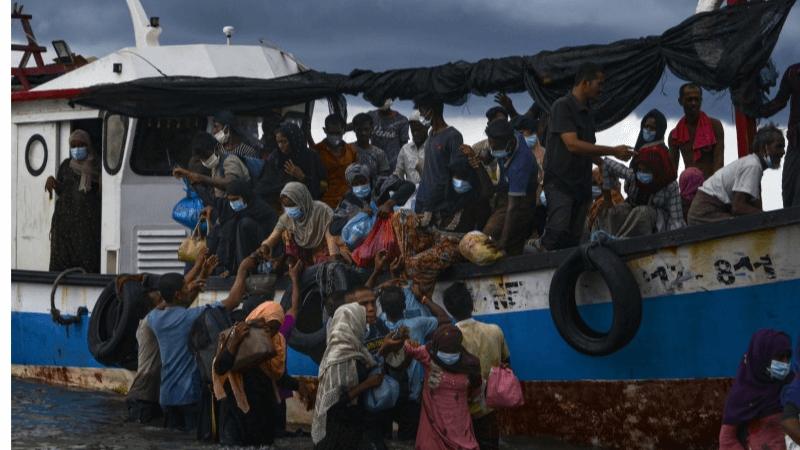
For the Rohingya, this rising tide of desperation manifests in a significant increase in dangerous sea crossings. Facing dwindling aid, insecurity, and a lack of opportunities in refugee camps in Bangladesh, or continued persecution in Myanmar, more Rohingya are risking their lives in irregular movements across the Bay of Bengal and Andaman Sea, often falling prey to smugglers and traffickers.
Cynthia Veliko, head of the OHCHR Regional Office for South-East Asia, stressed that “Migration should be a choice, not a necessity born of desperation.” This sentiment highlights the acute sense of “future lessness” felt by many, including the Rohingya, who cannot secure a dignified life at home or in asylum
BOB Post