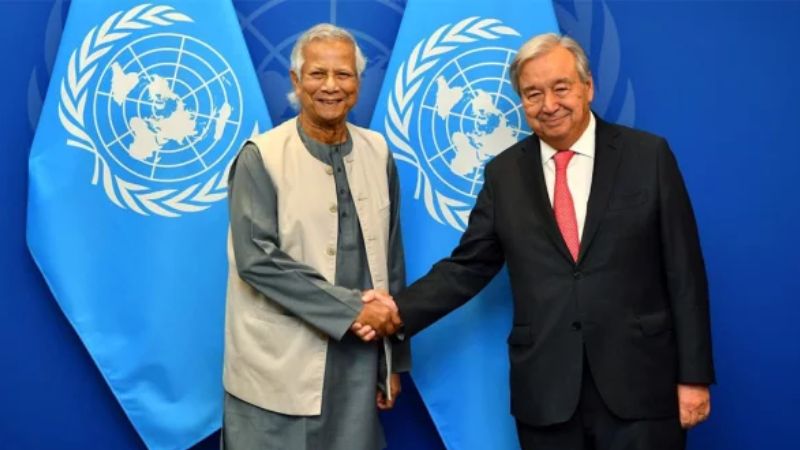
United Nations Secretary-General António Guterres and Chief Adviser Professor Muhammad Yunus are set to visit the Rohingya refugee camps in Cox’s Bazar on Friday (March 14) as part of Guterres’ annual Ramadan solidarity tour. The visit aims to reaffirm global commitment to addressing the plight of the Rohingya community and explore broader solutions for their safe repatriation.
According to Chief Adviser’s Deputy Press Secretary Azad Majumder, Prof Yunus will depart from Dhaka for Cox’s Bazar on Friday morning and return the same evening. During the visit, Guterres will participate in an iftar meal with Rohingya refugees and members of the Bangladeshi host community, recognizing Bangladesh’s generosity in sheltering nearly one million Rohingya who fled persecution in Myanmar.
The UN chief has consistently made solidarity visits a tradition, emphasizing the values of compassion, empathy, and generosity during Ramadan. “Every Ramadan, I undertake a solidarity visit and fast with a Muslim community around the globe. These missions remind the world of the true face of Islam,” Guterres said in a statement.
While in Bangladesh, Guterres is also scheduled to meet with Professor Muhammad Yunus and young representatives from civil society in Dhaka. His visit comes at a critical time as the global community continues to seek sustainable solutions for the Rohingya crisis.
In a recent letter to Prof Yunus, Guterres highlighted the urgency of an upcoming high-level conference focused on Rohingya Muslims and other minority groups in Myanmar. He expressed hope that the conference will renew international focus on the crisis and facilitate the development of comprehensive solutions. The UN chief assured Bangladesh of continued UN support and pledged to work with regional stakeholders, including the Association of Southeast Asian Nations (ASEAN), to create conditions conducive for the voluntary and safe return of Rohingya refugees to Rakhine.
“The United Nations will continue to mobilize the international community to support Bangladesh as a host to the Rohingya,” Guterres stated. “I will continue to exercise my good offices, including through my special envoy on Myanmar, to work closely with regional actors towards a political solution to the crisis.”
Additionally, Guterres noted that he has instructed UN country teams in both Bangladesh and Myanmar to enhance humanitarian aid and livelihood support for affected communities. He emphasized the importance of enabling safe, rapid, and unhindered humanitarian access throughout Myanmar, particularly in Rakhine.
This visit is deemed crucial not only for advancing discussions on Rohingya repatriation but also for strengthening Bangladesh’s engagement with the UN on various developmental fronts. The discussions could play a pivotal role in shaping international aid, refugee rehabilitation programs, and economic development initiatives in Bangladesh.
The visit underscores the UN’s unwavering support for Bangladesh amid the prolonged Rohingya crisis and highlights the need for a sustainable and diplomatic resolution to the humanitarian catastrophe.
BOB Post