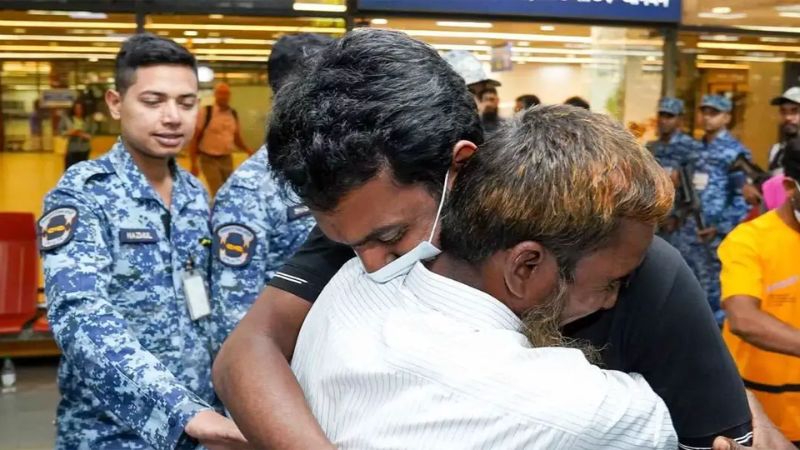
In a powerful culmination of humanitarian diplomacy and military coordination, 20 Bangladeshi teenagers—victims of a ruthless human trafficking ring—returned home today after spending nearly two harrowing years in prison in Myanmar.
Their journey back came aboard the Bangladesh Navy ship Samudra Avijan, which had traveled to Myanmar earlier this month to deliver 120 tonnes of relief supplies and participate in earthquake rescue efforts.
The rescued youths, many just 16 and 17 years old and primarily from Ukhiya in Cox’s Bazar, were lured with promises of better lives and lucrative jobs abroad. Instead, they were smuggled into Myanmar via Teknaf and detained as illegal immigrants after being intercepted by the Myanmar Army during a dangerous sea crossing.
One of the returnees, Mohammad Hashem, recounted the brutal betrayal.
“The traffickers sold me to an agent who took me to a hidden camp in the hills of Teknaf. From there, we were put on a boat to Malaysia. After seven days adrift at sea, we were caught by the Myanmar Army and thrown into jail.”
These young victims were incarcerated at the Jubilant Rehabilitation Centers in Myanmar under charges of illegal entry, despite being trafficked against their will.
Rear Admiral Mir Ershad Ali, Commander of the Chattogram Naval Area, confirmed that the teens were caught in the web of human traffickers exploiting Bangladesh’s vulnerable coastal communities.
“They were promised a future, but ended up imprisoned in a foreign land. The traffickers took advantage of their dreams.”
Rear Admiral Ali credited the successful repatriation to a mix of strategic diplomacy and goodwill missions undertaken by the Bangladesh Armed Forces.
“Our recent humanitarian aid during Myanmar’s earthquake crisis conveyed a message of compassion and responsibility. That created a positive diplomatic window which facilitated the release of these young men.”
Also returning with the trafficking victims were 55 members of the Bangladesh Armed Forces who had been deployed for medical and rescue missions in Myanmar following the earthquake.
Upon arriving at the Chattogram Naval Base, the rescued youths were provided vaccinations and reunited with their families through coordination with the district administration.
Rights activists are now calling for stronger crackdowns on trafficking networks operating in Cox’s Bazar and surrounding regions, where poverty and lack of opportunity leave young people vulnerable to exploitation.
This incident sheds light on how human trafficking not only robs youth of their futures but can transform hope into long-term detention and trauma.
As Bangladesh welcomes its lost sons back, the nation is reminded that trafficking is not just a cross-border crime—it’s a humanitarian crisis.
BOB Post