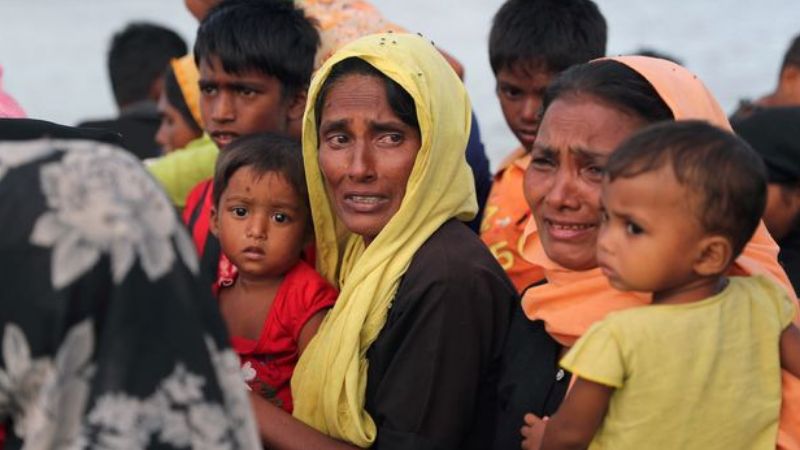
The latest report from the United Nations has revealed that after more than seven years in Bangladesh’s refugee camps, Rohingyas no longer see humanitarian assistance as enough. Instead, they are demanding justice, dignity, and a roadmap for returning home.
The findings come from a research-based study titled “Rohingya Perspectives on Pathways to a Safe, Dignified and Peaceful Future”, published Tuesday by the Office of the UN High Commissioner for Human Rights (OHCHR). According to the report, based on interviews with 125 Rohingya men and women in Cox’s Bazar, most refugees believe only a political solution can guarantee safe and dignified repatriation.

Citizenship or Nothing
The report notes that Rohingyas insist on full citizenship, recognition of their identity, equal rights, and freedom of movement. Many proposed that a UN peacekeeping zone be established in their native Rakhine State to ensure security. Others demanded the return of confiscated land, compensation, and accountability for the atrocities committed against them.
Arakan Army Rejected as Authority
According to OHCHR’s findings, more than 70 percent of participants said they do not consider repatriation under the control of the Arakan Army (AA) to be safe. Respondents accused the group of harboring hostility toward the Rohingya identity and warned of possible forced labor, religious persecution, or restricted camp life under AA authority. Women and girls were described as especially vulnerable.
Crisis of Leadership
The UN report also highlights widespread mistrust within the camps. Nearly half of those interviewed felt that there is no effective leadership representing the Rohingya community. Camp leaders, or majhis, are often accused of corruption, while diaspora figures are dismissed as self-interested. More than 60 percent of the women interviewed said they were unsure who actually represents them at the international level.
Future in the Youth
Despite despair, the OHCHR study records a sense of hope among younger Rohingyas. Many said access to education and livelihoods is essential for dignity, and they expressed a willingness to work with Rakhine Buddhists in rebuilding Myanmar if treated as equals.
No Return Under the Junta
Strikingly, 95 percent of respondents said they cannot imagine returning home while Myanmar’s military junta remains in power. According to the UN report, most fear that without justice and political guarantees, repatriation would only lead to renewed persecution.
The OHCHR concludes that humanitarian aid alone will never end the crisis. Instead, international actors must address the root causes: statelessness, racism, and impunity. For the Rohingya, the path forward is clear—citizenship, safety, justice, and direct involvement in shaping their own future.
BOB Post