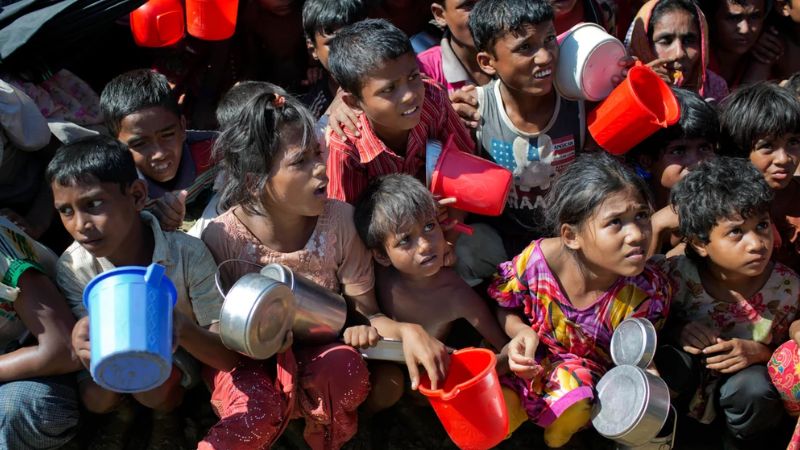
The United Nations High Commissioner for Refugees (UNHCR) and the International Organization for Migration (IOM) have warned that a reduction in international funding for over 1.1 million Rohingya refugees in Bangladesh could lead to a dire humanitarian crisis.
The two UN agencies have jointly appealed for necessary funds to support food, education, and other essential humanitarian aid for the Rohingya population. They cautioned that funding shortages in critical areas such as food assistance, fuel, and shelter could make the situation "very dire" for the refugees. A lack of support might push many Rohingya to undertake dangerous sea journeys in search of safer places to live.
According to a Reuters report, UNHCR, IOM, and 113 other organizations have requested $934.5 million in aid for 2025-26 to support the 1.48 million Rohingya refugees and host communities in Bangladesh.
Earlier in March, the United Nations World Food Programme (WFP) stated that food assistance rations for Rohingya refugees could be reduced due to the suspension of operations by the United States Agency for International Development (USAID). This raised concerns about a food crisis in the overcrowded refugee camps.
WFP noted that donor support has been declining, leading to food ration cuts for the Rohingya. While the reduction is not solely due to the USAID suspension, the U.S. decision has had an impact, as the United States has been the largest donor for Rohingya refugees.
Although the U.S. government has suspended all global development aid for 90 days, emergency food assistance remains an exception. Since the beginning of the Rohingya refugee crisis in August 2017, the U.S. has provided over $2.5 billion in aid to support the Rohingya in Bangladesh.
Following the announcement by former U.S. President Donald Trump, WFP revealed that funding shortages would force a cut in food assistance. Starting April 1, the monthly food ration for each Rohingya refugee will be reduced from $12.50 to just $6.
Meanwhile, UN Secretary-General António Guterres, during his visit to Bangladesh, pledged to do everything possible to prevent cuts to food assistance for the Rohingya refugees.
The Rohingya, one of the most persecuted communities in the world, were forcibly displaced from Myanmar due to ethnic violence and genocide. Since 2017, Bangladesh has generously sheltered them, but hosting such a large refugee population places immense pressure on resources, infrastructure, and the local economy.
If international funding declines:
Food insecurity will escalate, leading to malnutrition and suffering, especially among children.
Health crises will worsen due to inadequate medical services, increasing risks of disease outbreaks.
Lack of education and opportunities could leave an entire generation of Rohingya youth vulnerable to exploitation, radicalization, or human trafficking.
Forced migration and instability may rise, as desperate refugees seek risky sea routes to escape deteriorating conditions, leading to more regional security challenges.
A stable and sustainable solution for the Rohingya crisis requires global responsibility. The international community must continue its humanitarian support to prevent further suffering and work toward long-term solutions, including safe repatriation, legal protection, and sustainable livelihoods for the Rohingya people.
BOB Post