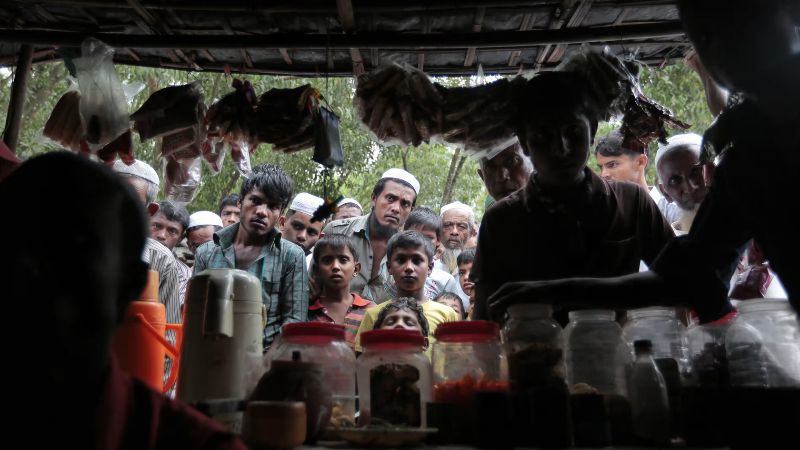
The local population in Teknaf and Cox’s Bazar is facing increasing pressure due to the continued stay of over a million Rohingya refugees, according to officials, researchers, and community leaders. Since the Rohingya influx in 2017, the lives and livelihoods of the host communities have been affected in many ways — economically, environmentally, and socially.
Forests Destroyed, Water Scarce
Thousands of acres of forest land have been cleared to build shelters and provide firewood for the camps. According to a joint report by UNDP and UN Women, around 5,000 hectares of forest in Ukhiya and Teknaf have been lost since 2017. This destruction has caused soil erosion, increased landslide risks, and pushed wildlife out of their natural habitats.
Water scarcity is another growing concern. A study by the Bangladesh Water Development Board found that excessive use of groundwater in and around the camps has significantly lowered the water table, affecting both locals and refugees who rely on tube wells for drinking water.
Jobs Lost and Wages Cut
The refugee presence has also disrupted the local economy. Many Rohingyas are working as cheap laborers, which has caused wages in the informal sector to drop. According to a study by the Policy Research Institute, day labor wages in Teknaf have fallen by over 14 percent since the camps were established. Local workers say they are struggling to compete.
Markets are also feeling the pressure. Prices of daily necessities have gone up, while income opportunities for locals have shrunk.
Crime on the Rise
The region has seen an increase in drug trafficking, particularly yaba smuggling, and human trafficking in recent years. Law enforcement agencies report that criminal networks are taking advantage of the situation, often using vulnerable refugees to carry out illegal activities. Teknaf Police have identified several drug routes linked to the border areas near the camps.
Health and Education Under Strain
Hospitals and clinics in Cox’s Bazar are overwhelmed. Local residents often have to wait longer for treatment, as many medical facilities prioritize humanitarian services for refugees. Schools have also become overcrowded, making it difficult for local children to receive proper education.
“We Are Carrying a Burden We Cannot Bear”
Locals in Teknaf and Ukhiya have repeatedly urged the government and international agencies to speed up the process of repatriation. Many say their patience is running out. “We welcomed them out of humanity, but now our own survival is at stake,” said Abdul Gafur, a local resident in Ukhiya.
Government Reaffirms Repatriation Is the Only Solution
Foreign Secretary Md Jashim Uddin recently raised the issue in a meeting with the outgoing UNHCR representative, saying that repatriation is the only viable solution. He said the long-term stay of the Rohingya is not sustainable for either side and stressed the need for international pressure on Myanmar to take them back.
The Road Ahead
Despite several failed attempts, Bangladesh continues to seek a peaceful and voluntary repatriation process. However, the unstable situation in Myanmar’s Rakhine State remains the biggest obstacle.
In the meantime, the people of Teknaf and Cox’s Bazar continue to bear the weight of a crisis they didn’t create — a burden that grows heavier with each passing year.
BOB Post