A new study by economists from Yale, Harvard, American University, and Queens University has provided quantitative evidence that Myanmar’s campaign of violence against the Rohingya was neither random nor exaggerated, as claimed by former state leader Aung San Suu Kyi, but systematic, economically motivated, and disproportionately harsh compared to state responses against other minority groups.
The research, soon to be published in the Economic Journal, draws on a large-scale survey of more than 4,600 Rohingya refugees in Cox’s Bazar alongside thousands of Bangladeshis in host communities, combined with satellite imagery, international rice price data, and conflict records.
The findings reveal a disturbing pattern: spikes in international rice prices Myanmar’s main agricultural product significantly increased the likelihood of state violence, looting, and land confiscation in rice-growing areas. The impact was most severe in Rakhine State, home to the Rohingya, where the probability of state-led violence against civilians rose by an order of magnitude compared to other regions.
“Suddenly the value of that rice-growing land becomes more salient,” said Yale economist Mushfiq Mobarak, one of the study’s authors. “And that’s whenthe attacks intensified through looting, burning, and expulsions.”

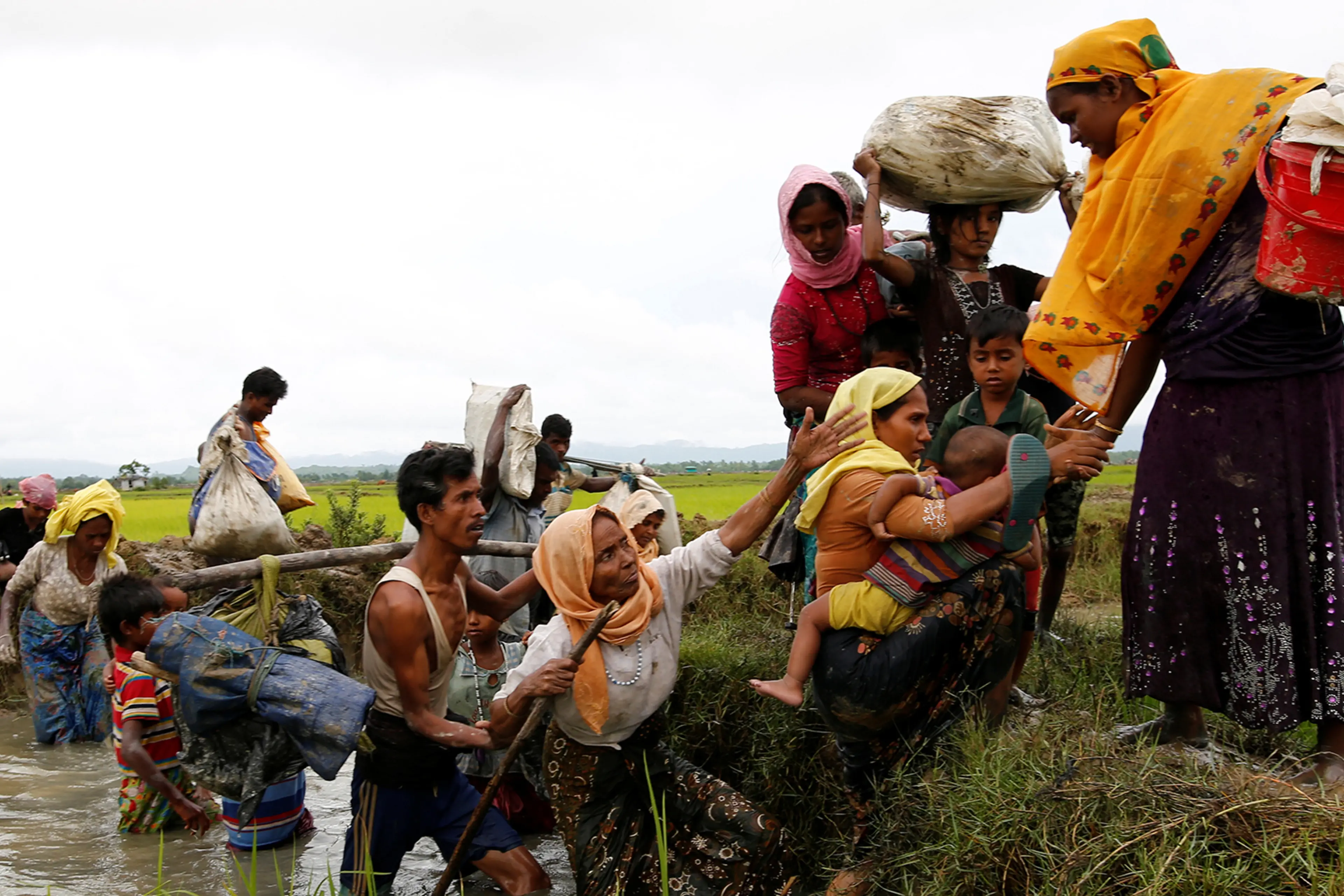
Survey results from Rohingya refugees confirm the data patterns: 79% reported losing their land, 60% lost animals, and more than half lost agricultural equipment. Families that had lived in Rakhine for generations were systematically stripped of livelihoods and property before being forced across the border into Bangladesh.
The study also compared Myanmar’s conflicts with other ethnic groups such as the Shan, Kachin, and Karen. It found that state forces treated the Rohingya with unprecedented brutality. For every clash involving Rohingya militias, government troops launched an average of six additional unilateral attacks on Rohingya civilians far higher than the 0.58 average against other groups. Civilian deaths spiked by nearly 60 in the month after each confrontation, a level of retaliation not seen in other ethnic conflicts.
“This is not random,” said co-author Paula López-Peña of Queens University. “There’s directed animosity here. The Rohingya were singled out with a far more disproportionate and violent response.”
The research directly challenges Suu Kyi’s defense before the International Court of Justice (ICJ), where she dismissed allegations of genocide as “exaggerated.” By combining refugee testimony with independent datasets, the study strengthens the Rohingya’s long-standing claims that the campaign against them was designed to destroy their community through killings, sexual violence, arson, and land dispossession.
Rights groups say the findings add weight to genocide claims at the ICJ, and underscore the need for accountability. “This study confirms what Rohingya survivors have said all along that the violence was deliberate, systematic, and intended to erase them from their homeland,” said a Rohingya community leader in Cox’s Bazar.
The authors suggest that their methodology using satellite imagery, price data, and global conflict records could be applied to other data-poor conflict zones, from South Sudan to Palestine, to establish whether state violence is systematic or disproportionate.
For Rohingya refugees, however, the study is more than an academic breakthrough. It provides statistical validation of their lived experiences, and a powerful tool in the fight for justice and recognition of the atrocities they endured.
BOB Post