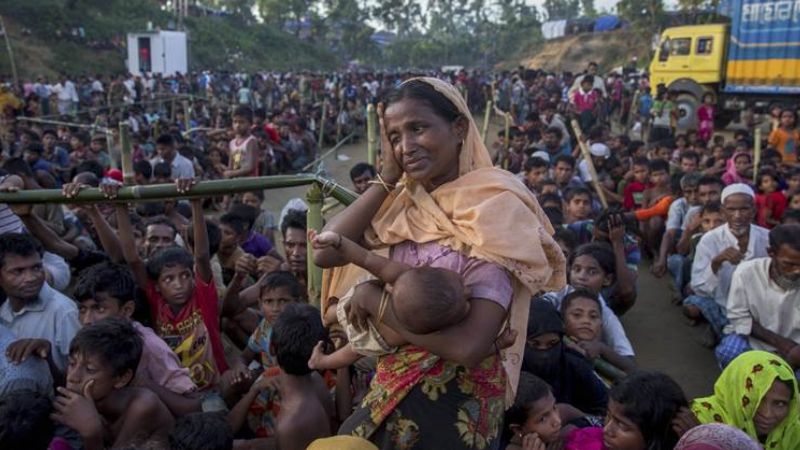
Armed clashes and worsening conditions in Myanmar have triggered a fresh wave of Rohingya refugees into Bangladesh, marking the largest movement since the mass exodus of 2017, according to the United Nations Refugee Agency (UNHCR).
Thousands of desperate families — mostly women and children — are crossing the border in search of safety, joining nearly one million Rohingya already living in overcrowded camps in Cox’s Bazar.
“This is the largest movement of Rohingya refugees into Bangladesh since 2017,” said UNHCR spokesperson Babar Baloch during a briefing in Geneva on Friday. Unlike the rapid influx seen in 2017, this wave has been unfolding gradually as fighting intensifies in Myanmar’s Rakhine State.
Urgent Need for Asylum and Aid
UNHCR is working closely with Bangladeshi authorities to manage the new arrivals, advocating for access to safety and asylum amid a tightly controlled border.
“Bangladesh has long shown generosity by hosting the Rohingya. We are appealing to the authorities to allow safe and managed access for those fleeing conflict,” Baloch said.
The recent arrivals, many in critical condition, are depending on local solidarity — sharing already limited resources with existing camp residents.

By the end of June, more than 121,000 new refugees had been biometrically registered, though many more remain unaccounted for. Access to shelter remains a major concern, as camp infrastructure strains under pressure.
“These new arrivals are crammed into just 24 square kilometers alongside almost one million others,” Baloch warned. “More humanitarian support is urgently required.”
Funding Crisis Threatens Humanitarian Response
While aid agencies have provided basic services — including food, healthcare, and education — a severe funding shortfall now threatens the entire response effort.

UNHCR’s $255 million appeal for 2024 is only 35% funded. Without immediate financial backing, the agency warns that healthcare services could be disrupted as early as September, and essential supplies like cooking fuel will run out by December. Food aid and education for 230,000 children, including 63,000 recent arrivals, are also at risk.
“We simply do not have the resources to support both the new arrivals and those who were already here,” Baloch cautioned.
A Call to the International Community
Despite the immense strain, Bangladesh continues to permit emergency assistance for new refugees — a move the UN describes as a “humanitarian gesture” under extremely difficult conditions.
As displacement from Myanmar shows no sign of abating, UNHCR and its partners are urgently calling on the global community to step in.
“Unless there is immediate and sustained international support, the already fragile humanitarian operation in Cox’s Bazar could unravel — with catastrophic consequences for more than one million people relying on it for survival,” Baloch said.
BOB Post