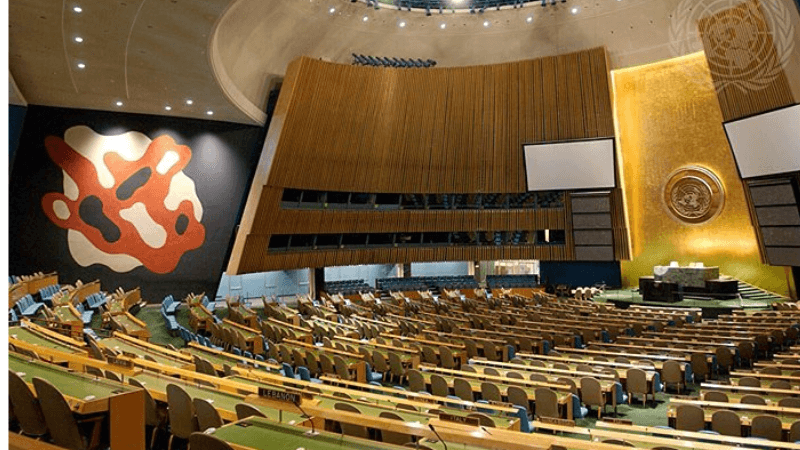
The 80th session of the United Nations General Assembly has been dominated by a renewed and intense focus on the Israeli-Palestinian conflict, with a high-level summit galvanizing significant diplomatic momentum towards a two-state solution. However, this spotlight has cast a long shadow over another protracted humanitarian crisis: the plight of the Rohingya, whose desperate situation, many fears, is being relegated to the sidelines of global attention even as the need for their safe and dignified repatriation becomes more critical than ever.
The week's proceedings saw a landmark high-level conference on the question of Palestine, co-chaired by France and Saudi Arabia. The summit culminated in several European nations, including France, Belgium, and Luxembourg, announcing their recognition of the State of Palestine, joining a growing international consensus. World leaders, in their addresses to the General Assembly, overwhelmingly reiterated the urgency of a ceasefire in Gaza and the establishment of an independent Palestinian state.

United Nations Secretary-General António Guterres, in his opening remarks, underscored the gravity of the situation, stating, "The Israeli-Palestinian conflict is morally, legally, and politically intolerable. The nightmare must stop." This sentiment was echoed by numerous heads of state, who dedicated significant portions of their speeches to the crisis, reflecting a concerted global effort to address the long-standing issue.
In stark contrast, the Rohingya crisis, now in its eighth year since the mass exodus from Myanmar, has received comparatively muted attention during the high-level general debate. While a high-level conference on the situation of Rohingya Muslims and other minorities in Myanmar is scheduled for September 30th, diplomats and humanitarian organizations have expressed concern that it may not generate the same level of political will and concrete commitments as witnessed for the Palestinian cause.
Bangladesh's interim leader, Muhammad Yunus, in the lead-up to the General Assembly, warned that his country could no longer bear the burden of hosting over a million Rohingya refugees alone and called for a practical roadmap for their voluntary return. He highlighted the dwindling international funding for the refugee response, which has led to cuts in essential services, including food, healthcare, and education within the sprawling camps in Cox's Bazar.
Humanitarian organizations on the ground have painted a grim picture of the deteriorating conditions. In a joint statement, a consortium of NGOs warned that the Rohingya crisis is at risk of becoming a "forgotten crisis," with catastrophic consequences for a generation of stateless children. They have urged the international community to move beyond short-term humanitarian aid and work towards long-term, sustainable solutions, with repatriation at the forefront.
The challenges to the repatriation of the Rohingya are immense. The political instability and ongoing conflict in Myanmar's Rakhine State, coupled with the military junta's failure to guarantee the safety, citizenship, and fundamental rights of the Rohingya, have created an environment where a safe return is currently untenable. Rohingya representatives have consistently stated that they will not return to a situation of persecution and that any repatriation plan must include their direct involvement and address the root causes of their displacement.
As the world's leaders conclude their deliberations at the UNGA, the disparity in focus between the Palestinian and Rohingya crises serves as a poignant reminder of the selective nature of international attention. While the renewed push for a resolution in the Middle East is a welcome development, the lagging response to the plight of the Rohingya underscores the urgent need for the international community to demonstrate a more consistent and equitable commitment to all populations facing persecution and displacement.
The upcoming high-level conference on the Rohingya will be a crucial test of whether the world can translate its stated principles of human rights and justice into meaningful action for one of the world's most vulnerable communities. The demand for a safe, voluntary, and dignified repatriation for the Rohingya is not just a necessity but a moral imperative that can no longer be ignored.
BOB Post