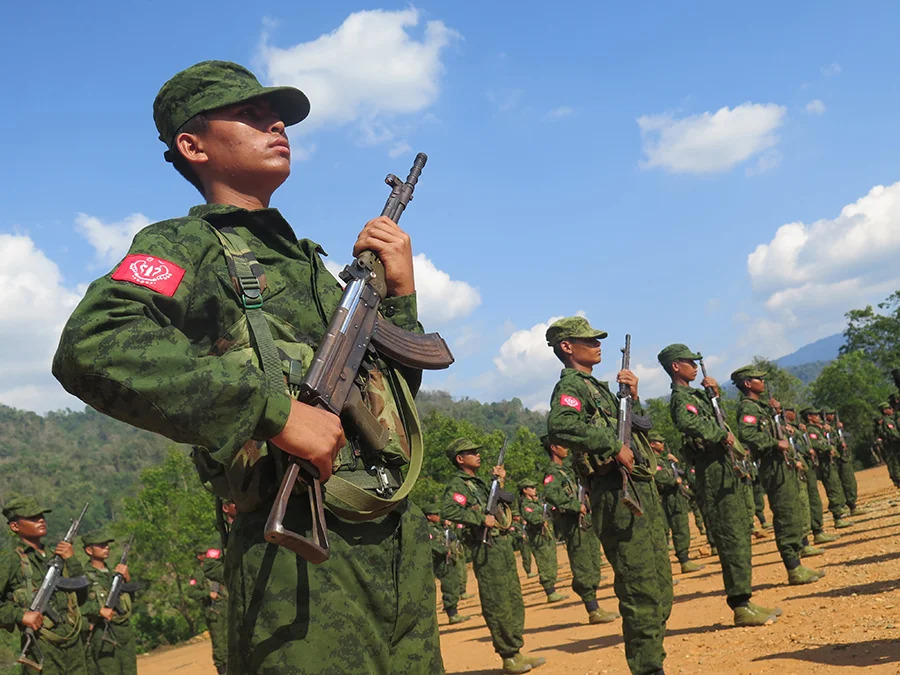
Tens of thousands of Rohingya refugees have fled Myanmar’s conflict-ridden Rakhine state in recent months, seeking shelter in Bangladesh. The escalating violence, driven by clashes between the Myanmar military junta and the Arakan Army (AA) rebel group, has forced many Rohingya to abandon their homes in search of safety.
Since a brutal military crackdown in 2017 led to the mass exodus of Rohingya Muslims to Bangladesh, the situation in Myanmar has remained volatile. The military coup in 2021 further exacerbated tensions, with ethnic rebel groups, including the well-armed Arakan Army, intensifying their fight for greater autonomy in Rakhine state.
However, for the Rohingya still residing in Myanmar, the recent resurgence of violence has brought new threats. Reports indicate that both the Myanmar military and the AA have been forcibly recruiting young Rohingya men to fight in the ongoing conflict. Those who resist face abduction or execution.
Desperate Escape Amidst Brutal Violence
Roshid Ahmad, a 21-year-old Rohingya from Maungdaw, described his escape to Bangladesh in December 2024. “The Arakan Army rebels are forcibly taking away Rohingya young men from villages, conscripting and making them fight against the Myanmar military,” Ahmad told DW from a refugee camp in Cox’s Bazar. “Many of the abducted Rohingya have disappeared without any trace.”
Other refugees have shared similar accounts of atrocities. Jawad Alom, who fled Myanmar in September with his family, recalled how AA fighters stormed their village in Buthidaung, abducting men and brutally attacking women. “My brother and I escaped, but when we returned, we found that the rebels had gang-raped at least half a dozen Rohingya women, including my brother’s wife,” Alom said.
As the conflict intensifies, reports of summary executions have also emerged. Alom recounted finding bodies floating in roadside ponds while fleeing to Bangladesh, believing them to be Rohingya men executed by AA rebels.
A Growing Humanitarian Crisis
Bangladesh estimates that over 65,000 Rohingya refugees have arrived since late 2023, with other figures suggesting as many as 80,000. The influx has strained resources in the already overcrowded refugee camps of Cox’s Bazar, which currently host nearly one million Rohingya.
Despite multiple repatriation attempts in recent years, most Rohingya remain unwilling to return to Myanmar due to security concerns. Canada-based refugee expert Mohammad Zaman highlighted the ongoing repression by both the military and the AA, stating, “That is no right environment to return to.”
International Inaction and Uncertain Future
Zaman criticized the international community for its lack of response to what many describe as a second or third wave of genocide against the Rohingya. “The inaction is deplorable,” he said, emphasizing the need for urgent global intervention.
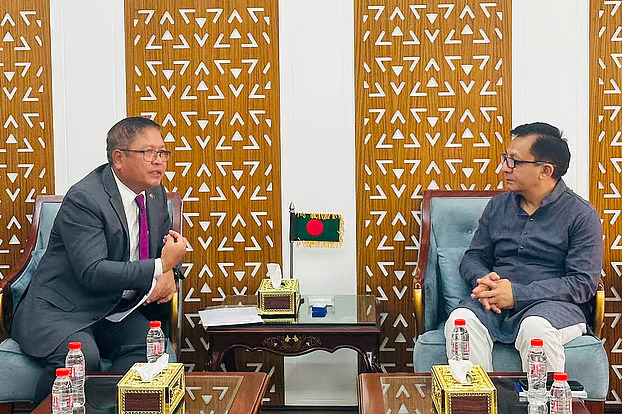
Bangladesh’s interim government has indicated its willingness to support UN-led humanitarian efforts in Rakhine, but only if violence ceases. Khalilur Rahman, the high representative on Rohingya issues, stated, “Aid must be provided without discrimination or intimidation. Only then can we talk about voluntary, safe, and dignified repatriation.”
Rohingya activists stress that any repatriation must guarantee legal recognition, accountability, and protection. “Without these guarantees, returning to Myanmar would only mean another cycle of genocide and displacement,” said human rights activist Htway Lwin.
For now, as conflict rages on in Myanmar, the Rohingya in Bangladesh can only wait, uncertain of when—or if—they will ever be able to return home safely.
BOB Post