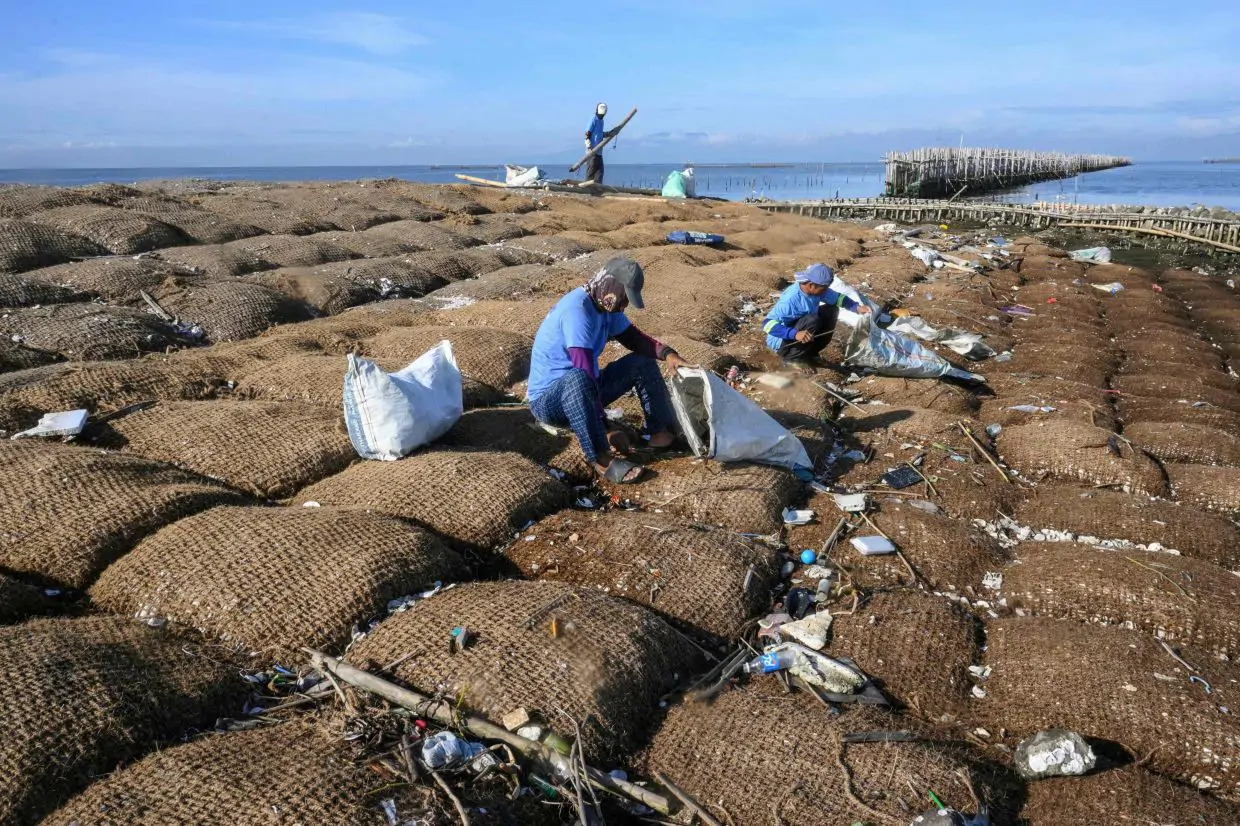
Residents of a flood-prone island in the Philippines are using bamboo poles, brushwood and discarded oyster shells to reduce the impact of waves and flooding, offering an alternative to costly concrete seawalls.
The project is under way on Pamarawan Island, north of Manila, where around 3,000 people face recurring floods driven by storm surges, land subsidence and rising sea levels.
For years, residents raised their homes with layers of concrete, but the walls often failed to withstand powerful waves. Fisherman Edgar Javier said the new barriers had reduced the force of waves that once threatened his home.
The initiative began with a study by the city government of Malolos and a Dutch engineering consultancy. Workers started installing bamboo poles along the coast in May 2025 to slow water flows and trap sediment, helping to raise the seabed and create conditions for mangrove growth.
According to AFP, workers are also building an oyster shell breakwater about 100 metres offshore. Coconut-fibre bags filled with shells are secured with wooden stakes to weaken waves before they reach the community.
The project covers around 14 hectares along Manila Bay and costs 70 million pesos, or about $1.1 million, including maintenance. Mayor Christian Natividad said a concrete seawall would cost roughly 90 million pesos.
Scientists have cautioned that nature-based solutions cannot replace conventional flood-control infrastructure everywhere. Bamboo also needs regular replacement, while the project's long term effectiveness remains uncertain.
The first phase was completed in late 2025, and residents say the barriers have helped keep floodwaters away during recent typhoons and monsoon rains. Arsenia Cabigao, 58, said flooding had previously disrupted her livelihood by submerging areas where she dried fish.
A scientific assessment is expected next year to determine whether mangrove planting can begin. Officials hope the project could eventually be replicated in other flood-prone areas.
“It's hard to fight water. Now we're trying to live with water,” Natividad said.
BOB Post