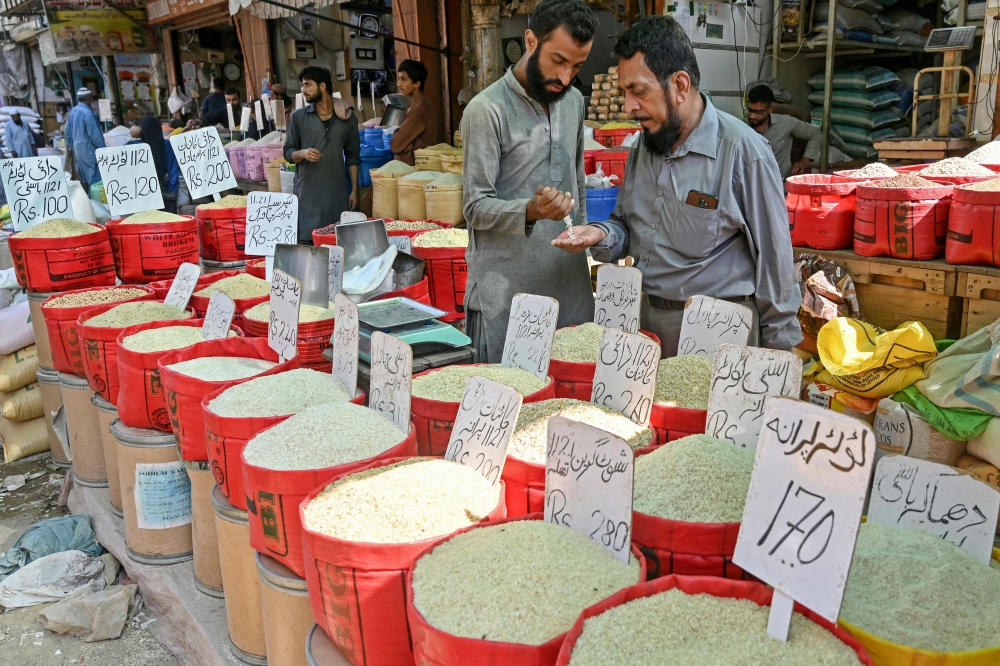
Pakistan’s rice exports plunged 40.5 percent to $1.31 billion during the first seven months of the current fiscal year, as increased competition from neighboring India eroded Islamabad’s market share and weakened its pricing power, according to official data released on Tuesday.
Figures from the Pakistan Bureau of Statistics (PBS) show that non-Basmati rice exports were hit hardest, falling 50.8 percent year-on-year to $827.8 million. Export volumes dropped to 2.0 million tons, down from 3.15 million tons in the same period last year. Basmati rice exports also declined, though at a slower pace, slipping 6.62 percent to $477.7 million, with volumes easing to 436,484 tons from 487,278 tons.
Officials from the Ministry of National Food Security informed a parliamentary committee in separate meetings held in December and January that India’s re-entry into the global rice market was a primary factor behind the downturn. They said increased Indian supply had intensified competition and made Pakistani rice less competitive in key destinations.

According to Arab News, industry leaders say the slump reflects not only India’s larger output but also structural advantages, including trade agreements and government subsidies that give Indian exporters an edge in pricing and market access.
Data from the Federal Board of Revenue (FBR) paints an even bleaker picture. For the July–December period, rice exports fell 47 percent to $973 million, compared to $1.82 billion a year earlier ,a shortfall exceeding $800 million.
In an effort to cushion exporters, the Ministry of Commerce last month introduced a 9 percent rebate on the free-on-board (FOB) value of Basmati rice exports priced above $750 per metric ton. The incentive was announced under the “Drawback of Local Taxes and Levies for Rice Order, 2026” on January 23, aiming to ease liquidity constraints and restore competitiveness.
Industry representatives say they are now accelerating efforts to diversify markets. Currently, Basmati rice is primarily shipped to the Middle East and the European Union, while non-Basmati varieties are exported to Southeast Asia and African countries.
Malik Faisal Jahangir, chairman of the Pakistan Rice Exporters Association, said exporters are exploring new opportunities in China, the Philippines, Indonesia, and Bangladesh to offset losses in traditional markets.
Analysts warn that without sustained policy support and strategic market expansion, Pakistan’s rice sector could face prolonged pressure amid shifting global trade dynamics.
BOB Post