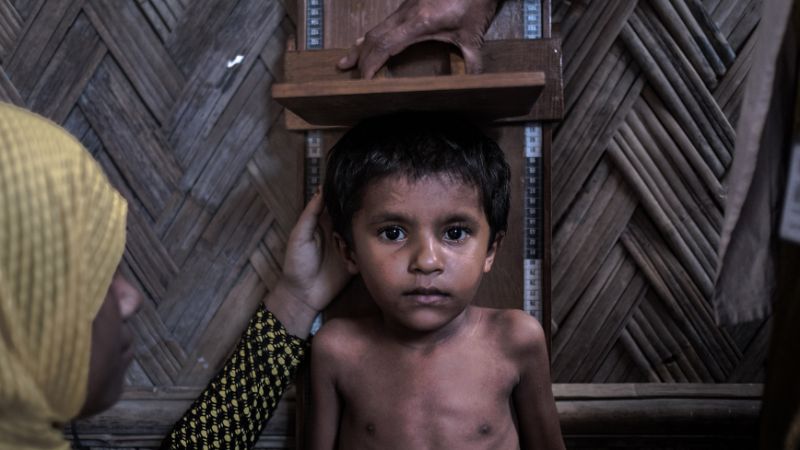
The number of Rohingya children requiring emergency treatment for severe acute malnutrition in Bangladesh's refugee camps has surged by 27% in February 2025 compared to the same period last year, according to UNICEF.
In Cox’s Bazar, where over one million Rohingya refugees reside—including more than 500,000 children—malnutrition levels have reached emergency thresholds, the United Nations agency reported on Tuesday (March 11).
Over 15% of children in the camps are now malnourished, marking the highest recorded rate since the mass displacement of Rohingya refugees in 2017. Last year, UNICEF provided lifesaving treatment to nearly 12,000 children under five, achieving a 92% recovery rate. However, without immediate intervention, severe acute malnutrition remains a fatal threat.
“The crisis is worsening, with January 2025 witnessing a 25% rise in severe malnutrition cases year-on-year (from 819 to 1,021 cases), followed by a 27% increase in February (from 836 to 1,062 cases),” UNICEF said.
Several factors contribute to this alarming trend, including prolonged monsoon rains in 2024, deteriorating sanitation, spikes in severe diarrhoea, cholera and dengue outbreaks, intermittent food ration cuts, and a fresh influx of refugees fleeing violence in Myanmar.
Urgent Need for Sustained Food Support and Repatriation Solutions
UNICEF’s Representative in Bangladesh, Rana Flowers, warned that as humanitarian needs grow and funding dwindles, the situation is becoming untenable.
“For now, we can provide the services that Rohingya mothers come seeking, and that very sick children need, but as needs keep rising and funding declines, families are telling us they are terrified of what will happen to their babies if there are further food ration cuts and if lifesaving nutrition treatment services stop,” she said.
The agency estimates that 14,200 children in the camps will suffer from severe acute malnutrition in 2025—a figure that could rise further with additional ration cuts, inadequate diets, and limited access to clean water and healthcare.
Malnourished children are 11 times more likely to die than their well-nourished peers without timely treatment, UNICEF warned.
The deepening crisis highlights the urgent need for a comprehensive solution. Sustained international food support remains crucial to prevent a humanitarian catastrophe. However, the broader issue of repatriation also demands immediate attention. Rohingya refugees remain in limbo, unable to return safely to Myanmar while lacking legal rights to work in Bangladesh. Without a long-term resolution, cycles of malnutrition, disease, and suffering will persist.
“These families cannot yet safely return home, and they have no legal right to work, so sustained humanitarian support is not optional – it is essential,” Flowers emphasized.
Despite UNICEF’s commitment to delivering aid, the looming risk of funding shortfalls threatens to cripple essential services. The international community must act swiftly to ensure consistent aid and work toward a viable repatriation solution, offering Rohingya families a path out of their prolonged suffering.
BOB Post