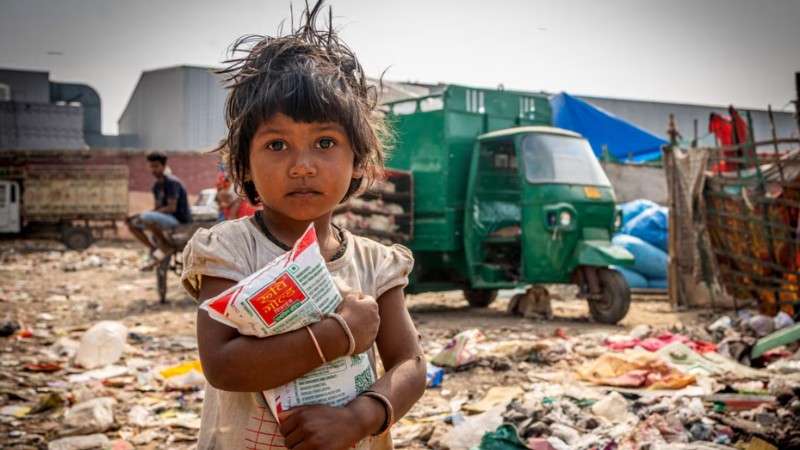
Around 40,000 Rohingya refugees in India may soon have access to education in government schools, following the Supreme Court’s recent statement affirming that no child should face discrimination in education.
During a hearing on a petition, a bench of Justices Suryakant and N. Kotiswar Singh reiterated the principle of equal education for all children. The court also sought details about the living conditions of Rohingya families, including their residences and personal particulars. While a final verdict is still awaited, the Supreme Court’s remarks have raised expectations among refugee families.
Rohingya refugees in Delhi are optimistic that the ruling will secure their children’s right to education. Speaking to India Tomorrow, a refugee named Naeem (name changed) welcomed the development, saying, “Schools ask for Aadhaar cards for admission, but if the Supreme Court rules in our favor, it will be a great relief.” He also expressed hope that Prime Minister Narendra Modi would support their cause until conditions in Myanmar improve.
The petition, filed by the NGO Rohingya Human Rights Initiative, demands free education in government schools, access to public healthcare, and benefits like subsidized food for refugees. Advocate Manik Gupta, representing the NGO, highlighted that in 2019, the Supreme Court had recognized Rohingya children’s right to education. “We have approached the court again to ensure all Rohingya children receive school admissions, regardless of their documentation status,” he said.
The PIL seeks directives allowing Rohingya children to enroll in schools without Aadhaar cards and to appear for board and university exams without restrictions.
According to the Ministry of Home Affairs, approximately 40,000 Rohingya refugees currently reside in India, primarily in Jammu and Kashmir, Hyderabad, Haryana, Uttar Pradesh, Delhi-NCR, and Rajasthan.
The Rohingya crisis stems from Myanmar’s 1982 Citizenship Law, which stripped them of citizenship. The situation worsened in 2012 after violent communal clashes in Myanmar’s Rakhine State, forcing thousands to flee.
As the Supreme Court prepares for the next hearing, all eyes remain on its final decision, which could set a global precedent for refugee rights.
BOB Post