Less than a year after riding a wave of youth-driven political change to power, Nepal's Prime Minister Balen Shah is confronting the first major public backlash against his government, as protests over the eviction of landless families gather momentum across the country.
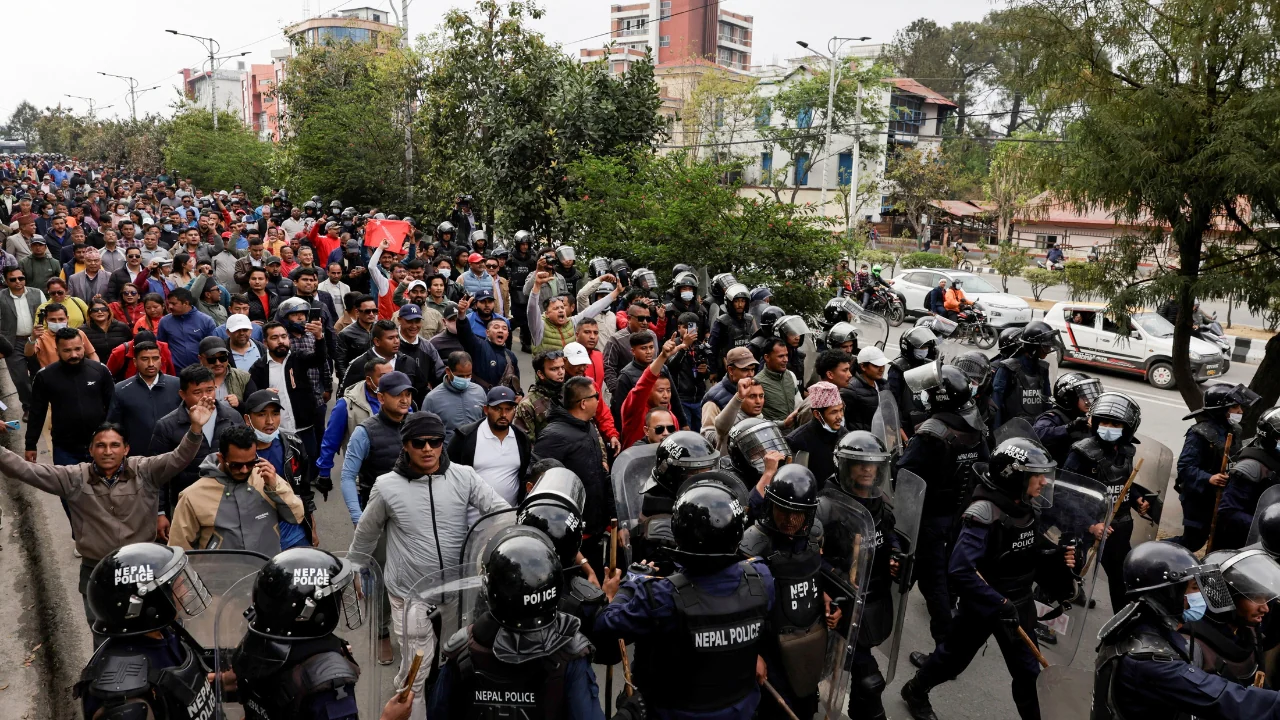
Hundreds of demonstrators rallied in Kathmandu on Saturday, accusing the government of violating the rights of poor and displaced communities through an aggressive eviction campaign that critics say has left thousands without shelter or a viable rehabilitation plan.
Organised by the Joint National Squatters Front, the protest saw participants carrying banners demanding an end to what they described as state repression against vulnerable people. Protesters called for an immediate halt to forced evictions, the release of detained activists, respect for human rights, and permanent housing for displaced families.
The unrest marks a striking political moment for Shah, whose rise to power was closely associated with Nepal's youth-led demand for accountable governance. Now, many of the same young activists who once championed his reformist image are questioning whether his administration is repeating the heavy-handed practices it once criticised.
The controversy stems from an eviction drive launched in April across Kathmandu Valley and other urban areas, where authorities cleared informal settlements occupied by more than 2,600 families—affecting an estimated 15,000 people, according to Indian broadcaster NDTV.
While officials defended the campaign as part of urban management and public land recovery efforts, rights advocates argue that the removals proceeded without a credible rehabilitation strategy, leaving hundreds of families stranded in temporary holding centres.
Tensions escalated after the government ordered residents to vacate those shelters earlier this month despite many saying they had nowhere else to go. The humanitarian situation further deteriorated when flooding struck one of the temporary settlements on Friday, forcing emergency evacuations.
The government's response has since come under sharper scrutiny after police dispersed visiting student activists and volunteers with batons, leaving at least one person hospitalised. Local media also reported the detention of several activists, students and journalists who attempted to document conditions inside the holding centres.
The public mood became even more volatile following reports that 25-year-old Ganesh Nepali set himself on fire after an alleged confrontation with Kathmandu city police over his motorcycle.
Although the incident was unrelated to the eviction campaign itself, it has become a powerful symbol for protesters who argue that growing public frustration is being met with coercion rather than dialogue.
Political opposition has seized on the issue. Nepali Congress President Gagan Kumar Thapa condemned the arrests of demonstrators and demanded the immediate release of those detained. Protest actions have also spread beyond the capital, with police arresting dozens of supporters of the movement in Koshi Province.
The unfolding crisis presents a defining challenge for Shah's administration. Celebrated internationally as a new-generation political figure and once praised for his reform agenda as Kathmandu's mayor, Shah now faces criticism that governance centred on efficiency and urban renewal cannot come at the expense of social justice and constitutional rights.
For many observers, the dispute is no longer simply about illegal settlements or urban planning. It has evolved into a broader debate over whether Nepal's new political leadership can balance development with dignity and whether a government propelled into office by a youth movement can retain the trust of the generation that helped bring it to power.
BOB Post