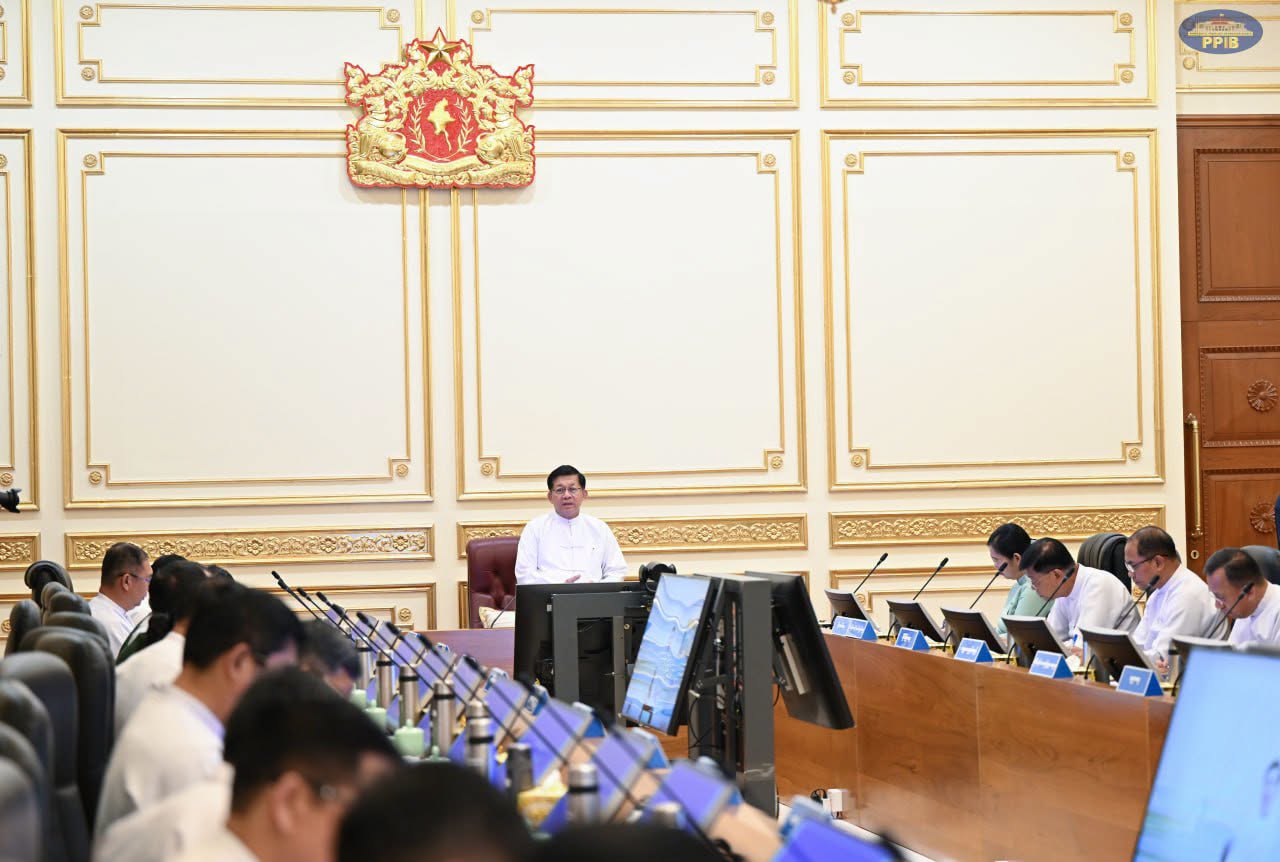
Since Myanmar’s military coup in 2021, the nation has spiraled into economic devastation, human rights abuses, and mass displacement under military mismanagement. The Myanmar kyat has plummeted in value against foreign currencies, while investments have fled the country, further destabilizing an already fragile economy.
The Armed Conflict Location and Event Data (ACLED) reports that since the coup, 288 out of Myanmar’s 330 townships have witnessed a staggering 12,739 armed conflicts, resulting in 57,904 civilian deaths, including 4,537 from airstrikes and heavy artillery. As of August 2024, over three million people are internally displaced, with 18 million requiring humanitarian aid. Additionally, the United Nations Development Programme revealed that almost half the population fell below the poverty line in 2023, up from 27 percent in 2017.
Amid the turmoil, armed opposition to the junta has grown, with the military reportedly losing control of over half the country. Significant defections from the military have intensified the junta’s manpower issues, prompting them to activate conscription laws in February 2024. The People's Military Service Law mandates military service for men aged 18-35 and women aged 18-27, while veterans are conscripted under the Reserve Forces Law. Another mandate recruits men up to age 65 into local militias, with the military aiming for a monthly intake of 5,000 conscripts.
The forced conscription policy has fueled fear among working-age citizens, many of whom have fled to neighboring Thailand. Young people have lined up at the Royal Thai Embassy in Yangon for visas, while thousands have already crossed the border, often without proper documentation. This exodus has exacerbated a brain drain that began with the coup, severely impacting key sectors like agriculture and creating food insecurity.
This law has also spurred Myanmar’s businesses to sell assets and relocate to Thailand. In the past year, Myanmar nationals invested 3.7 billion baht (US$111 million) in Thai properties, making them the second-largest buyers after Chinese nationals. Thailand’s Department of Employment noted that nearly 2.3 million Myanmar migrants registered by July 2024, with an estimated two million still undocumented.
Adding to these challenges, the junta’s strict passport renewal regulations are forcing many Myanmar nationals abroad into undocumented status. Rules include passport denials for students on non-ED visas and a mandatory income transfer to Myanmar bank accounts, with a 10 percent tax on earnings abroad.
Border areas remain flashpoints, with more than 4,500 battles recorded since the coup. Nine temporary camps in Thailand now host 90,000 Myanmar refugees. However, without Thailand’s ratification of the 1952 Geneva Convention on refugees, it holds no obligation to provide protections, leading to the deportation of 144,000 undocumented Myanmar migrants over the last three months.
As forced conscription continues, concerns grow that deportees may join resistance groups. The prolonged instability has also fueled cross-border crime, with increases in drug trafficking, human trafficking, and fraud rings in the Golden Triangle.
Myanmar’s conscription laws and political turmoil continue to pose severe humanitarian and security challenges for the region, with Thailand bearing the brunt of the refugee crisis. As internal resistance mounts against the junta, so does the likelihood that Myanmar’s people will continue to flee, seeking safety and stability across borders.
BOB Post