Myanmar's military junta announced Thursday it will release 4,893 prisoners in a mass amnesty to mark the country's traditional New Year festival, known as Thingyan. The move, the junta said, is aimed at promoting “state-building,” easing public concerns, and showing “compassionate grounds.”
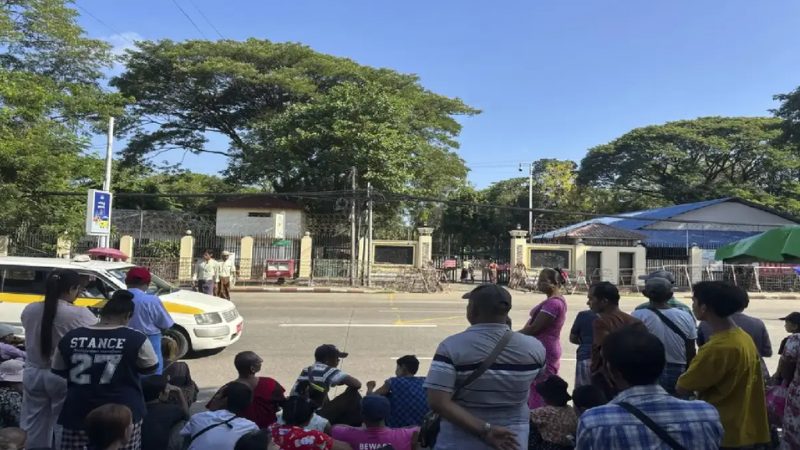
The announcement was met with cautious interest, as families gathered outside Yangon’s Insein Prison early in the morning, hoping to reunite with loved ones. Among those to be released are 13 foreign nationals who will be deported, though no further details were provided on their identities or charges.
The military government, which seized power in a 2021 coup, has faced widespread international condemnation and internal unrest, triggering a nationwide civil war and the detention of thousands of activists and protesters. Civil rights groups say that despite periodic amnesties, many high-profile political prisoners, including deposed civilian leader Aung San Suu Kyi, remain behind bars.
The junta stated that, in addition to the mass release, other inmates will have their sentences reduced by one-sixth. However, individuals convicted of serious crimes — such as terrorism, unlawful association, murder, and rape — will not be eligible.
The announcement comes as junta leader Min Aung Hlaing is reportedly set to travel to Bangkok for a rare foreign visit, where he is expected to meet Malaysian Prime Minister Anwar Ibrahim, current chair of the ASEAN bloc. While the junta has not officially confirmed the meeting, Anwar has said it will focus on the safety of Malaysian humanitarian teams deployed to Myanmar following last month’s devastating 7.7-magnitude earthquake.
Traditionally a time of vibrant celebration, this year’s Thingyan water festival has been subdued due to the March 28 quake, which struck Myanmar’s central region and has so far claimed at least 3,725 lives according to official figures.
Despite the announcement, rights groups remain skeptical about the true intent behind the amnesty, viewing it as a symbolic gesture that falls short of addressing deeper political and humanitarian crises gripping the country.
BOB Post