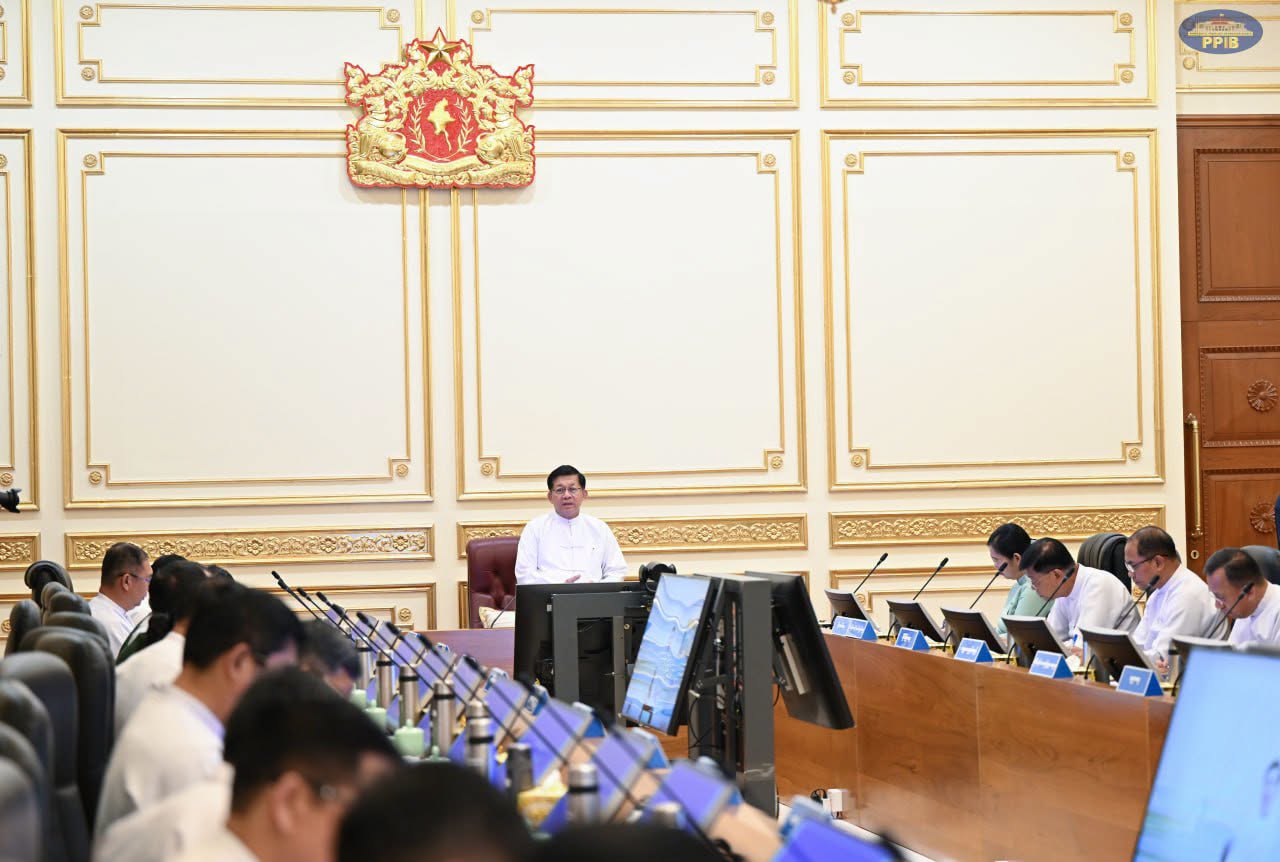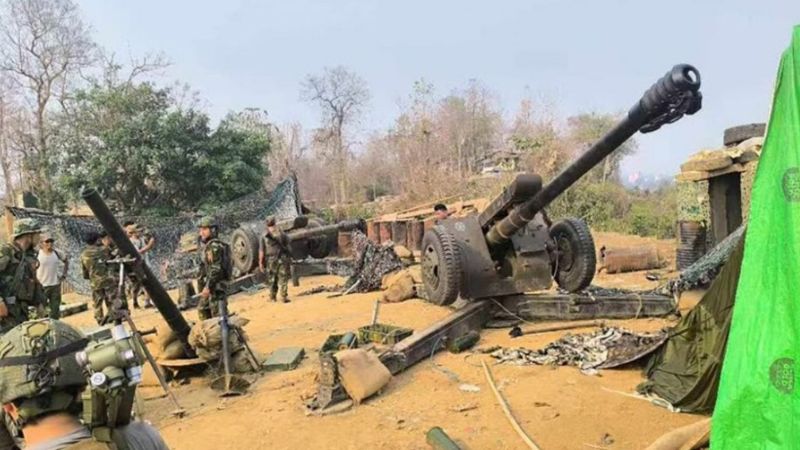
Myanmar’s military has regained control over several key towns previously held by ethnic insurgents, following weeks of intensified air strikes and renewed military offensives reportedly supported by China.
According to BBC reports cited by UNB, the junta recently recaptured Kyaukme and Hsipaw—two strategic towns in northern Shan State that sit along Asian Highway 14, a vital trade route linking the Chinese border to central Myanmar. Both towns had been under the control of the Ta’ang National Liberation Army (TNLA) since late 2024, marking a major setback for the regime at the time.
TNLA spokesman Tar Parn La told the BBC that heavy clashes continue in the area, with air strikes occurring “every day.” The junta’s forces, bolstered by thousands of new recruits and advanced weaponry, have now reestablished control of the route to China, signaling a shift in battlefield momentum.
Analysts attribute this turnaround largely to Beijing’s backing, which includes the supply of drones, aircraft parts, and other technical assistance. China has reportedly also provided financial and political support for the junta’s planned December elections, while exerting pressure on border-based ethnic groups to halt their offensives.
Military sources indicate that more than 60,000 newly conscripted soldiers have joined the junta’s ranks this year. Combined with the deployment of Chinese-made drones and Russian aircraft, the regime has achieved superior air power, enabling precise strikes that have weakened insurgent positions.
Despite the junta’s advances in Shan State and other trade-route regions, anti-junta resistance forces—including the People’s Defence Forces (PDFs) and various ethnic militias—remain active. However, coordination challenges, internal distrust, and restricted access to arms due to tighter Chinese border controls have limited their capacity to counter the renewed offensive.
Experts caution that the military’s territorial gains are unlikely to bring lasting peace. Large swathes of Rakhine and Chin States remain under insurgent control, and civilian displacement continues on a massive scale. “The military has destroyed over 100,000 homes in the dry zone alone, leaving deep grievances that will last generations,” said Morgan Michaels of the International Institute for Strategic Studies.
While China continues to support the junta in pursuit of stability and strategic access to the Indian Ocean, observers warn that the ongoing humanitarian crisis and widespread destruction could perpetuate Myanmar’s cycle of resistance and repression for years to come.
BOB Post