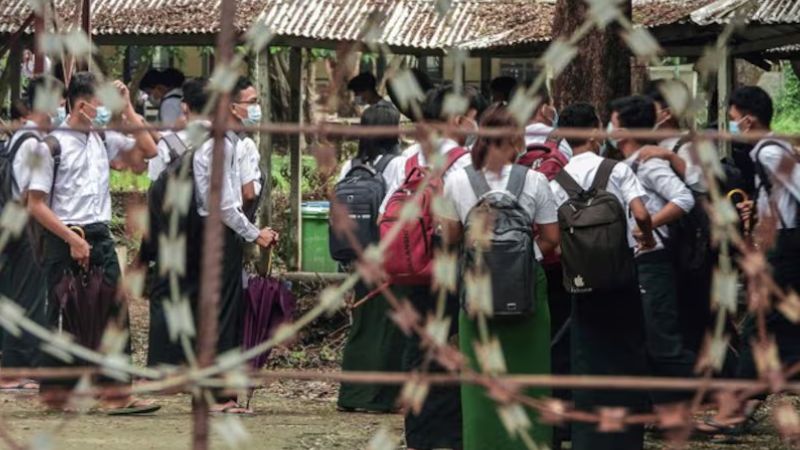
Children in Myanmar are facing unprecedented levels of violence as the military intensifies its crackdown, with rights groups warning of a 400 percent surge in attacks since 2020. Schools and hospitals have become deliberate targets, hundreds of minors have been killed or maimed, and many more have been abducted for forced recruitment or extortion, raising global concern over what advocates describe as one of the world’s gravest child protection crises
Since the 2021 coup, Myanmar has descended into a deepening humanitarian crisis where children are among the most affected. Reports indicate a shocking 400 percent rise in violence against minors between 2020 and 2023, with 500 children killed or maimed in 2022 and the toll climbing to 861 in 2023. Rights groups warn that this pattern reveals not only widespread civilian suffering but also the deliberate targeting of the country’s most vulnerable.

The military’s assaults have extended to schools and hospitals, with more than 200 documented attacks in recent years. These strikes strip children of access to education and health care, while also inflicting psychological trauma and long-term instability. Beyond bombings and gunfire, abductions have become increasingly common, with minors forced into recruitment, extortion, or information gathering for armed groups.
International organizations are scrambling to respond. Justice for Myanmar works to cut financial flows to the junta, while Save the Children provides direct aid and campaigns for accountability. CARE has directed funds toward basic needs and resilience programs, and World Vision continues to focus on clean water, sanitation, and hygiene for displaced families. Yet aid groups caution that humanitarian support is not enough while the violence continues unchecked. “We are patching wounds while the attacks persist,” said one aid worker, underscoring the limits of relief efforts in the face of systematic military aggression.
Observers describe the situation as one of the gravest child protection crises in the world today. They warn of a potential “lost generation” in Myanmar, robbed of education, health, and safety. As international responses remain slow and fragmented, pressure mounts on governments and global institutions to act decisively. Without urgent intervention, the future of Myanmar’s children risks being written in violence and despair.
BOB Post