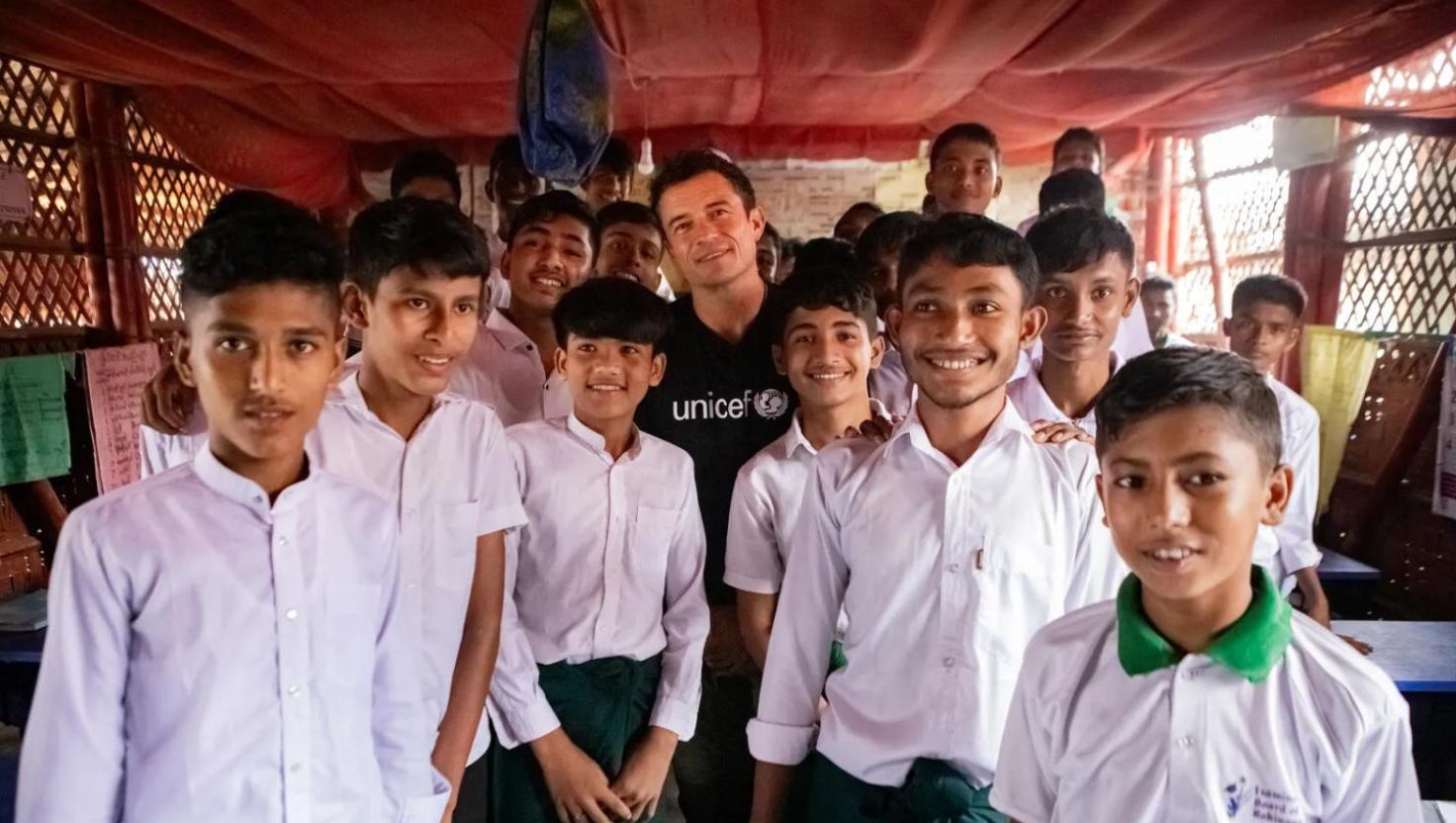
UNICEF Goodwill Ambassador Orlando Bloom has warned that half a million Rohingya children are at risk of losing access to education, health, and protection services as international funding for the refugee camps in Cox’s Bazar on Thursday(October 6) continues to shrink.
During a four-day visit to Bangladesh, Bloom met children, families, and aid workers to witness firsthand the devastating impact of funding shortages on the world’s largest refugee settlement. He highlighted the stories of students like 14-year-old Aziz, who dreams of becoming an engineer, and 15-year-old Husna, who hopes to study medicine but now faces uncertainty about her education.
“The children in these camps are 100 per cent dependent on aid, but that aid is sadly shrinking,” Bloom said, urging global donors to step up. “Keeping schools open is the only chance for girls in the camps to avoid child marriage and build a future.”
UNICEF was forced to temporarily close most schools earlier this year due to a lack of funds, affecting nearly 150,000 children. Although temporary fundraising allowed classes to resume, another shortfall expected in early 2026 could leave over 300,000 children without access to education, UNICEF said in a statement.
Beyond education, cuts to humanitarian assistance have worsened conditions across the camps. UNICEF reports a 24 percent rise in skin diseases linked to poor sanitation, and over 400 children were victims of abduction or forced recruitment in October alone three times higher than last year. Cases of severe acute malnutrition among children under five have also risen by 11 percent in 2025.
Rana Flowers, UNICEF’s Representative in Bangladesh, warned that without sustained funding, the crisis could lead to “a lost generation” of Rohingya children. “If current trends continue, over half a million children risk lifelong developmental delays, loss of childhood, or even death,” she said.
Bloom called on the international community to act urgently, describing the situation as a “child survival crisis.” “These children don’t deserve to be forgotten -no child does,” he said.
The visit comes amid widespread reductions in global aid budgets, with UNICEF projecting a 20 percent drop in its income over the next four years. The organization continues to appeal for international solidarity to protect the lives and futures of Rohingya children in Bangladesh.
BOB Post