The International Olympic Committee (IOC) has confirmed that global sports leaders have reached broad consensus on a new, unified eligibility framework for transgender athletes, with an official announcement expected in the first half of this year.
The proposed policy would mark the first time the IOC and international sports federations adopt a common set of rules applicable across major global competitions, including the Olympic Games and world championships. Until now, eligibility has been governed by individual federations, resulting in widely varying standards across sports.
While the final details have not yet been disclosed, the new framework is expected to significantly limit the participation of transgender athletes in women’s categories if they have experienced full male puberty prior to medical transition. According to a CNA report, IOC officials say the policy is aimed at ensuring competitive fairness while providing clarity to sports bodies worldwide.

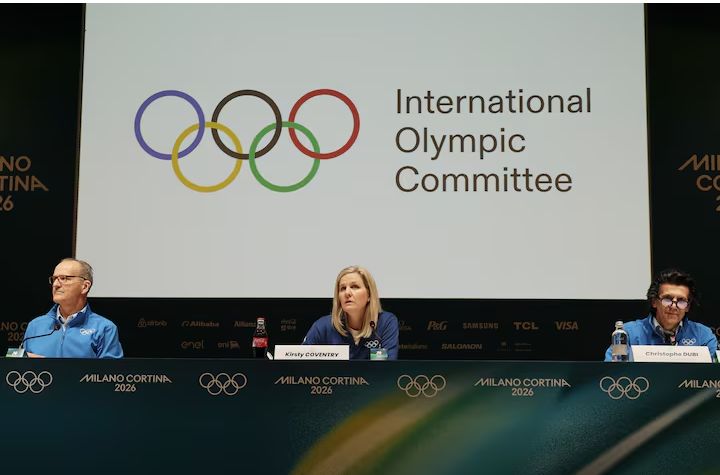
IOC spokesperson Mark Adams said the reform is being driven by the organization’s first female president, Kirsty Coventry, who has prioritized what she calls the “protection of the female category” as a central policy objective. Adams noted that the proposal has already gone through consultation and a “pause and reflect” phase, adding that consensus has largely been reached within the global sporting movement.
In September, Coventry established a dedicated “Protection of the Female Category” working group, comprising medical experts and representatives from international federations, to examine scientific, legal, and sporting implications of transgender participation.
The shift represents a departure from the IOC’s 2021 position, when it declined to impose universal rules and instead instructed federations to develop their own guidelines. Under those rules, still technically in force, transgender athletes could compete at the Olympics if approved by their respective governing bodies.
Participation by openly transgender athletes at the Games has been limited. New Zealand weightlifter Laurel Hubbard became the first openly transgender athlete to compete in a different gender category at the Tokyo Olympics in 2021.
At present, policies vary sharply across sports. World Aquatics permits participation only for athletes who transitioned before age 12, while World Rugby has imposed a blanket ban on transgender athletes at the elite level.
The issue has also become increasingly politicized. In the United States, President Donald Trump has signed an executive order barring transgender athletes from competing in female categories at school, college and professional levels and has stated he would not allow transgender participation at the Los Angeles 2028 Olympic Games.
The IOC’s forthcoming decision is expected to have wide-ranging implications for international sport, potentially reshaping eligibility standards across dozens of disciplines.
BOB Post