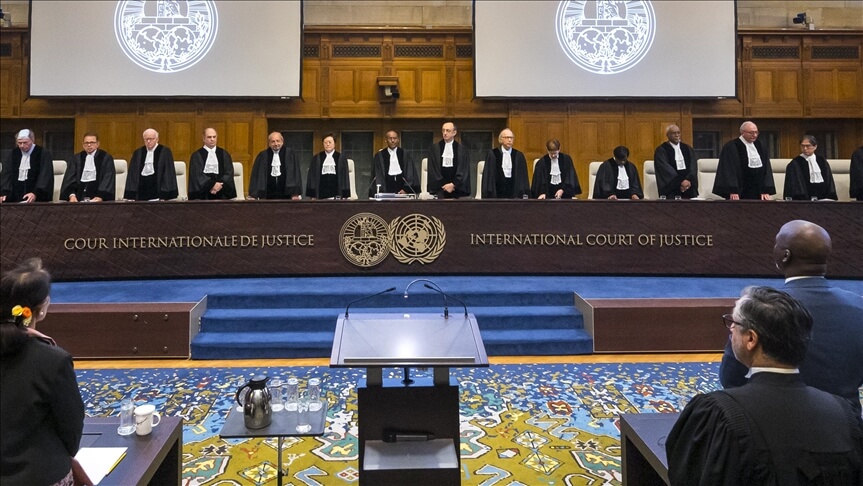
The International Court of Justice (ICJ) has entered a historic judicial phase to determine, for the first time, whether the persecution of Myanmar’s Muslim Rohingya minority constitutes genocide under international law. In the case brought by The Gambia, the West African state argues that Myanmar itself orchestrated and implemented violence with the intent to destroy the Rohingya people in whole or in part.
Professor Melanie O’Brien of the University of Western Australia stressed that the ICJ is not a criminal court trying individual perpetrators. Rather, the proceedings focus on whether Myanmar, as a state, violated its obligations under the Genocide Convention. “This is about state responsibility, not individual criminal liability,” she noted.
Lawyers representing The Gambia are presenting extensive evidence of atrocities on the ground to establish Myanmar’s state responsibility. Only two genocide-related cases have previously reached the ICJ, Bosnia v Serbia (2007) and Croatia v Serbia (2015). However, Reed Brody of the International Commission of Jurists cautioned that the court has never directly found a state guilty of genocide, as the legal threshold for such a ruling is historically extremely high.
Professor Juliet McIntyre of the University of Adelaide explained that The Gambia’s biggest challenge is meeting this strict standard convincing judges that the only reasonable conclusion from the evidence is the existence of genocidal intent.

Genocide, History and Digital Hate
During hearings that began on January 12, The Gambia has argued consistently that violence against the Rohingya was planned and carried out with state backing. Counsel for The Gambia, Philippe Sands, cited writings of Raphael Lemkin, the architect of the Genocide Convention, to underscore the concept of state accountability for genocide.
Subsequent hearings detailed the Myanmar military’s so-called “clearance operations,” describing mass killings, village destruction, rape and forced displacement carried out by the Tatmadaw. According to O’Brien, the cumulative evidence points to a single rational conclusion: the existence of clear genocidal intent.
She added that The Gambia successfully demonstrated structural similarities between the Rohingya case and past genocides such as Rwanda, Srebrenica and the Holocaust. The court was also presented with evidence of entrenched legal discrimination against Rohingya and the role of Facebook in spreading social hatred and incitement.
UN Reports and the Credibility of Evidence
Key evidence includes reports by the UN Fact-Finding Mission on Myanmar and the Independent Investigative Mechanism for Myanmar (IIMM). These reports are based on confidential interviews with more than 1,200 victims, witnesses and former officials, alongside satellite imagery, videos, photographs and official documents.
While Myanmar has dismissed these reports as unreliable, The Gambia’s lawyer Paul Reichler argued that the ICJ has relied on similar UN findings in past cases after assessing their credibility, and should do so again in this case.
Genocidal Intent and Sexual Violence
The Gambia has placed particular emphasis on sexual and gender-based violence. Evidence presented to the court includes accounts of mass rape of women and girls, killings following sexual assault, and sexual abuse of men and boys. O’Brien noted that the genocidal process itself was deeply gendered men were targeted for killing, while women were subjected to widespread sexual violence.
A ruling that recognizes this pattern could set an important legal precedent in how genocide is interpreted under international law.
Broader Implications
Legal experts believe the outcome of the case will have far-reaching consequences, not only for Myanmar but for the international legal system as a whole. Reed Brody said the ruling could influence other ongoing genocide-related cases, including South Africa v Israel.
After three weeks of hearings, judges are expected to take several months to deliberate. A decision in this landmark case is anticipated later this year.
Source: Justice Info.net
BOB Post